


The value of 18F-FDG PET/CT for the diagnosis of device-related infections in patients with a left ventricular assist device: a systematic review and meta-analysis
- PMID: 32594196
- PMCID: PMC7835315
- DOI: 10.1007/s00259-020-04930-8
The value of 18F-FDG PET/CT for the diagnosis of device-related infections in patients with a left ventricular assist device: a systematic review and meta-analysis
Abstract
Background: Left ventricular assist devices (LVADs) are increasingly used for the treatment of advanced heart failure. LVADs improve quality of life and decrease mortality, but the driveline carries substantial risk for major infections. These device-related LVAD and driveline infections are difficult to diagnose with conventional imaging. We reviewed and analysed the current literature on the additive value of 18F-fluorodeoxyglucose positron emission tomography combined with computed tomography (FDG-PET/CT) imaging for the diagnosis of LVAD-related infections."
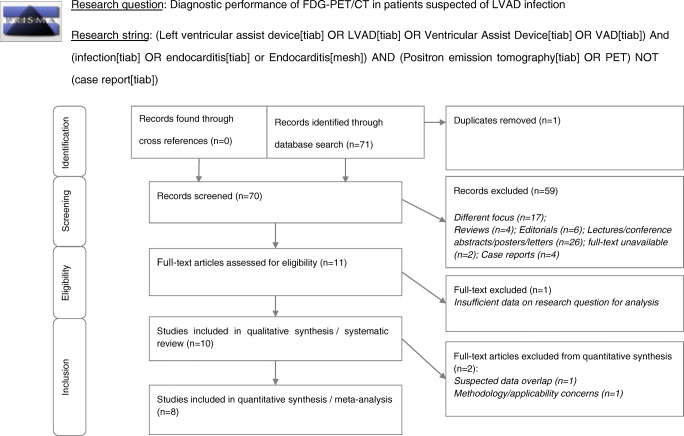
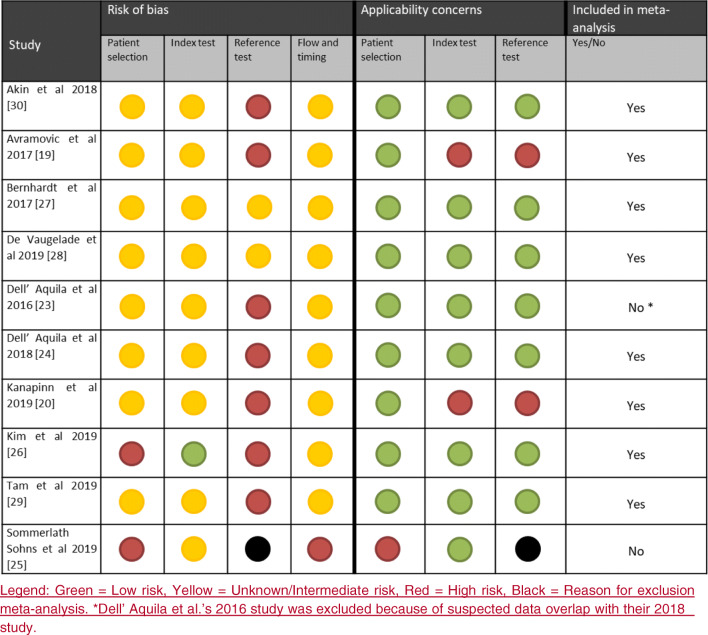
Materials/methods: We performed a systematic literature review using several databases from their inception until the 31st of December, 2019. Studies investigating the diagnostic performance of FDG-PET/CT in patients with suspected LVAD infection were retrieved. After a bias risk assessment using QUADAS-2, a study-aggregate meta-analysis was performed on a per examination-based analysis.
Results: A total of 10 studies were included in the systematic review, eight of which were also eligible for study-aggregate meta-analysis. For the meta-analysis, a total of 256 FDG-PET/CT scans, examining pump/pocket and/or driveline infection, were acquired in 230 patients. Pooled sensitivity of FDG-PET/CT was 0.95 (95% confidence interval (CI) 0.89-0.97) and pooled specificity was 0.91 (95% CI 0.54-0.99) for the diagnosis of device-related infection. For pump/pocket infection, sensitivity and specificity of FDG-PET/CT were 0.97 (95%CI 0.69-1.00) and 0.93 (95%CI 0.64-0.99), respectively. For driveline infection, sensitivity and specificity were 0.96 (95%CI 0.88-0.99) and 0.99 (95%CI 0.13-1.00) respectively. Significant heterogeneity existed across studies for specificity, mostly caused by differences in scan procedures. Predefined criteria for suspicion of LVAD and/or driveline infection were lacking in all included studies.
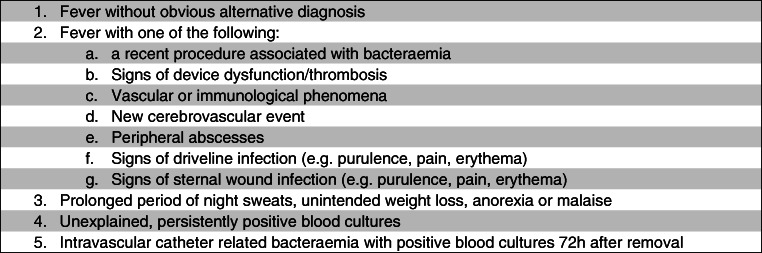
Conclusions: FDG-PET/CT is a valuable tool for assessment of device-related infection in LVAD patients, with high sensitivity and high, albeit variable, specificity. Standardization of FDG-PET/CT procedures and criteria for suspected device-related LVAD infections are needed for consistent reporting of FDG-PET/CT scans.
Keywords: 18F-FDG PET/CT; LVAD infection; Meta-analysis; Systematic review.
Conflict of interest statement
The authors declare that they have no conflict of interest.
Figures


References
-
- Goldstein DJ, Meyns B, Xie R, Cowger J, Pettit S, Nakatani T, et al. Third annual report from the ISHLT mechanically assisted circulatory support registry: a comparison of centrifugal and axial continuous-flow left ventricular assist devices. J Heart Lung Transplant. 2019;38(4):352–363. doi: 10.1016/j.healun.2019.02.004. - DOI - PubMed
-
- Trachtenberg BH, Cordero-Reyes AM, Aldeiri M, Alvarez P, Bhimaraj A, Ashrith G, et al. Persistent blood stream infection in patients supported with a continuous-flow left ventricular assist device is associated with an increased risk of cerebrovascular accidents. J Card Fail. 2015;21(2):119–125. doi: 10.1016/j.cardfail.2014.10.019. - DOI - PubMed
Publication types
MeSH terms
Substances
LinkOut - more resources
Full Text Sources
