


Heat inactivation of serum interferes with the immunoanalysis of antibodies to SARS-CoV-2
- PMID: 32594577
- PMCID: PMC7361150
- DOI: 10.1002/jcla.23411
Heat inactivation of serum interferes with the immunoanalysis of antibodies to SARS-CoV-2
Abstract
Background: The detection of serum antibodies to the severe acute respiratory syndrome coronavirus 2 (SARS-CoV-2) is emerging as a new tool for the coronavirus disease 2019 (COVID-19) diagnosis. Since many coronaviruses are sensitive to heat, heating inactivation of samples at 56°C prior to testing is considered a possible method to reduce the risk of transmission, but the effect of heating on the measurement of SARS-CoV-2 antibodies is still unclear.
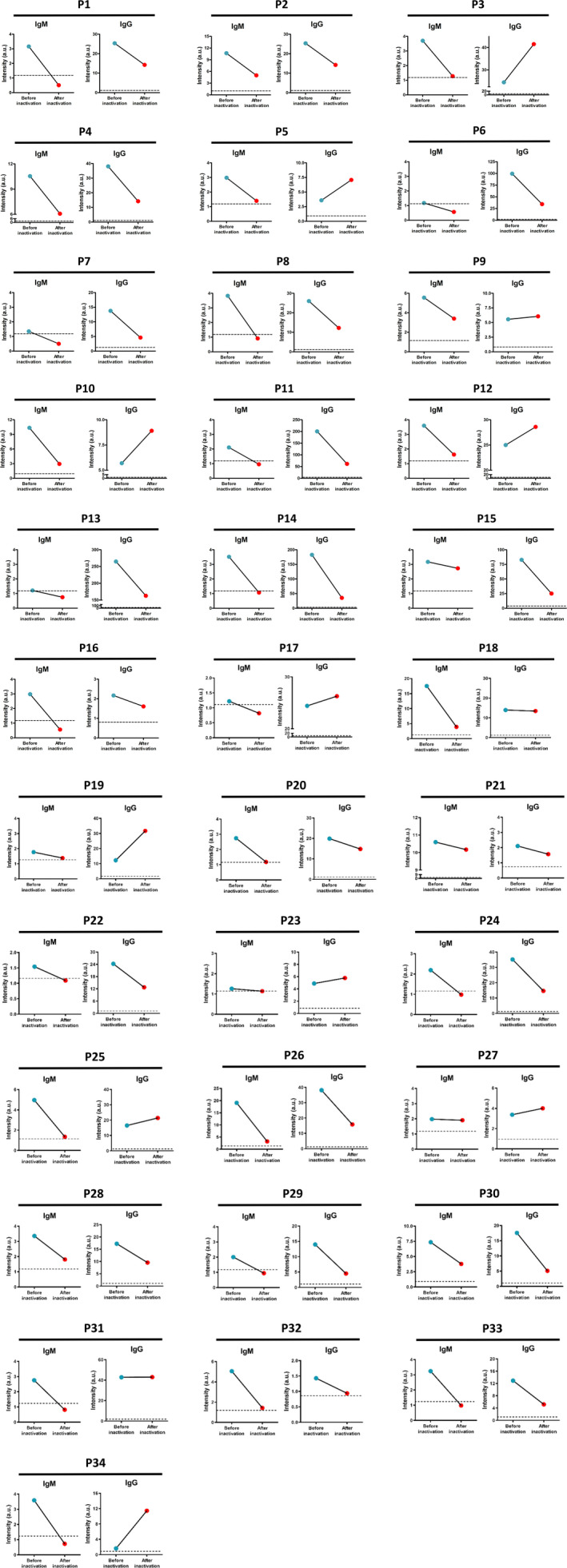
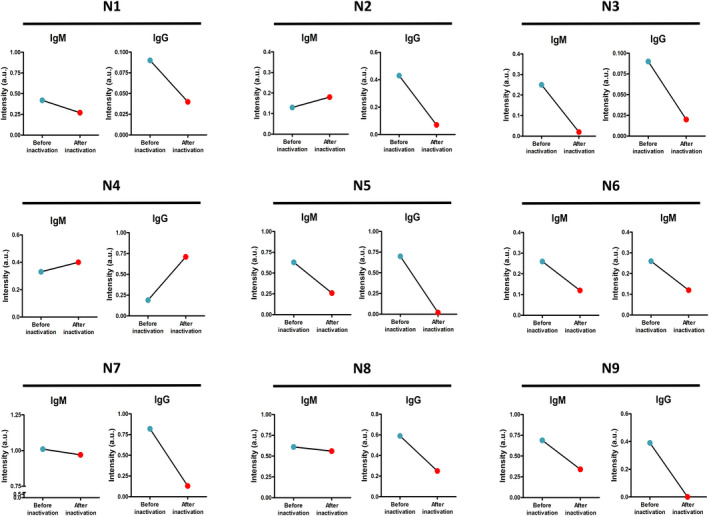
Methods: By comparing the levels of SARS-CoV-2 antibodies before and after heat inactivation of serum at 56°C for 30 minutes using a quantitative fluorescence immunochromatographic assay RESULTS: We showed that heat inactivation significantly interferes with the levels of antibodies to SARS-CoV-2. The IgM levels of all the 34 serum samples (100%) from COVID-19 patients decreased by an average level of 53.56%. The IgG levels were decreased in 22 of 34 samples (64.71%) by an average level of 49.54%. Similar changes can also be observed in the non-COVID-19 disease group (n = 9). Of note, 44.12% of the detected IgM levels were dropped below the cutoff value after heating, suggesting heat inactivation can lead to false-negative results of these samples.
Conclusion: Our results indicate that heat inactivation of serum at 56°C for 30 minutes interferes with the immunoanalysis of antibodies to SARS-CoV-2. Heat inactivation prior to immunoanalysis is not recommended, and the possibility of false-negative results should be considered if the sample was pre-inactivated by heating.
Keywords: COVID-19; SARS-CoV-2; antibodies; heat inactivation; immunoanalysis.
© 2020 The Authors. Journal of Clinical Laboratory Analysis published by Wiley Periodicals LLC.
Figures
References
-
- Mahase E. Coronavirus: covid‐19 has killed more people than SARS and MERS combined, despite lower case fatality rate. BMJ. 2020;368:m641. - PubMed
-
- Phelan AL, Katz R, Gostin LO. The novel coronavirus originating in Wuhan, China: challenges for global health governance. J Am Med Assoc. 2020;323(8):709. - PubMed
-
- World Health Organization . Laboratory testing for coronavirus disease 2019 (COVID‐19) in suspected human cases: interim guidance. 2 March 2020.
-
- General office of the National Health Commission . Guide of diagnosis and treatment of novel coronavirus (nCoV) pneumonia, 6th Version. 18 February 2020.
MeSH terms
Substances
Grants and funding
LinkOut - more resources
Full Text Sources
Other Literature Sources
Miscellaneous
