


Effects of Organic Selenium on the Physiological Response, Blood Metabolites, Redox Status, Semen Quality, and Fertility of Rabbit Bucks Kept Under Natural Heat Stress Conditions
- PMID: 32596265
- PMCID: PMC7303341
- DOI: 10.3389/fvets.2020.00290
Effects of Organic Selenium on the Physiological Response, Blood Metabolites, Redox Status, Semen Quality, and Fertility of Rabbit Bucks Kept Under Natural Heat Stress Conditions
Abstract
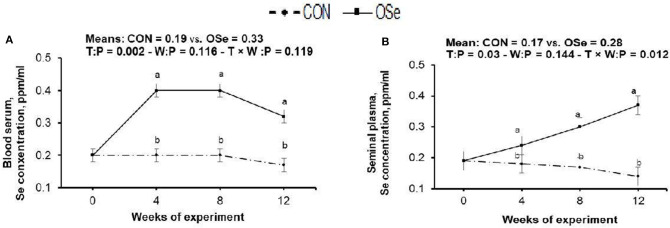
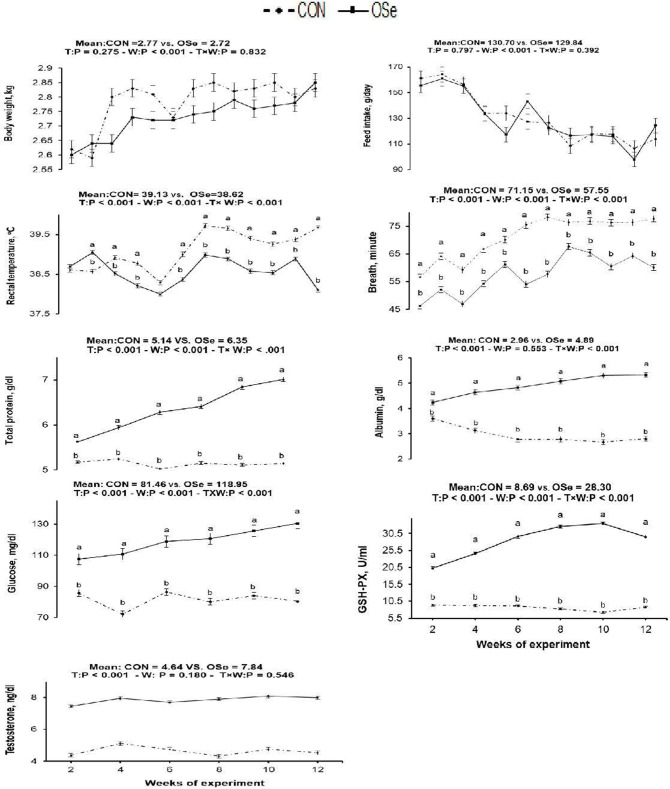
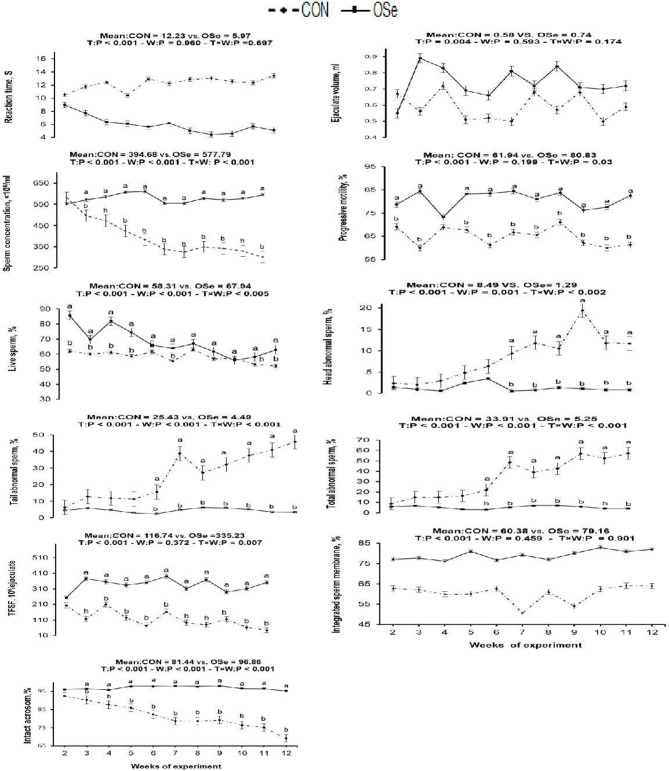
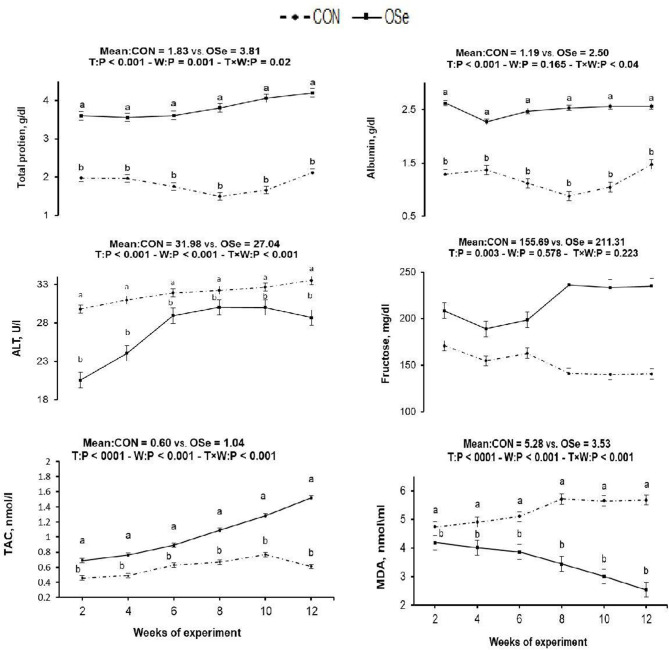
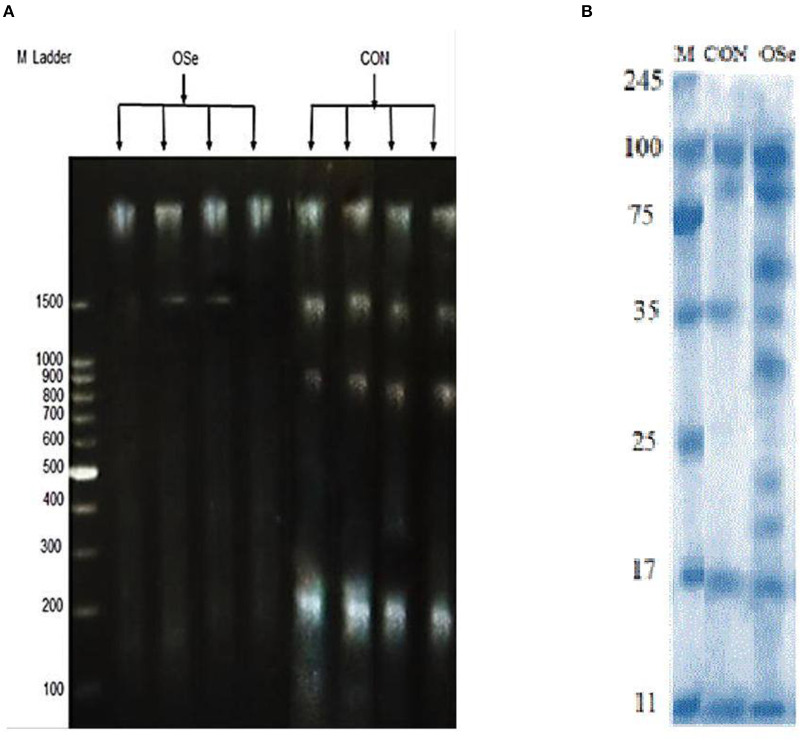
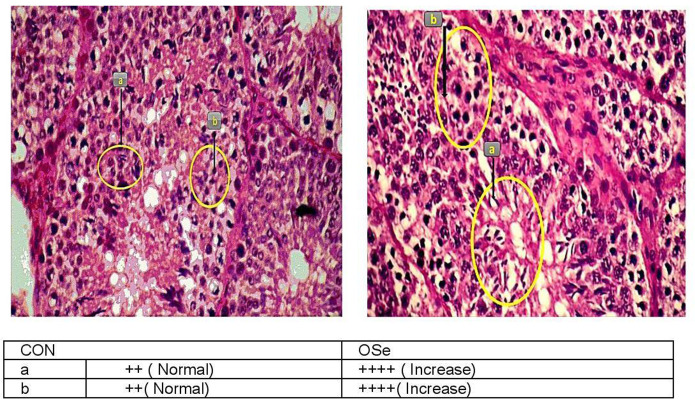
Heat stress can impair the general health of rabbit bucks by disturbing physiological homeostasis with negative consequences in animal welfare and remarkable decline in reproductive performance. Selenium (Se) can control a number of vital biological processes. Thus, the effects of organic selenium (OSe) supplementation on the blood metabolites, redox status, semen quality, testicular histology, seminal plasma protein profile, and fertility of rabbit bucks kept under natural heat stress conditions were studied. Adult V-line male rabbits were fed a basal diet supplemented with 0.3 mg OSe/kg dry matter (DM) diet (OSe, n = 9) or not (control, CON, n = 9) for 12 weeks. The results showed that rabbits fed the OSe diet had 73.68 and 68.75% higher (P < 0.05) OSe concentrations in the blood serum and seminal plasma, respectively, than rabbits fed the CON diet. The OSe diet significantly decreased the rectal temperature and respiration rate and significantly increased the blood serum concentrations of total protein, albumin, glucose, and glutathione peroxidase compared to the CON diet. Rabbits fed the OSe diet had lower reaction times (12.53 vs. 5.84 s, ± 0.79, P < 0.01) and higher total functional sperm counts (116.74 vs. 335.23 × 10⁶/ml, ± 24.68, P < 0.001) and percentages of integrated sperm membranes (60.38 vs. 79.19%, ± 1.69, P < 0.01) than rabbits fed the CON diet. Rabbits fed the OSe diet had higher (P < 0.01) contents of seminal plasma total protein, albumin, alanine transaminase, fructose, and total antioxidant capacity and lower (P < 0.001) malondialdehyde (MDA) levels than those fed the CON diet. Rabbits fed the OSe diet had sperm cells with higher levels of integrated DNA than those fed the CON diet. The seminal plasma of rabbits fed the OSe diet contained four new proteins, with molecular weights of 19.0, 21.5, 30.0, and 44.0 kDa. The kindling rates, litter size, and weight at birth of females mated with males fed the OSe diet were significantly higher than those of females mated with males fed the CON diet. In summary, the inclusion of 0.3 mg OSe/kg DM diet of naturally heat-stressed rabbit bucks countered the negative impacts of elevated environmental temperature on physiological homeostasis, semen quality, and fertility.
Keywords: antioxidant; heat stress; male; selenium; semen.
Copyright © 2020 Hosny, Hashem, Morsy and Abo-elezz.
Figures
References
-
- Hashem NM, AbdEl-Hady A, Hassan O. Effect of vitamin E or propolis supplementation on semen quality, oxidative status and hemato-biochemical changes of rabbit bucks during hot season. Livestock Sci. (2013) 157:520–6. 10.1016/j.livsci.2013.09.003 - DOI
-
- Abdulrashid M, Juniper DT. Effect of dietary protein, selenium and temperature humidity index on reproductive traits of male rabbits in a tropical environment. J Ani Prod Res. (2016) 28:61–5.
LinkOut - more resources
Full Text Sources
