


Evaluating the Utility of Polygenic Risk Scores in Identifying High-Risk Individuals for Eight Common Cancers
- PMID: 32596635
- PMCID: PMC7306192
- DOI: 10.1093/jncics/pkaa021
Evaluating the Utility of Polygenic Risk Scores in Identifying High-Risk Individuals for Eight Common Cancers
Abstract
Background: Genome-wide association studies have identified common genetic risk variants in many loci associated with multiple cancers. We sought to systematically evaluate the utility of these risk variants in identifying high-risk individuals for eight common cancers.
Methods: We constructed polygenic risk scores (PRS) using genome-wide association studies-identified risk variants for each cancer. Using data from 400 812 participants of European descent in a population-based cohort study, UK Biobank, we estimated hazard ratios associated with PRS using Cox proportional hazard models and evaluated the performance of the PRS in cancer risk prediction and their ability to identify individuals at more than a twofold elevated risk, a risk level comparable to a moderate-penetrance mutation in known cancer predisposition genes.
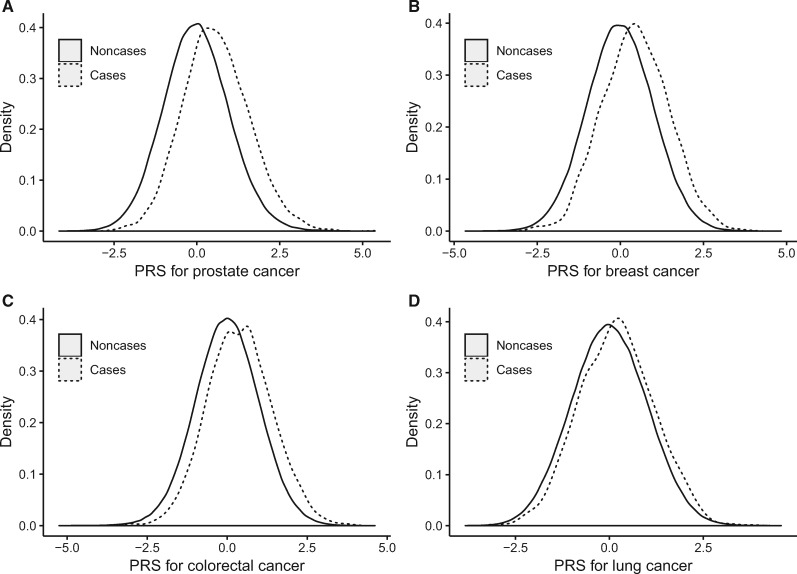
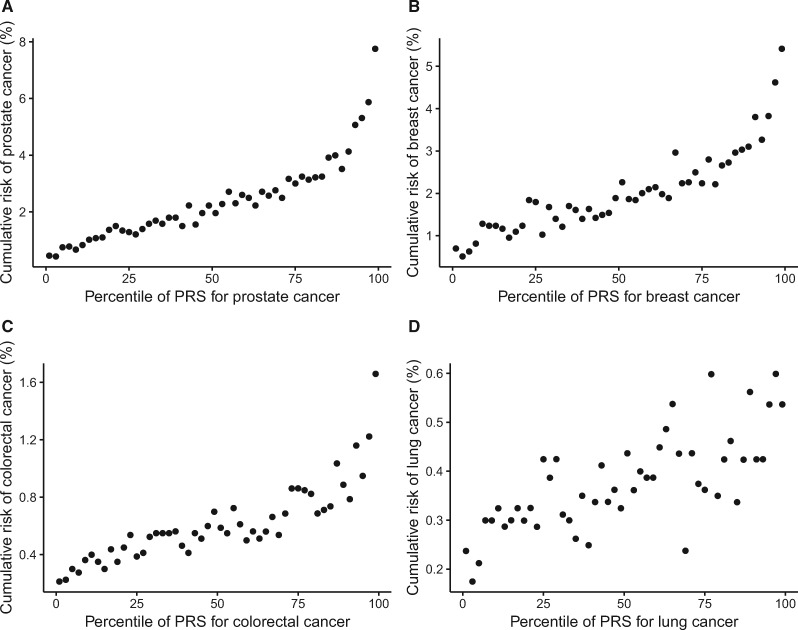
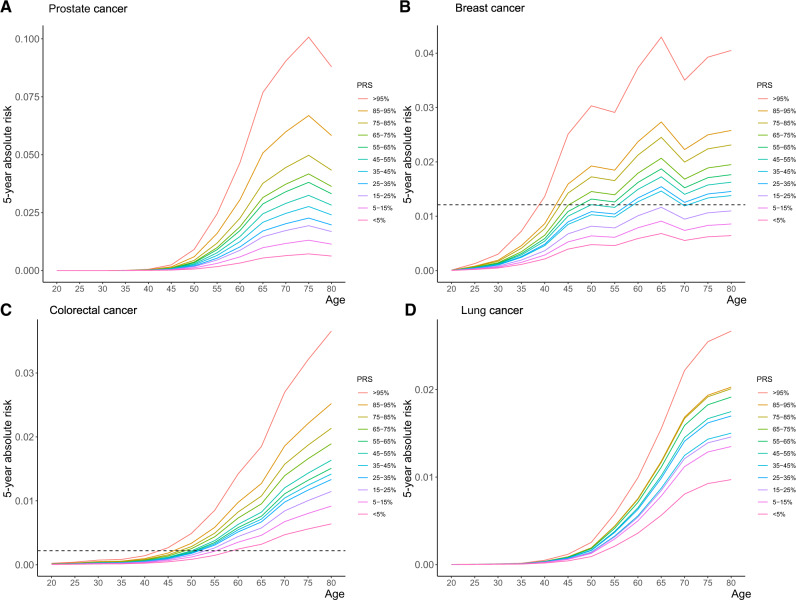
Results: During a median follow-up of 5.8 years, 14 584 incident case patients of cancers were identified (ranging from 358 epithelial ovarian cancer case patients to 4430 prostate cancer case patients). Compared with those at an average risk, individuals among the highest 5% of the PRS had a two- to threefold elevated risk for cancer of the prostate, breast, pancreas, colorectal, or ovary, and an approximately 1.5-fold elevated risk of cancer of the lung, bladder, or kidney. The areas under the curve ranged from 0.567 to 0.662. Using PRS, 40.4% of the study participants can be classified as having more than a twofold elevated risk for at least one site-specific cancer.
Conclusions: A large proportion of the general population can be identified at an elevated cancer risk by PRS, supporting the potential clinical utility of PRS for personalized cancer risk prediction.
© The Author(s) 2020. Published by Oxford University Press.
Figures
References
-
- Bray F, Ferlay J, Soerjomataram I, Siegel RL, Torre LA, Jemal A.. Global cancer statistics 2018: GLOBOCAN estimates of incidence and mortality worldwide for 36 cancers in 185 countries. CA Cancer J Clin. 2018;68(6):394–424. - PubMed
-
- Nielsen FC, van Overeem Hansen T, Sørensen CS.. Hereditary breast and ovarian cancer: new genes in confined pathways. Nat Rev Cancer. 2016;16(9):599–612. - PubMed
Grants and funding
LinkOut - more resources
Full Text Sources