


Psychological distress links perceived neighborhood characteristics to longitudinal trajectories of cognitive health in older adulthood
- PMID: 32599413
- PMCID: PMC7363567
- DOI: 10.1016/j.socscimed.2020.113125
Psychological distress links perceived neighborhood characteristics to longitudinal trajectories of cognitive health in older adulthood
Abstract
Rationale: Perceived neighborhood characteristics have been linked to cognitive health in older adulthood. The pathways through which neighborhood characteristics could influence cognition in older adulthood, however, have not been fully explored. Poorer quality neighborhoods may negatively influence cognition through feelings of psychological distress.
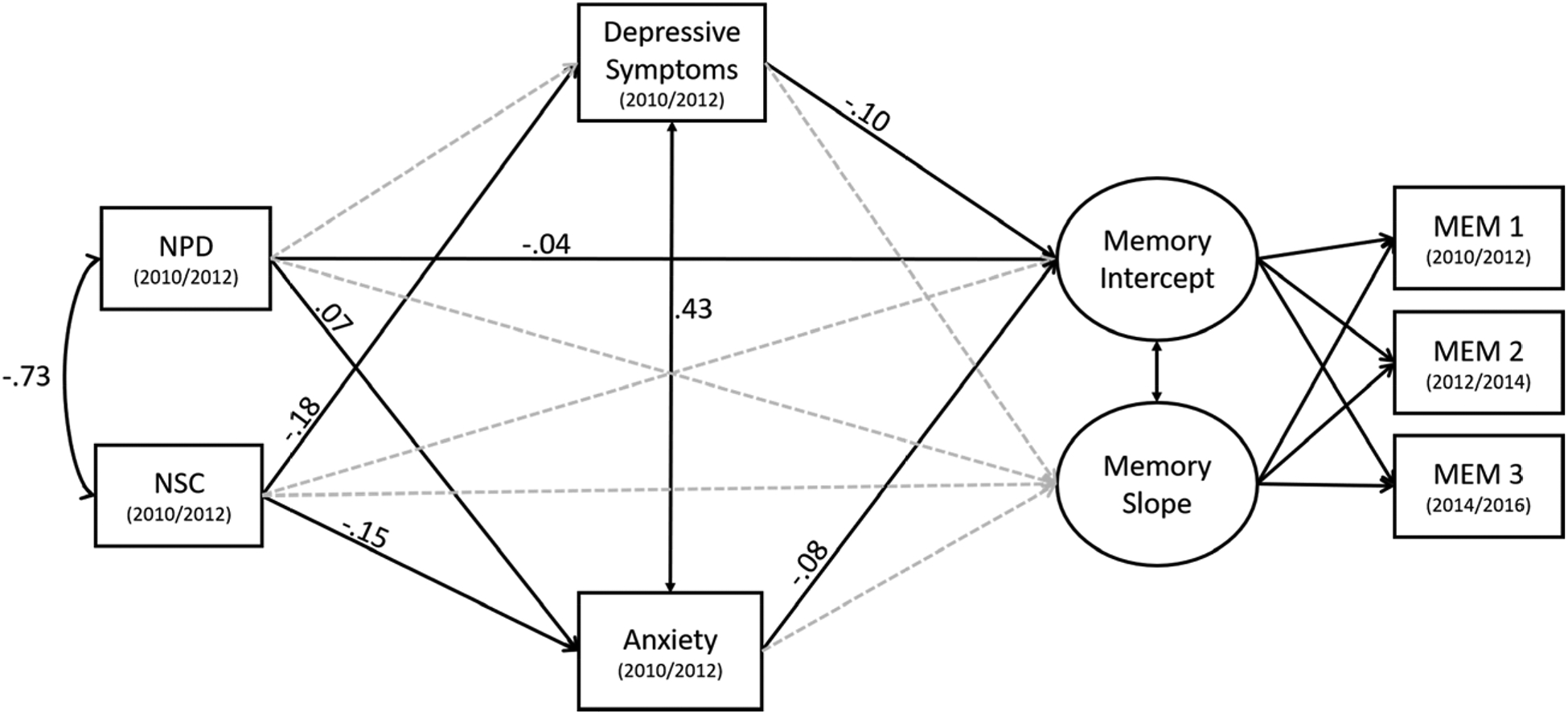
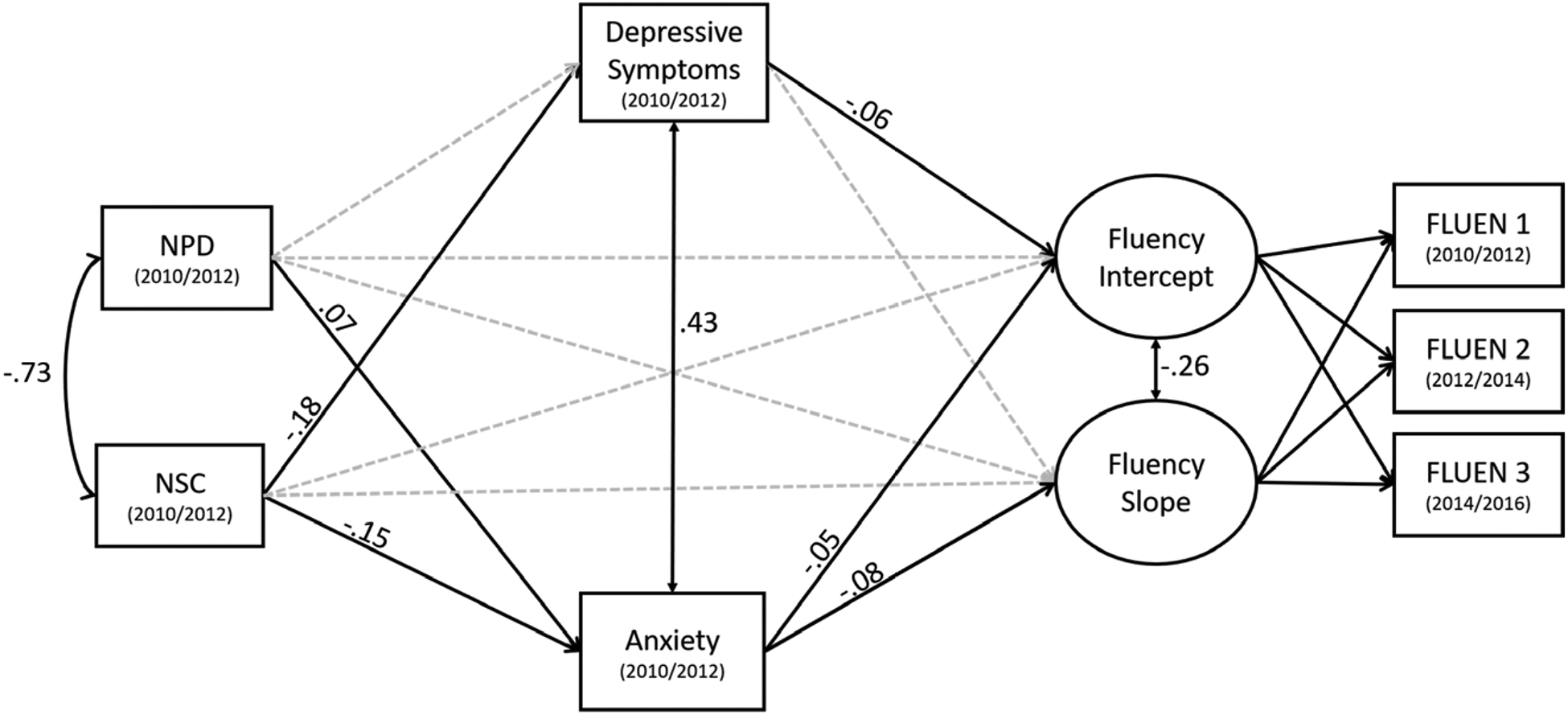
Objective: To examine whether perceived neighborhood physical disorder and social cohesion were associated with change in episodic memory and semantic verbal fluency through anxiety and depressive symptoms.
Methods: Using the Health and Retirement Study (HRS; n = 13,919), mediation models were conducted. Change in cognition (episodic memory and semantic verbal fluency) were modeled using latent growth curve models.
Results: Higher physical disorder was associated with worse initial episodic memory and verbal fluency through greater anxiety symptoms. Higher social cohesion was associated with better initial episodic memory and verbal fluency through both lower anxiety and fewer depressive symptoms. Further, individuals with higher social. cohesion reported lower anxiety and in turn, showed a slower rate of verbal fluency decline. A direct effect of physical disorder on initial episodic memory remained, after accounting for indirect effects and covariates.
Conclusions: Overall, individuals who live in neighborhoods with high physical disorder and low social cohesion may experience greater psychological distress. Symptoms of anxiety and depression may, in turn, interfere with cognitive functioning. Neighborhood characteristics may be an important, targetable area for intervention to improve not only mental health outcomes, but cognitive health outcomes in older adulthood.
Keywords: Anxiety; Cognitive aging; Depressive symptoms; Perceived neighborhood characteristics.
Copyright © 2020 Elsevier Ltd. All rights reserved.
Conflict of interest statement
Declaration of competing interest The authors have no conflicts of interest.
Figures
References
Publication types
MeSH terms
Grants and funding
LinkOut - more resources
Full Text Sources
