


Reluctance to seek pediatric care during the COVID-19 pandemic and the risks of delayed diagnosis
- PMID: 32600464
- PMCID: PMC7322712
- DOI: 10.1186/s13052-020-00849-w
Reluctance to seek pediatric care during the COVID-19 pandemic and the risks of delayed diagnosis
Abstract
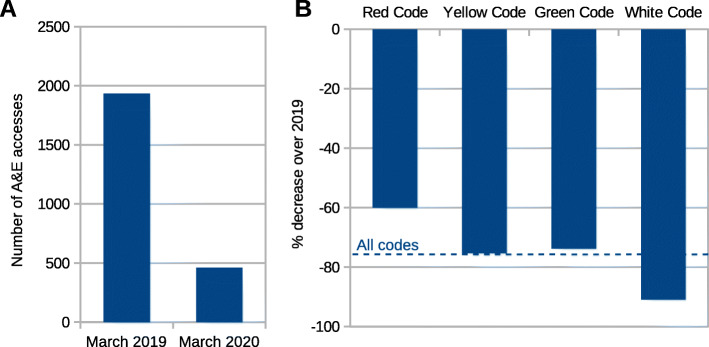
Since the outbreak of COVID-19 pandemic, the number of cases registered worldwide has risen to over 3 million. While COVID-19 per se does not seem to represent a significant threat to the pediatric population, which generally presents a benign course and a low lethality, the current emergency might negatively affect the care of pediatric patients and overall children welfare. In particular, the fear of contracting COVID-19 may determine a delayed access to pediatric emergency facilities. Present report focuses on the experience of The Children Hospital in Alessandria (northern Italy). The authors document a drop in the number of admissions to the emergency department (A&E) during the lock-down. They will also focus on four emblematic cases of pediatric patients who were seen to our A&E in severe conditions. All these cases share a significant diagnostic delay caused by the parents' reluctance to seek medical attention, seen as a potential risk factor for COVID-19 contagion. None was found positive to all COVID-19 swab or immunologic testing. All in all, our data strongly support the importance of promoting a direct and timely interaction between patients and medical staff, to prevent the fear of COVID-19 from causing more harm than the virus itself.
Keywords: COVID-19; Delayed diagnosis; Pediatric emergency.
Conflict of interest statement
The authors declare that they have no competing interests.
Figures
References
-
- WHO. Coronavirus disease 2019 (COVID-19) Situation Report – 92, vol. 2019: World Heal Organ; 2020. p. 2633. https://www.who.int/emergencies/diseases/novel-coronavirus-2019.
-
- Istituto Superiore di Sanità . Sorveglianza Integrata COVID-19 in Italia. 2020. p. 1.
-
- Castagnoli R, Votto M, Licari A, et al. Severe acute respiratory syndrome coronavirus 2 (SARS-CoV-2) infection in children and adolescents: a systematic review. JAMA Pediatr. 2020;2. 10.1001/jamapediatrics.2020.1467. - PubMed
-
- Dong Y, Mo X, Hu Y, et al. Epidemiological characteristics of 2143 pediatric patients with 2019 coronavirus disease in China. Pediatrics. 2020. 10.1542/peds.2020-0702.
Publication types
MeSH terms
LinkOut - more resources
Full Text Sources
Medical
