


Reductive dearomative arylcarboxylation of indoles with CO2 via visible-light photoredox catalysis
- PMID: 32601286
- PMCID: PMC7324572
- DOI: 10.1038/s41467-020-17085-9
Reductive dearomative arylcarboxylation of indoles with CO2 via visible-light photoredox catalysis
Abstract
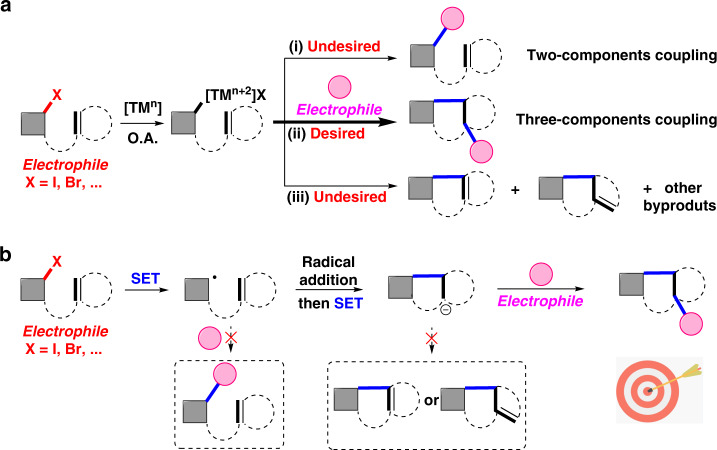
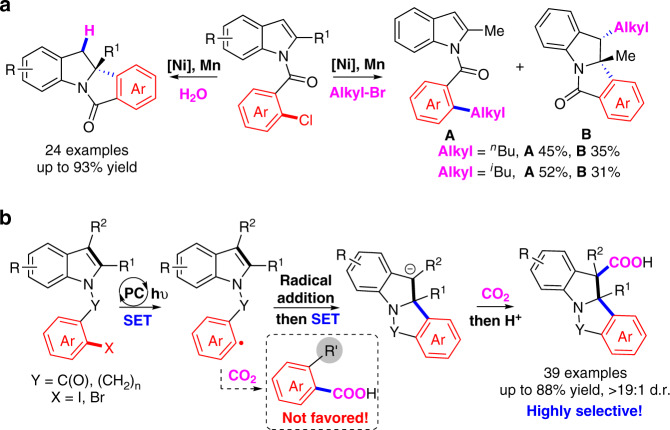
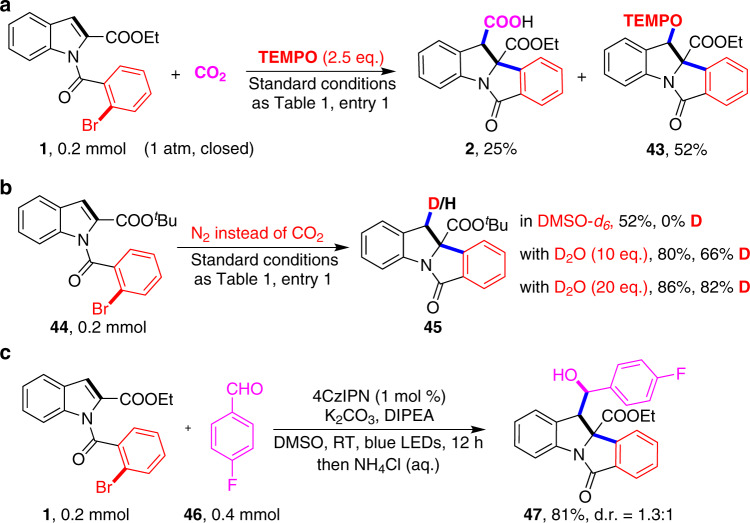
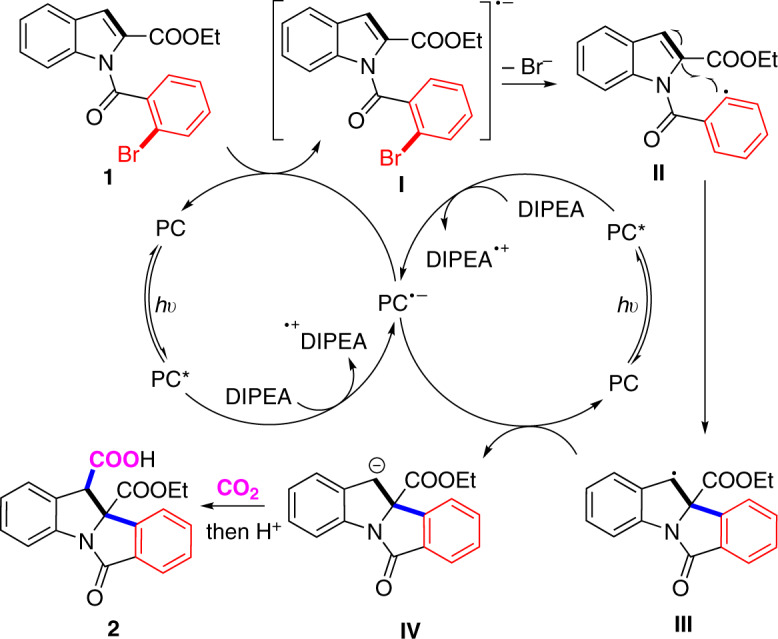
Catalytic reductive coupling of two electrophiles and one unsaturated bond represents an economic and efficient way to construct complex skeletons, which is dominated by transition-metal catalysis via two electron transfer. Herein, we report a strategy of visible-light photoredox-catalyzed successive single electron transfer, realizing dearomative arylcarboxylation of indoles with CO2. This strategy avoids common side reactions in transition-metal catalysis, including ipso-carboxylation of aryl halides and β-hydride elimination. This visible-light photoredox catalysis shows high chemoselectivity, low loading of photocatalyst, mild reaction conditions (room temperature, 1 atm) and good functional group tolerance, providing great potential for the synthesis of valuable but difficultly accessible indoline-3-carboxylic acids. Mechanistic studies indicate that the benzylic radicals and anions might be generated as the key intermediates, thus providing a direction for reductive couplings with other electrophiles, including D2O and aldehyde.
Conflict of interest statement
The authors declare no competing interests.
Figures
References
-
- Krische, M. J. Metal Catalyzed Reductive C–C Bond Formation (Springer, 2007).
-
- Gu J, Wang X, Xue W, Gong H. Nickel-catalyzed reductive coupling of alkyl halides with other electrophiles: concept and mechanistic considerations. Org. Chem. Front. 2015;2:1411–1421.
-
- Sun SZ, Duan Y, Mega RS, Somerville RJ, Martin R. Site-selective 1,2-dicarbofunctionalization of vinyl boronates through dual catalysis. Angew. Chem. Int. Ed. 2020;59:4370–4374. - PubMed
Grants and funding
LinkOut - more resources
Full Text Sources
Research Materials
Miscellaneous
