Risk of Depression in the Adolescent and Adult Offspring of Mothers With Perinatal Depression: A Systematic Review and Meta-analysis
- PMID: 32602910
- PMCID: PMC7327545
- DOI: 10.1001/jamanetworkopen.2020.8783
Risk of Depression in the Adolescent and Adult Offspring of Mothers With Perinatal Depression: A Systematic Review and Meta-analysis
Abstract
Importance: Maternal depression during pregnancy is associated with emotional and behavioral difficulties of offspring during childhood that can increase the risk of depression in adolescence and adulthood.
Objective: To investigate the association between perinatal maternal depression and an increased long-term risk of depression in their adolescent and adult offspring.
Data sources: A systematic search of the electronic databases of PubMed and PsycINFO was conducted from May 2019 to June 2019.
Study selection: A total of 6309 articles were identified, of which 88 articles were extracted for full-text review by 2 reviewers. Only articles reporting data from prospective longitudinal studies that assessed maternal depression during antenatal and/or postnatal periods and resulting offspring 12 years or older with measures of established psychometric properties were included. Exclusion criteria consisted of all other study designs, mothers with other medical and psychiatric comorbidities, and offspring younger than 12 years.
Data extraction and synthesis: Data were extracted by 2 independent reviewers, and discrepancies were mediated by an expert third reviewer. Meta-analysis was performed using Bayesian statistical inference and reported using Meta-analysis of Observational Studies in Epidemiology (MOOSE) guideline. The association of depression timing with the sex of offspring was explored using metaregression.
Main outcomes and measures: Offspring depression was evaluated using standardized depression scales or clinical interviews.
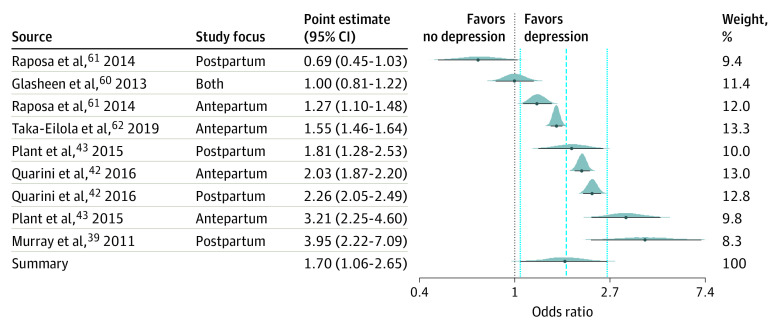
Results: Six studies with a total of 15 584 mother-child dyads were included in the meta-analysis, which found the offspring of mothers who experienced perinatal depression to have increased odds of depression (odds ratio [OR], 1.70; 95% credible interval [CrI], 1.60-2.65; posterior probability [PP] [OR >1], 98.6%). Although metaregression found no evidence for an overall association between perinatal depression timing and offspring depression (antenatal vs postnatal, PP [OR >1] = 53.8%), subgroup analyses showed slightly higher pooled odds for the antenatal studies (OR, 1.78; 95% CrI, 0.93-3.33; PP [OR >1] = 96.2%) than for the postnatal studies (OR, 1.66; 95% CrI, 0.65-3.84; PP [OR >1] = 88.0%). Female adolescent offspring recorded higher rates of depression in metaregression analyses, such that a 1% increase in the percentage of female (relative to male) offspring was associated with a 6% increase in the odds of offspring depression (OR, 1.06; 95% CrI, 0.99-1.14; τ2 = 0.31).
Conclusions and relevance: In this study, maternal perinatal depression, especially antenatal depression, was associated with the risk of depression in adolescence and adulthood. More research into the mechanisms of depression risk transmission and assessments of postinterventional risk reduction could aid in the development of future strategies to tackle depressive disorders in pregnancy.
Conflict of interest statement
Figures


References
Publication types
MeSH terms
Grants and funding
LinkOut - more resources
Full Text Sources
Medical
Miscellaneous