


Obesity aggravates COVID-19: A systematic review and meta-analysis
- PMID: 32603481
- PMCID: PMC7361606
- DOI: 10.1002/jmv.26237
Obesity aggravates COVID-19: A systematic review and meta-analysis
Abstract
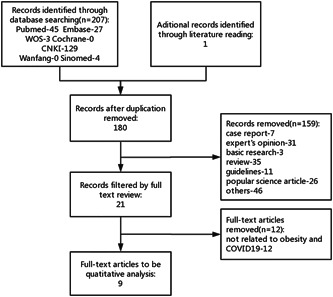
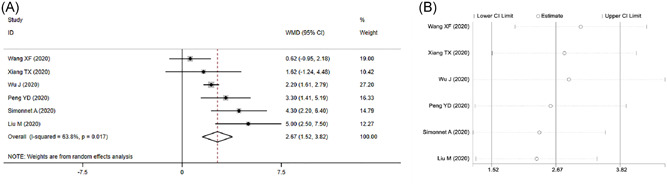
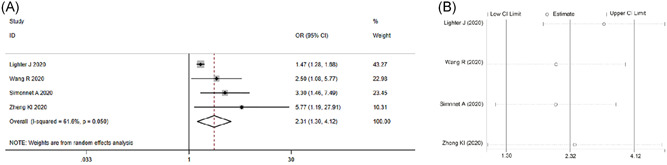
Obesity and COVID-19 are both worldwide epidemics now. There may be some potential relationships between them, but little is known. This study was done to explore this relationship through literature search, systematic review, and meta-analysis. Pubmed, Embase, WOS, Cochrane, CNKI, Wanfang, and Sinomed databases were searched to collect literature concerning obesity and COVID-19. Systematic review and meta-analysis were conducted after literature screening, quality assessment, and data extraction. A total of 180 articles were initially searched after duplicate removal, and 9 were finally included in our analysis. Results show that severe COVID-19 patients have a higher body mass index than non-severe ones (WMD = 2.67; 95% CI, 1.52-3.82); COVID-19 patients with obesity were more severely affected and have a worse outcome than those without (OR = 2.31; 95% CI, 1.3-4.12). Obesity may aggravate COVID-19.
Keywords: COVID-19; meta-analysis; obesity; risk factor; systematic review.
© 2020 Wiley Periodicals LLC.
Conflict of interest statement
The authors declare that there are no conflict of interests.
Figures
References
-
- Mazzola P, Rimoldi SM, Rossi P, et al. Aging in Italy: the need for new welfare strategies in an old country. Gerontologist. 2016;56(3):383‐390. - PubMed
-
- Torres‐Gil FM, Suh EH, Angel J. Working across borders: the social and policy implications of aging in the Americas. J Cross Cult Gerontol. 2013;28(3):215‐222. - PubMed
-
- Hales CM, Carroll MD, Fryar CD, et al. Prevalence of obesity and severe obesity among adults: United States, 2017–2018. NCHS Data Brief. 2020;360. https://www.cdc.gov/nchs/products/index.htm - PubMed
Publication types
MeSH terms
LinkOut - more resources
Full Text Sources
Medical
