


doi: 10.1016/j.phrs.2020.105051.
Epub 2020 Jun 27.
Targeting inflammation and cytokine storm in COVID-19
Affiliations
- PMID: 32603772
- PMCID: PMC7320704
- DOI: 10.1016/j.phrs.2020.105051
Item in Clipboard
Targeting inflammation and cytokine storm in COVID-19
Pharmacol Res.
2020 Sep.
No abstract available
Conflict of interest statement
None declared.
Figures
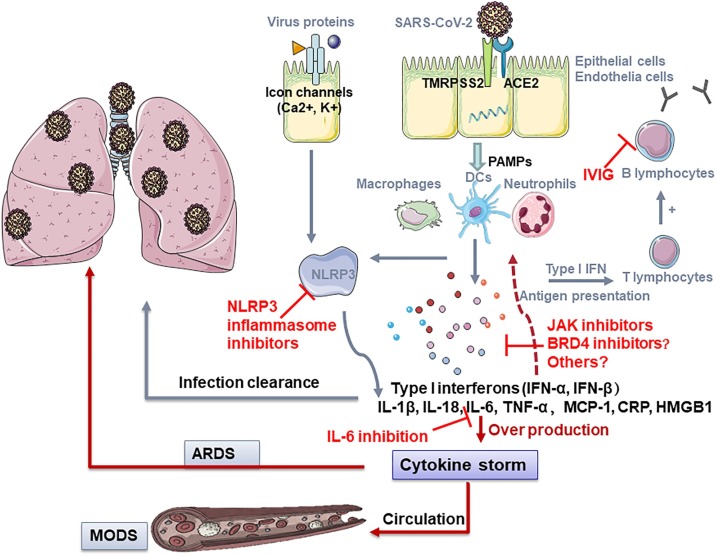
Potential therapies of COVID-19 by targeting inflammation and cytokine storm. SARS-CoV-2 enters and infects cells by binding to TMPRSS2 and ACE2, subsequently releases virus RNA, one of the PAMPs, and recruits dendritic cells, macrophages and neutrophils. The released type I interferon and pro-inflammatory cytokines and chemokines induce the innate immune response while adaptive immune response is ignited by activating T and B lymphocytes to defend against the virus. Meanwhile, intact viruses or the components can directly activate the NLRP3 inflammasome, leading to IL-1β secretion. In most infections, moderate immune response and antiviral response are capable to combat the infection. Nevertheless, in individuals with immunological dysfunction, persistent hyper-inflammation triggers a cytokine storm, leading to the lung injury and ARDS or eventually swept through the whole body, causing MODS. During the pathological progression, the inhibition of NRLP3, JAK1/2, IL-6, BRD4 and the infusion of IVIG may be beneficial in suppressing the overwhelming inflammation and arrest or reverse the COVID-19 disease. Abbreviations: ACE2, angiotensin converting enzyme 2; ARDS, acute respiratory distress syndrome; IVIG, intravenous immunoglobulin; MODS, multiple organ dysfunction syndrome; NLRP3, Nod-like receptor protein 3; PAMP, pathogen-associated molecular pattern; TMPRSS2, transmembrane serine protease 2.
References
-
- Huang C., Wang Y., Li X., Ren L., Zhao J., Hu Y., Zhang L., Fan G., Xu J., Gu X., Cheng Z., Yu T., Xia J., Wei Y., Wu W., Xie X., Yin W., Li H., Liu M., Xiao Y., Gao H., Guo L., Xie J., Wang G., Jiang R., Gao Z., Jin Q., Wang J., Cao B. Clinical features of patients infected with 2019 novel coronavirus in Wuhan, China. Lancet. 2020;395(10223):497–506. - PMC - PubMed
-
- Ledford H. Coronavirus breakthrough: dexamethasone is first drug shown to save lives. Nature. 2020 - PubMed
MeSH terms
Substances
LinkOut - more resources
Full Text Sources
Other Literature Sources
