


Immune Immunomodulation in Coronavirus Disease 2019 (COVID-19): Strategic Considerations for Personalized Therapeutic Intervention
- PMID: 32604407
- PMCID: PMC7337699
- DOI: 10.1093/cid/ciaa904
Immune Immunomodulation in Coronavirus Disease 2019 (COVID-19): Strategic Considerations for Personalized Therapeutic Intervention
Abstract
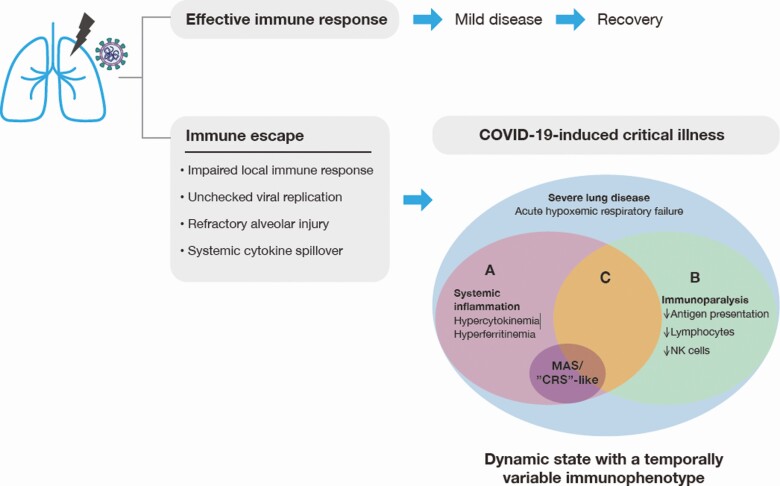
We are learning that the host response to severe acute respiratory syndrome coronavirus 2 ( SARS-CoV-2) infection is complex and highly dynamic. Effective initial host defense in the lung is associated with mild symptoms and disease resolution. Viral evasion of the immune response can lead to refractory alveolar damage, ineffective lung repair mechanisms, and systemic inflammation with associated organ dysfunction. The immune response in these patients is highly variable and can include moderate to severe systemic inflammation and/or marked systemic immune suppression. There is unlikely to be a "one size fits all" approach to immunomodulation in patients with coronavirus disease 2019 (COVID-19). We believe that a personalized, immunophenotype-driven approach to immunomodulation that may include anticytokine therapy in carefully selected patients and immunostimulatory therapies in others is the shortest path to success in the study and treatment of patients with critical illness due to COVID-19.
Keywords: COVID-19; cytokine storm; immune modulation; immunoparalysis; inflammation.
© The Author(s) 2020. Published by Oxford University Press for the Infectious Diseases Society of America.
Figures
Comment in
-
Treatment of Coronavirus Disease 2019-Evidence-based or Personalized Medicine?Clin Infect Dis. 2022 Jan 7;74(1):149-151. doi: 10.1093/cid/ciaa996. Clin Infect Dis. 2022. PMID: 32667978 Free PMC article. No abstract available.
References
-
- World Health Organization; China Joint Mission on Coronavirus Disease 2019. Report of the WHO-China Joint Mission on Coronavirus Disease 2019 (COVID-19). Available at: www.who.int.
MeSH terms
Substances
LinkOut - more resources
Full Text Sources
Medical
Miscellaneous
