. 2020 Jun 27;12(7):597.
doi: 10.3390/pharmaceutics12070597.

The Enhanced Cytotoxic and Pro-Apoptotic Effects of Optimized Simvastatin-Loaded Emulsomes on MCF-7 Breast Cancer Cells

Affiliations

The Enhanced Cytotoxic and Pro-Apoptotic Effects of Optimized Simvastatin-Loaded Emulsomes on MCF-7 Breast Cancer Cells

Zuhier A Awan et al. Pharmaceutics. .

Retraction in

Abstract

Statins, including simvastatin (SMV), are commonly used for the control of hyperlipidaemia and have also proven therapeutic and preventative effects in cardiovascular diseases. Besides that, there is an emerging interest in their use as antineoplastic drugs as demonstrated by different studies showing their cytotoxic activity against different cancer cells. In this study, SMV-loaded emulsomes (SMV-EMLs) were formulated and evaluated for their cytotoxic activity in MCF-7 breast cancer cells. The emulsomes were prepared using a modified thin-film hydration technique. A Box-Behnken model was used to investigate the impact of formulation conditions on vesicle size and drug entrapment. The optimized formulation showed a spherical shape with a vesicle size of 112.42 ± 2.1 nm and an entrapment efficiency of 94.34 ± 1.11%. Assessment of cytotoxic activities indicated that the optimized SMV-EMLs formula exhibited significantly lower half maximal inhibitory concentration (IC50) against MCF-7 cells. Cell cycle analysis indicated the accumulation of cells in the G2-M phase as well as increased cell fraction in the pre-G1 phase, suggesting an enhancement of anti-apoptotic activity of SMV. The staining of cells with Annex V revealed an increase in early and late apoptosis, in line with the increased cellular content of caspase-3 and Bax. In addition, the mitochondrial membrane potential (MMP) was significantly decreased. In conclusion, SMV-EMLs demonstrated superior cell death-inducing activity against MCF-7 cells compared to pure SMV. This is mediated, at least in part, by enhanced pro-apoptotic activity and MMP modulation of SMV.

Keywords: apoptosis; breast cancer; cell cycle; cytotoxicity; emulsomes; simvastatin.


Conflict of interest statement

The authors declare no conflict of interest.

Figures
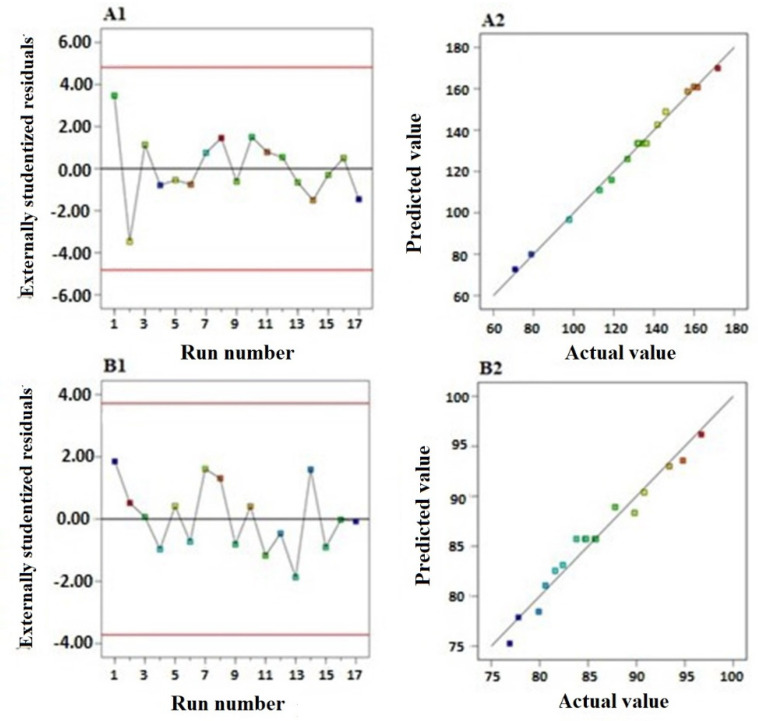
Figure 1
Figure 1
The diagnostic plots for vesicle size: (A1) externally studentized residuals vs. run number plot and (A2) predicted vs. actual values plot. The diagnostic plots for the entrapment efficiency of SMV-EMLs: (B1) externally studentized residuals vs. run number plot and (B2) predicted vs. actual values plot.
Figure 2
Figure 2
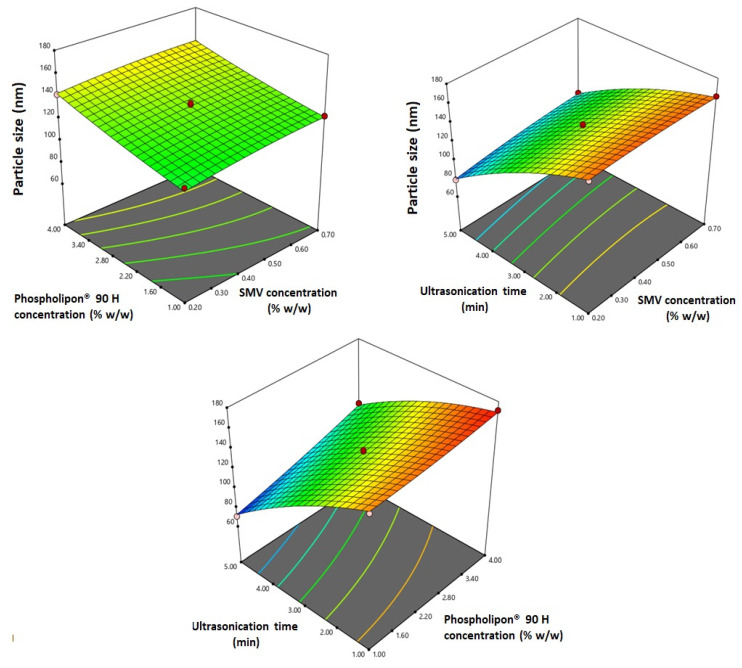
Response 3D-plots for the effect of SMV concentration (X1), Phospholipon® 90 H (X2), and ultrasonication time (X3) on the vesicle size of SMV-EMLs.
Figure 3
Figure 3
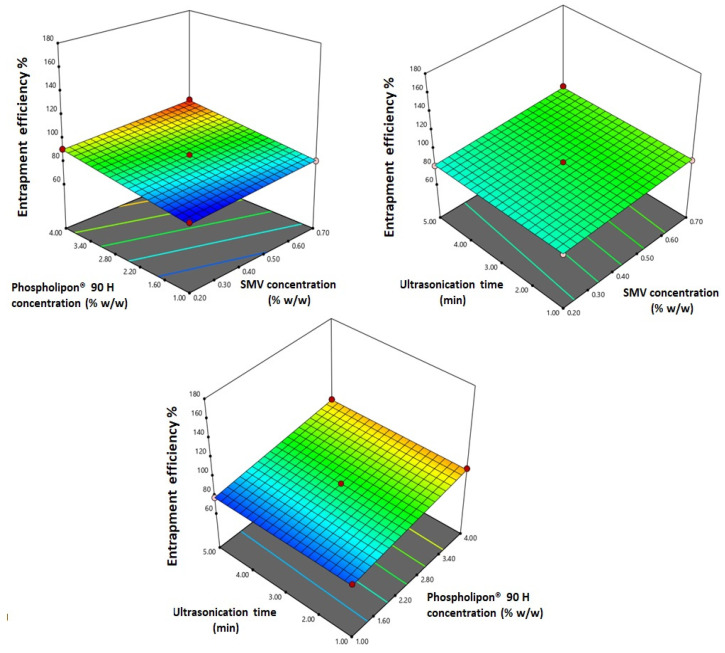
Response 3D-plots for the effect of SMV concentration (X1), Phospholipon® 90 H (X2), and ultrasonication time (X3) on the entrapment efficiency of SMV-EMLs.
Figure 4
Figure 4
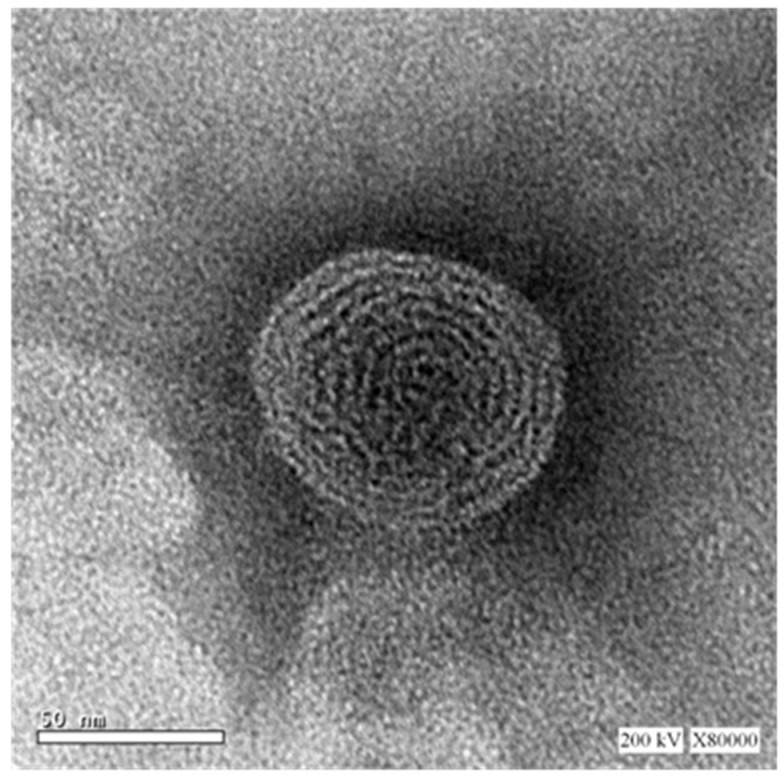
TEM of optimized SMV-EMLs (80,000× magnification).
Figure 5
Figure 5
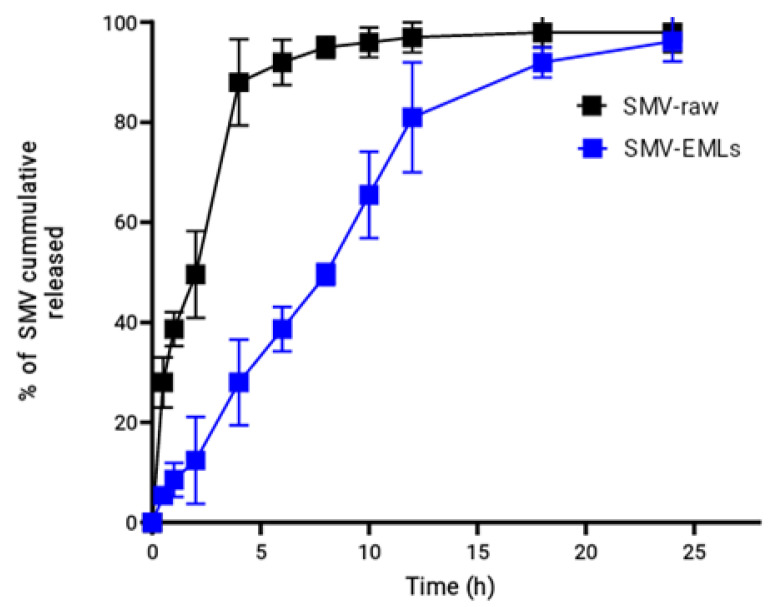
In vitro release profile of optimized SMV-EMLs in PBS (pH 7.4) containing Tween 80 (0.1%) at 37 ± 0.5 °C.
Figure 6
Figure 6
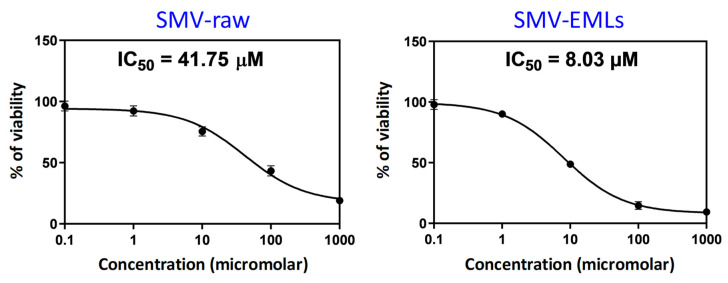
IC50 of the SMV-raw and SMV-EMLs in the MCF-7 cells. Data are the mean of 3 independent experiments.
Figure 7
Figure 7
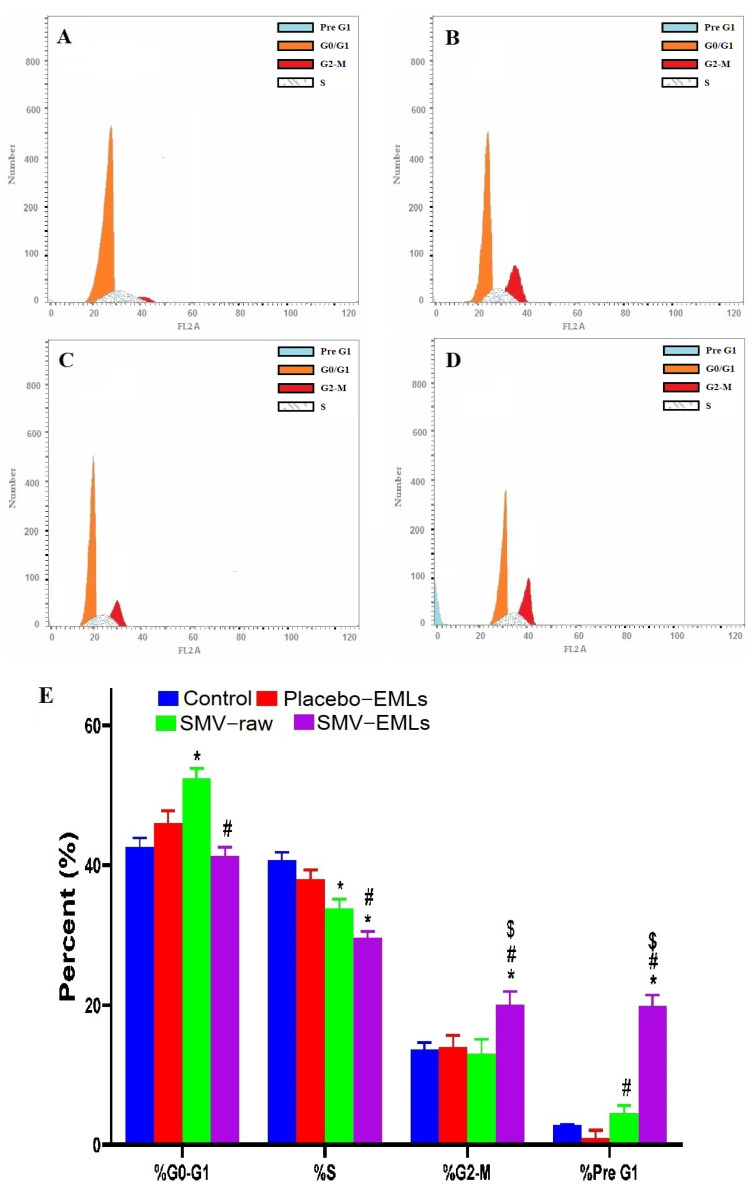
Impact of Placebo-EMLs, SMV-raw, or optimized SMV-EMLs treatments on MCF-7 cell cycle phases. (A) Control, (B) Placebo-EMLs, (C) SMV-raw, (D) SMV-EMLs, and (E) graphical presentation of each phase. * Significantly different vs. Control (p < 0.05); # Significantly different vs. Placebo-EMLs (p < 0.05); $ Significantly different vs. SMV-raw (p < 0.05).
Figure 8
Figure 8
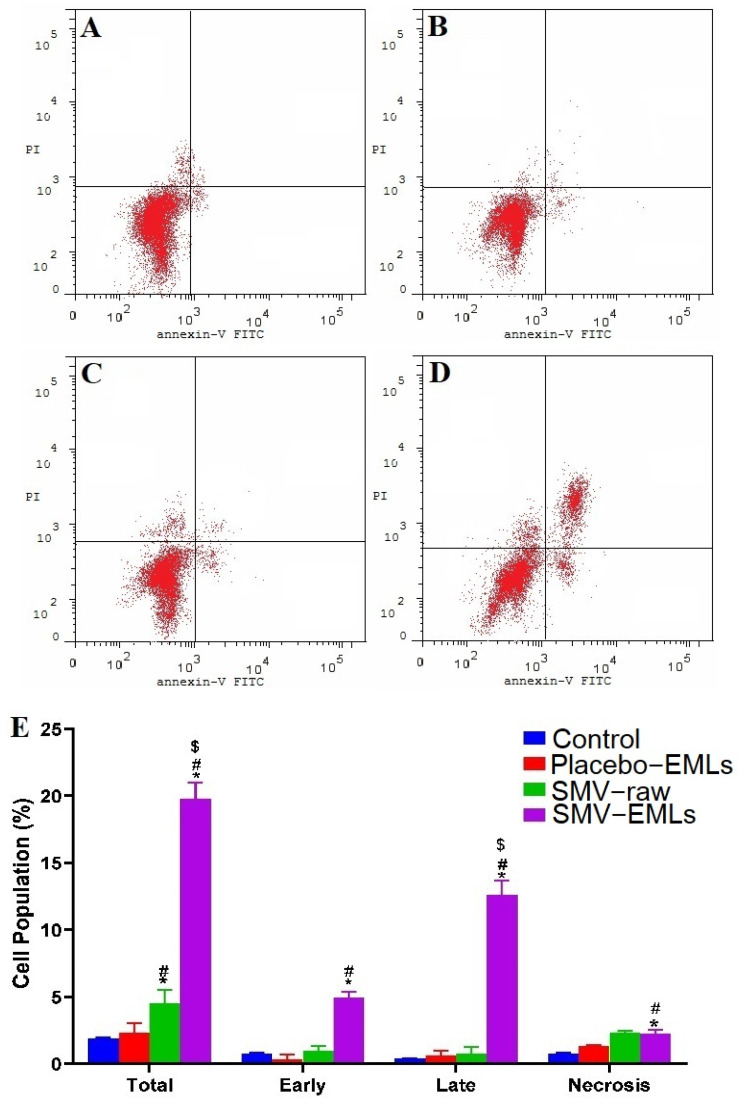
Impact of Placebo-EMLs, SMV-raw, or optimized SMV-EMLs treatments on the annexin-V FITC positive-staining of MCF-7 cells. (A) Control, (B) Placebo-EMLs, (C) SMV-raw, (D) SMV-EMLs, and (E) graphical presentation of apoptosis + necrosis (total), early and late stages of apoptosis, and necrosis. * Significantly different vs. Control (p < 0.05); # Significantly different vs. Placebo-EMLs (p < 0.05); $ Significantly different vs. SMV-raw (p < 0.05).
Figure 9
Figure 9
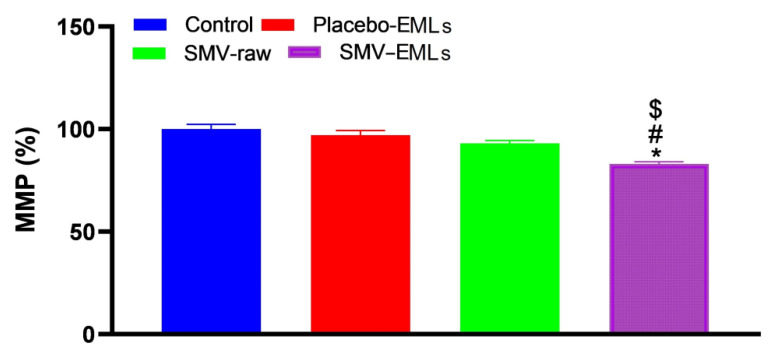
Impact of Placebo-EMLs, SMV-raw, or optimized SMV-EMLs treatments on MMP of MCF-7 cells. Values were normalized with respect to control untreated MCF-7 cells and are expressed as the percent variation of MMP. * Significantly different vs. Control (p < 0.05); # Significantly different vs. Placebo-EMLs (p < 0.05); $ Significantly different vs. SMV-raw (p < 0.05).
Figure 10
Figure 10
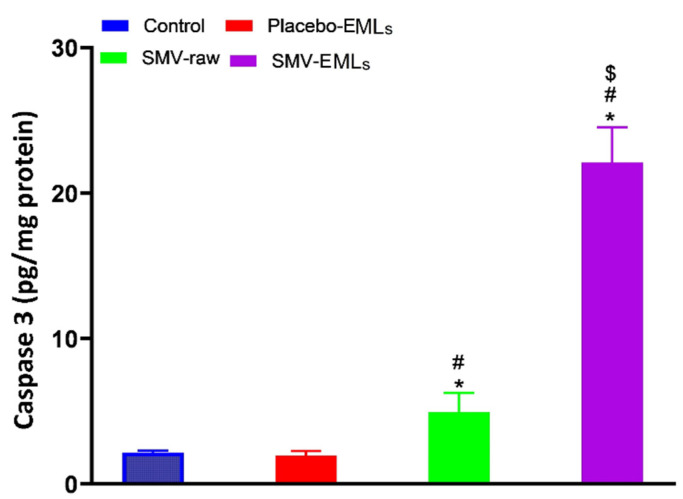
Modulation of Placebo-EMLs, SMV-raw, or optimized SMV-EMLs treatments on caspase-3 enzyme concentrations in MCF-7 cells. Values were normalized with respect to control untreated MCF-7 cells and are expressed as the percent variation of caspase 3. * Significantly different vs. Control (p < 0.05); # Significantly different vs. Placebo-EMLs (p < 0.05); $ Significantly different vs. SMV-raw (p < 0.05).
Figure 11
Figure 11
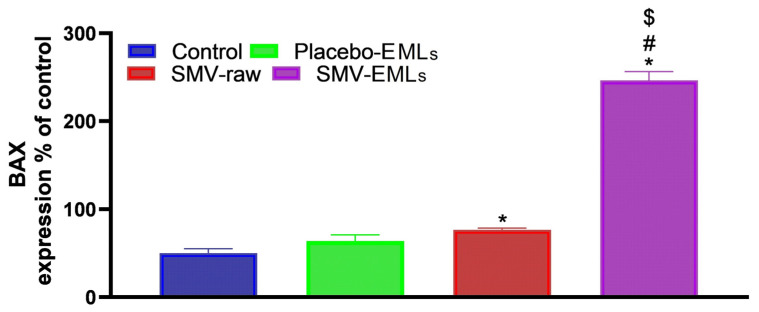
Modulation of Placebo-EMLs, SMV-raw, or SMV-EMLs treatments on Bax protein concentrations in MCF-7 cells. * Significantly different vs. Control (p < 0.05); # Significantly different vs. Placebo-EMLs (p < 0.05); $ Significantly different vs. SMV-raw (p < 0.05).

References

    1. Saslow D., Hannan J., Osuch J., Alciati M.H., Baines C., Barton M., Bobo J.K., Coleman C., Dolan M., Gaumer G., et al. Clinical breast examination: Practical recommendations for optimizing performance and reporting. CA Cancer J. Clin. 2004;54:327–344. doi: 10.3322/canjclin.54.6.327. - DOI - PubMed
    1. Gajjar A., Reaman G.H., Racadio J.M., Smith F.O. Brain Tumors in Children. Springer; Berlin/Heidelberg, Germany: 2018.
    1. Waks A.G., Winer E.P. Breast cancer treatment: A review. JAMA. 2019;321:288–300. doi: 10.1001/jama.2018.19323. - DOI - PubMed
    1. Ohri N., Rapkin B.D., Guha C., Kalnicki S., Garg M. Radiation therapy noncompliance and clinical outcomes in an urban academic cancer center. Int. J. Radiat. Oncol. Biol. Phys. 2016;95:563–570. doi: 10.1016/j.ijrobp.2016.01.043. - DOI - PubMed
    1. Hershman D.L., Kushi L.H., Shao T., Buono D., Kershenbaum A., Tsai W.Y., Fehrenbacher L., Gomez S.L., Miles S., Neugut A.I. Early discontinuation and nonadherence to adjuvant hormonal therapy in a cohort of 8,769 early-stage breast cancer patients. J. Clin. Oncol. 2010;28:4120–4128. doi: 10.1200/JCO.2009.25.9655. - DOI - PMC - PubMed

Publication types