


The Effects of Cross-Legged Sitting on the Trunk and Pelvic Angles and Gluteal Pressure in People with and without Low Back Pain
- PMID: 32605016
- PMCID: PMC7370107
- DOI: 10.3390/ijerph17134621
The Effects of Cross-Legged Sitting on the Trunk and Pelvic Angles and Gluteal Pressure in People with and without Low Back Pain
Abstract
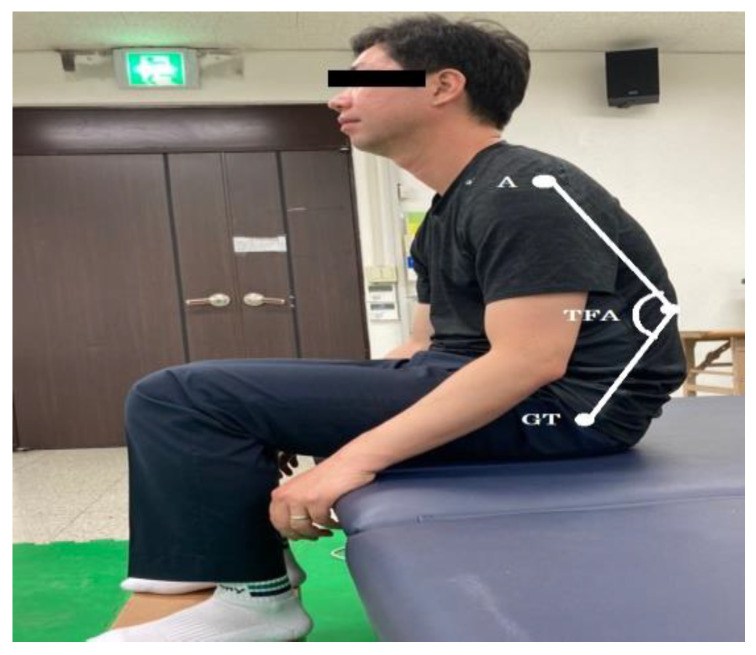
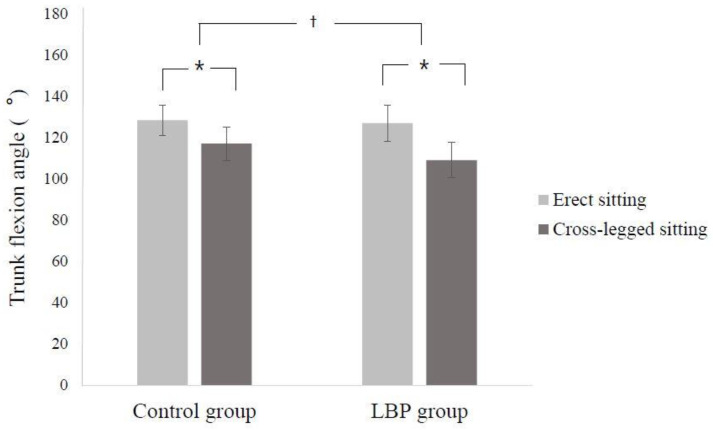
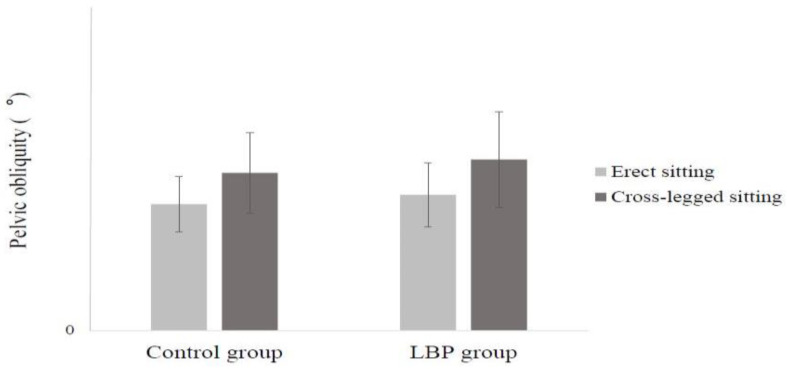
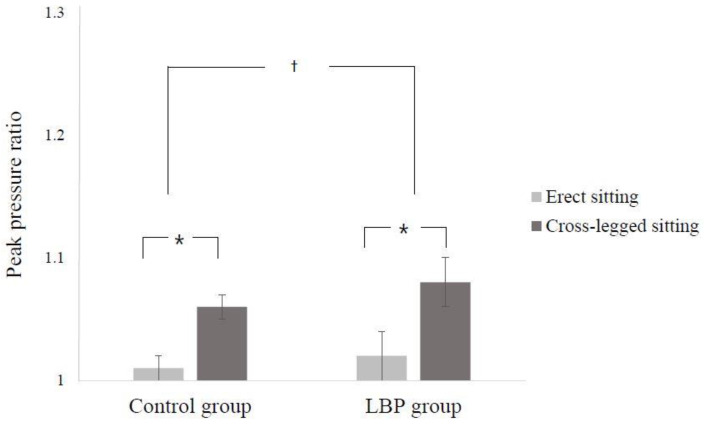
The purpose of this study was to investigate the effects of cross-legged sitting on the trunk flexion angle, pelvic obliquity, and gluteal pressure of subjects with and without low back pain (LBP). The study subjects were 30 LBP patients and 30 healthy individuals. They were instructed to sit on a chair, the height of which was adjustable, so that their knee and hip joints were bent at 90°. All subjects were asked to perform two sitting postures: erect sitting and cross-legged sitting. Trunk flexion angle and pelvic obliquity were measured using a three-dimensional motion-capture system, and gluteal pressure was measured using a force plate. Compared to erect sitting, cross-legged sitting showed a significantly lower trunk flexion angle and greater pelvic obliquity in both groups. Compared to healthy subjects, the patients with LBP had lower trunk flexion angles and greater gluteal pressure asymmetry during cross-legged sitting. The pelvic obliquity was greater in the cross-legged sitting posture than in the erect sitting posture, but there was no difference between the groups. We found that the trunk became more slouched in the cross-legged sitting posture than in the erect sitting posture, and this tendency was more pronounced in patients with LBP.
Keywords: cross-legged sitting; gluteal pressure; pelvic obliquity; trunk flexion angle.
Conflict of interest statement
The authors have declared that no competing interests exist.
Figures
References
-
- Neumann D.A. Kinesiology of the Musculoskeletal System: Foundations for Physical Rehabilitation. Mosby; St. Louis, MO, USA: 2002.
Publication types
MeSH terms
LinkOut - more resources
Full Text Sources
Miscellaneous
