


Quantitative bone imaging biomarkers to diagnose temporomandibular joint osteoarthritis
- PMID: 32605824
- PMCID: PMC7765741
- DOI: 10.1016/j.ijom.2020.04.018
Quantitative bone imaging biomarkers to diagnose temporomandibular joint osteoarthritis
Abstract
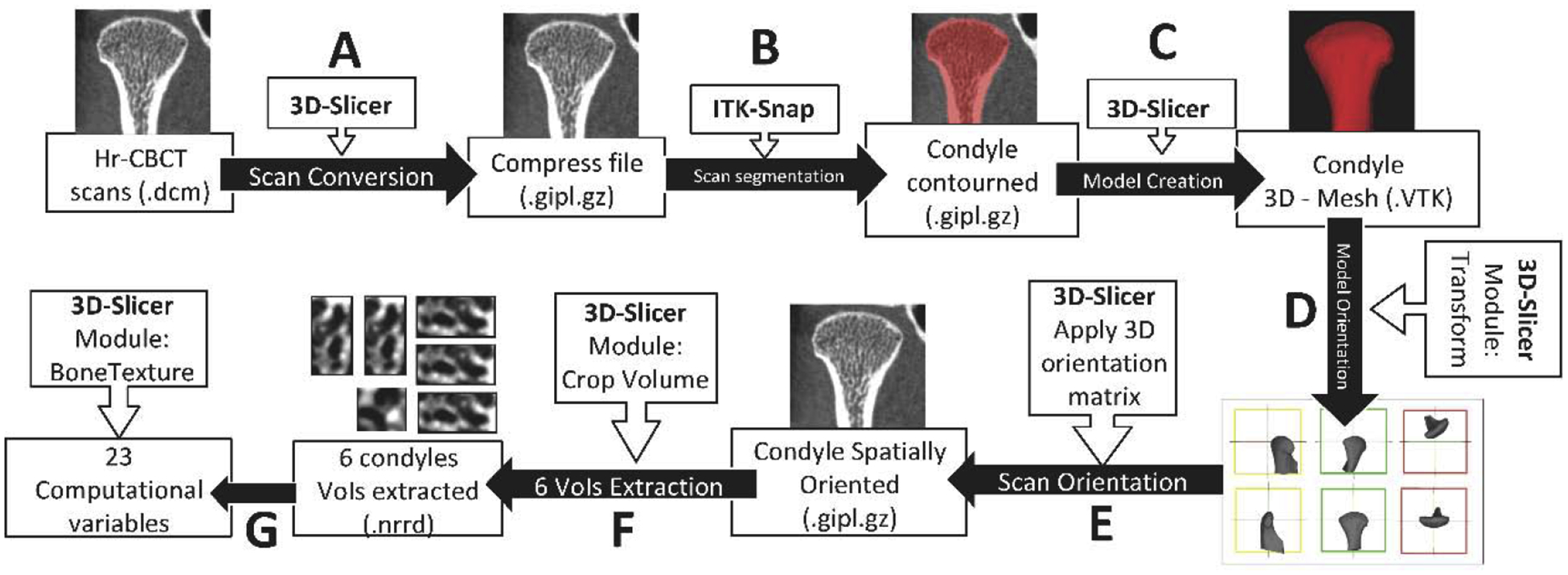
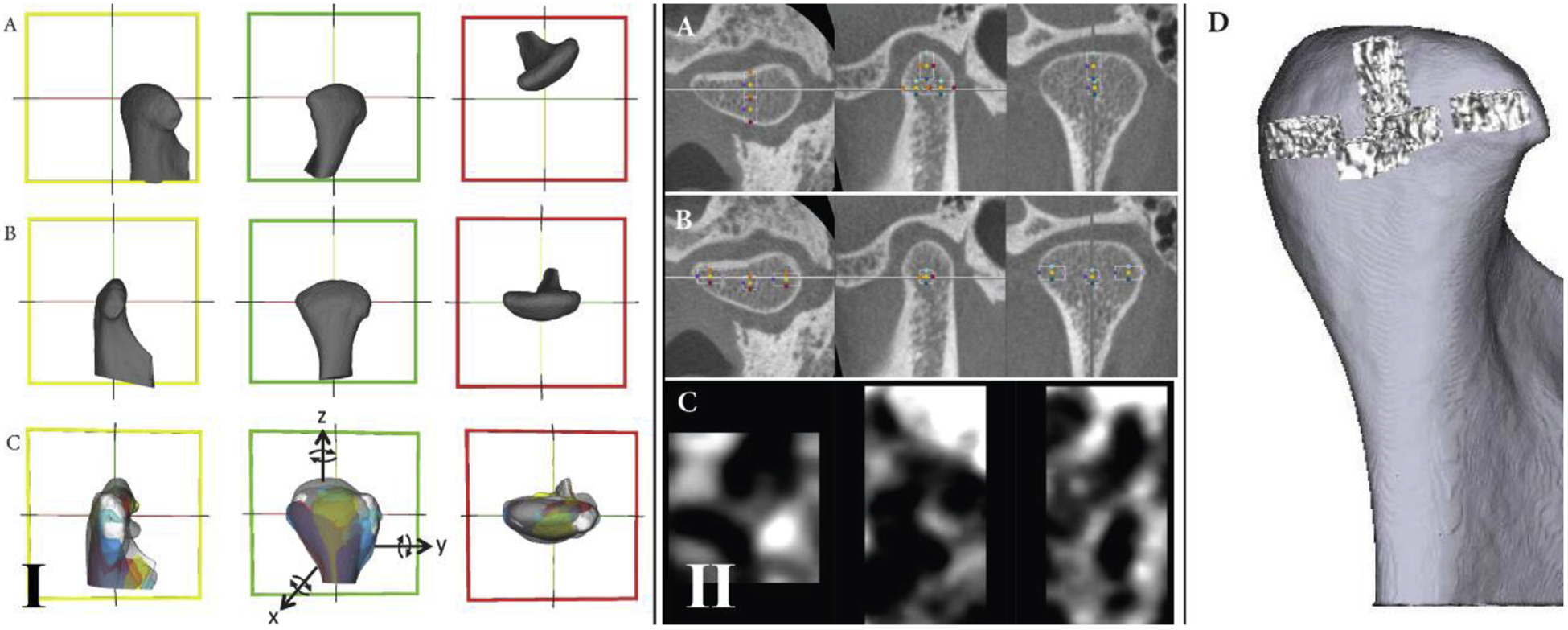
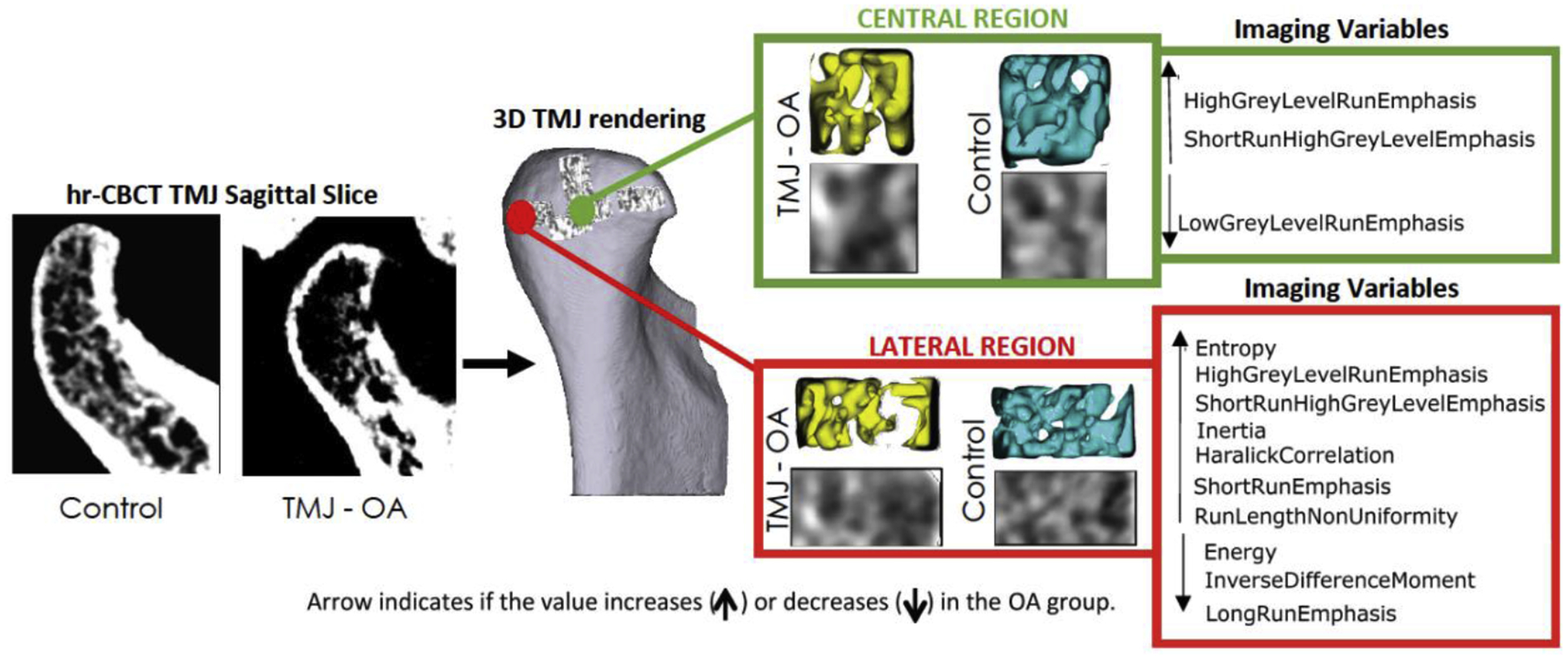
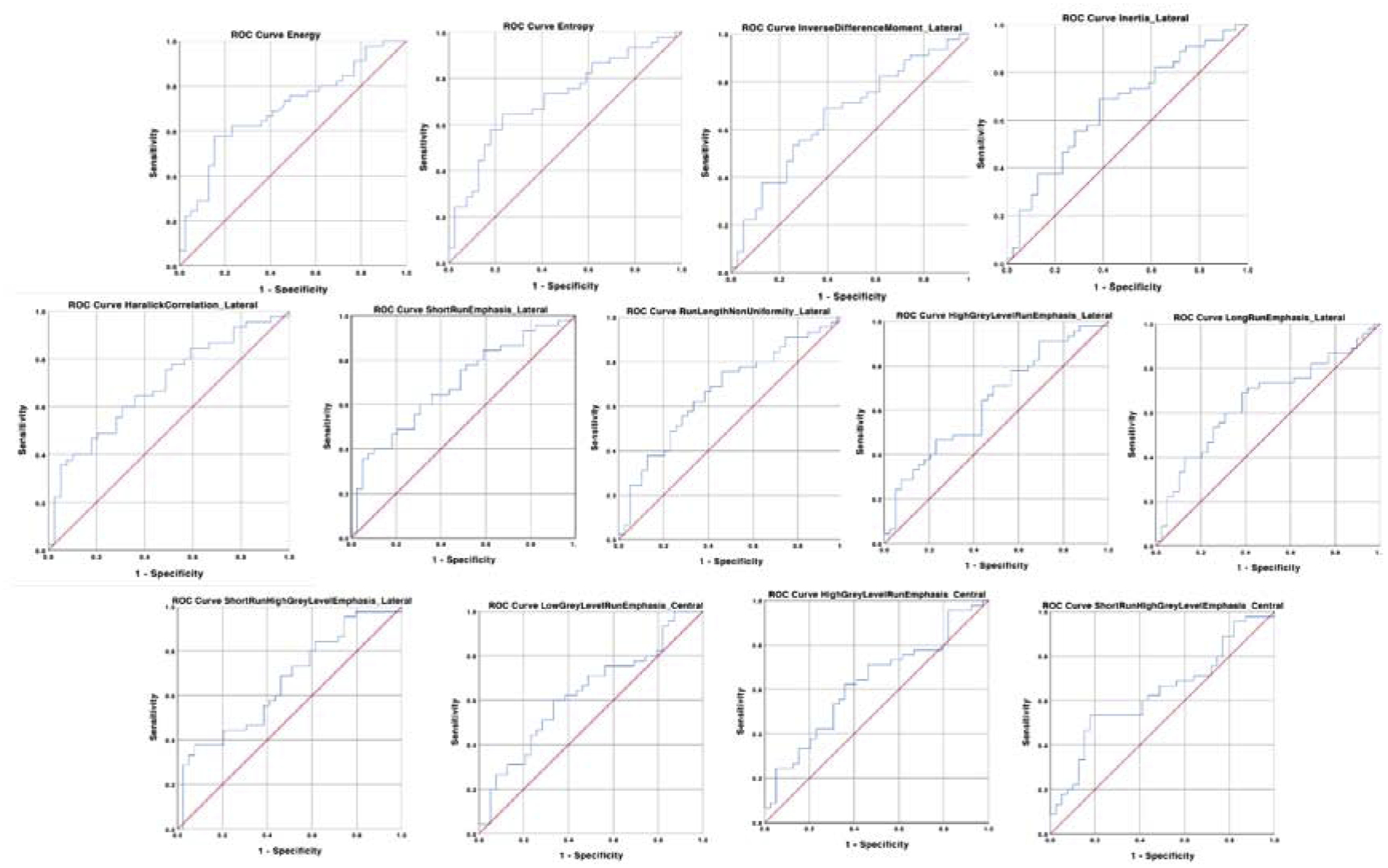
Bone degradation of the condylar surface is seen in temporomandibular joint osteoarthritis (TMJ OA); however, the initial changes occur in the subchondral bone. This cross-sectional study was performed to evaluate 23 subchondral bone imaging biomarkers for TMJ OA. The sample consisted of high-resolution cone beam computed tomography scans of 84 subjects, divided into two groups: TMJ OA (45 patients with TMJ OA) and control (39 asymptomatic subjects). Six regions of each mandibular condyle scan were extracted for computation of five bone morphometric and 18 grey-level texture-based variables. The groups were compared using the Mann-Whitney U-test, and the receiver operating characteristics (ROC) curve was determined for each variable that showed a statically significance difference. The results showed statistically significant differences in the subchondral bone microstructure in the lateral and central condylar regions between the control and TMJ OA groups (P< 0.05). The area under the ROC curve (AUC) for these variables was between 0.620 and 0.710. In conclusion, 13 imaging bone biomarkers presented an acceptable diagnostic performance for the diagnosis of TMJ OA, indicating that the texture and geometry of the subchondral bone microarchitecture may be useful for quantitative grading of the disease.
Keywords: biomarkers; cone beam computed tomography; osteoarthritis; temporomandibular joint.
Copyright © 2020 International Association of Oral and Maxillofacial Surgeons. Published by Elsevier Inc. All rights reserved.
Conflict of interest statement
Competing interests
The authors declare that there is no conflict of interest regarding the publication of this article.
Figures
References
-
- Schiffman E, Ohrbach R, Truelove E, et al. Diagnostic criteria for temporomandibular disorders (DC/TMD) for clinical and research applications: recommendations of the International RDC/TMD Consortium Network and Orofacial Pain Special Interest Group. J Oral Facial Pain Headache 2014: 8: 6–27. doi: 10.11607/jop.1151 - DOI - PMC - PubMed
MeSH terms
Substances
Grants and funding
LinkOut - more resources
Full Text Sources
Other Literature Sources
Medical
