Costing Analysis of a Pilot Community Health Worker Program in Rural Nepal
- PMID: 32606093
- PMCID: PMC7326517
- DOI: 10.9745/GHSP-D-19-00393
Costing Analysis of a Pilot Community Health Worker Program in Rural Nepal
Abstract
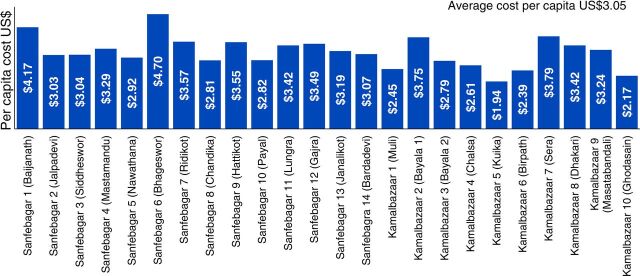
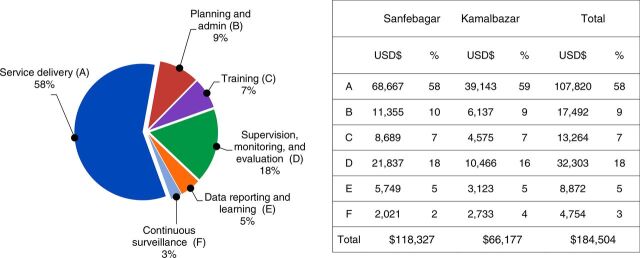
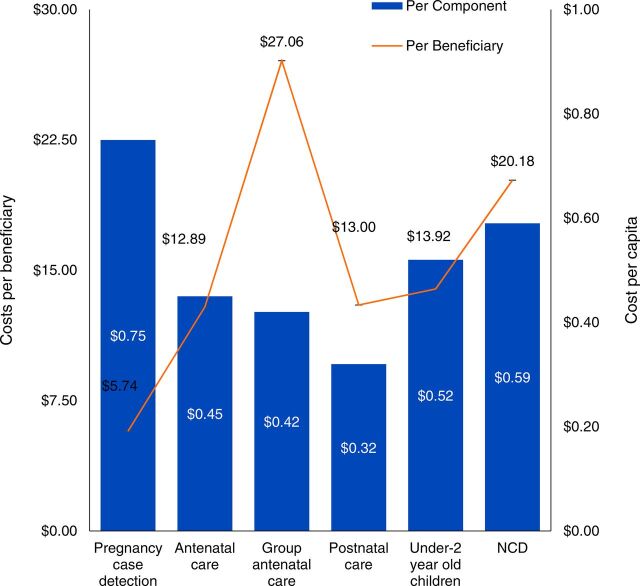
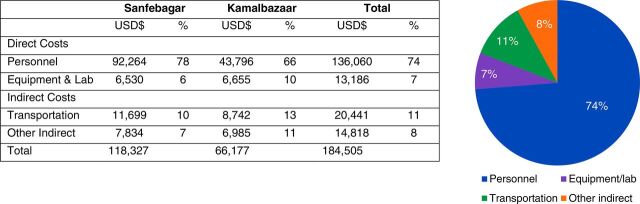
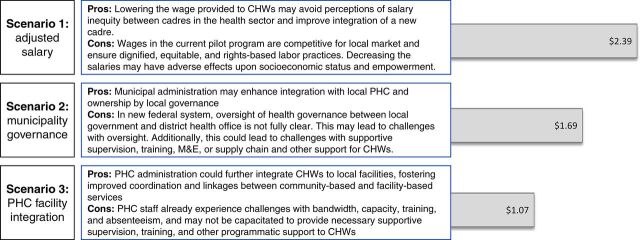
Community health workers (CHWs) are essential to primary health care systems and are a cost-effective strategy to achieve the Sustainable Development Goals (SDGs). Nepal is strongly committed to universal health coverage and the SDGs. In 2017, the Nepal Ministry of Health and Population partnered with the nongovernmental organization Nyaya Health Nepal to pilot a program aligned with the 2018 World Health Organization guidelines for CHWs. The program includes CHWs who: (1) receive regular financial compensation; (2) meet a minimum education level; (3) are well supervised; (4) are continuously trained; (5) are integrated into local primary health care systems; (6) use mobile health tools; (7) have consistent supply chain; (8) live in the communities they serve; and (9) provide service without point-of-care user fees. The pilot model has previously demonstrated improved institutional birth rate, antenatal care completion, and postpartum contraception utilization. Here, we performed a retrospective costing analysis from July 16, 2017 to July 15, 2018, in a catchment area population of 60,000. The average per capita annual cost is US$3.05 (range: US$1.94 to US$4.70 across 24 villages) of which 74% is personnel cost. Service delivery and administrative costs and per beneficiary costs for all services are also described. To address the current discourse among Nepali policy makers at the local and federal levels, we also present 3 alternative implementation scenarios that policy makers may consider. Given the Government of Nepal's commitment to increase health care spending (US$51.00 per capita) to 7.0% of the 2030 gross domestic product, paired with recent health care systems decentralization leading to expanded fiscal space in municipalities, this CHW program provides a feasible opportunity to make progress toward achieving universal health coverage and the health-related SDGs. This costing analysis offers insights and practical considerations for policy makers and locally elected officials for deploying a CHW cadre as a mechanism to achieve the SDG targets.
© Nepal et al.
Figures
Comment in
-
Learning from Community Health Worker Programs, Big and Small.Glob Health Sci Pract. 2020 Jun 30;8(2):147-149. doi: 10.9745/GHSP-D-20-00244. Print 2020 Jun 30. Glob Health Sci Pract. 2020. PMID: 32614780 Free PMC article.
References
-
- Maternal Child Survival Program (MCSP). Institutionalizing Community Health: Ten Critical Principles. Recommendations outlined from: Institutionalizing Community Health Conference; March 27–30, 2017; Johannesburg, South Africa. Accessed June 4, 2020. https://www.mcsprogram.org/resource/institutionalizing-community-health-...
-
- Dahn B, Woldemariam AT, Perry H, et al. Strengthening Primary Health Care through Community Health Workers: Investment Case and Financing Recommendations. World Health Organization; 2015. Accessed June 4, 2020. https://www.who.int/hrh/news/2015/CHW-Financing-FINAL-July-15-2015.pdf
-
- World Health Organization (WHO). WHO Guideline on Health Policy and System Support to Optimize Community Health Worker Programmes. WHO; 2018. Accessed June 4, 2020. https://apps.who.int/iris/bitstream/handle/10665/275474/9789241550369-en... - PubMed
-
- Government of Nepal, Ministry of Health and Population (MOHP); New ERA; ICF International. Nepal Demographic and Health Survey 2016. MOHP; 2016. Accessed June 4, 2020. https://www.dhsprogram.com/pubs/pdf/fr336/fr336.pdf