


Migratory birds as the potential source for the transmission of Aspergillus and other fungus to Bangladesh
- PMID: 32607367
- PMCID: PMC7320803
- DOI: 10.5455/javar.2020.g427
Migratory birds as the potential source for the transmission of Aspergillus and other fungus to Bangladesh
Abstract
Objectives: Migratory birds play a major role in the transmission of pathogens globally, but still their role in the transmission of fungi in Bangladesh is not known. The present study was carried out for the isolation and molecular detection of fungi including Aspergillus from migratory birds traveling to Bangladesh.
Materials and methods: A total of 50 fecal samples were collected from BaojaniBaor, Magura, and areas close to Jahangirnagar University, Savar. The isolation of fungus was based on culture on Potato Dextrose Agar (PDA), followed by staining, morphology, and molecular detection using polymerase chain reaction (PCR).
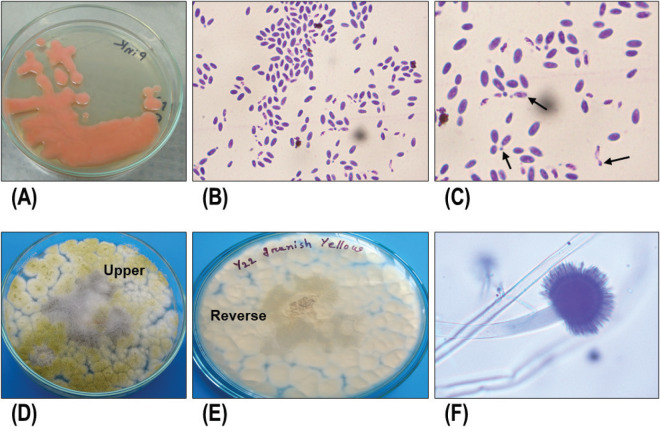
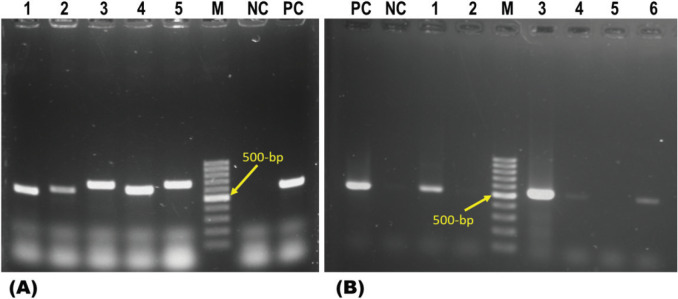
Results: Among 50 samples, 40 showed positive for fungal growth on PDA, of which 30 yield only yeast-like colonies, five only molds, and five yielded both yeast and molds. The isolated molds produced various pigmented colonies, namely, black, whitish, grayish, olive green, and yellow. Among 10 molds, six were confirmed as fungi by PCR using genus-specific primers such as ITS1 and ITS4. Later, of these six fungi, five were confirmed as Aspergillus by PCR with primers such as ASAP1 and ASAP2 specific for Aspergillus genus. Therefore, the overall occurrence of Aspergillus was 10% (5/50). PCR specific for Aspergillus fumigatus and Aspergillus niger failed to produce specific PCR amplicon, suggesting that the isolated Aspergillus belongs to other groups.
Conclusion: This is the first report describing the isolation and molecular detection of Aspergillus from fecal samples of migratory birds in Bangladesh. The present findings confirm that migratory birds are potential source for Aspergillus and other fungus in Bangladesh.
Keywords: Aspergillus spp; Migratory birds; PCR; mold; transmission; yeast.
Copyright: © Journal of Advanced Veterinary and Animal Research.
Conflict of interest statement
The authors declare that there is no conflict of interest in the publication of this article.
Figures
References
-
- Claassen AH. World Wide Fund (WWF) for Nature. Phnom Penh, Cambodia: 2004. Abundance, distribution, and reproductive success of sandbar nesting birds below the Yali Falls hydropower dam on the Sesan River, Northeastern Cambodia; pp. 1–45.
-
- Siddiqui KU, Islam MA, Kabir SM, Ahmad M, Ahmed AT, Rahman AK, et al. Vol. 26 Birds. Dhaka, Bangladesh: Asiatic Society of Bangladesh; 2008. Encyclopedia of flora and fauna of Bangladesh; pp. 1–662.
-
- Zurell D, Graham CH, Gallien L, Thuiller W, Zimmermann NE. Long-distance migratory birds threatened by multiple independent risks from global change. Nat Clim Chang. 2018;8(11):992–6. https://doi.org/10.1038/s41558-018-0312-9. - PMC - PubMed
-
- Alfonzo A, Francesca N, Sannino C, Settanni L, Moschetti G. Filamentous fungi transported by birds during migration across the Mediterranean sea. Curr Microbiol. 2013;66(3):236–42. https://doi.org/10.1007/s00284-012-0262-9. - PubMed
-
- Somveille M, Rodrigues AS, Manica A. Why do birds migrate? A macroecological perspective. Glob Ecol Biogeogr. 2015;24(6):664–74. https://doi.org/10.1111/geb.12298.
LinkOut - more resources
Full Text Sources
Research Materials
Miscellaneous