


KVA-D-88, a Novel Preferable Phosphodiesterase 4B Inhibitor, Decreases Cocaine-Mediated Reward Properties in Vivo
- PMID: 32609488
- PMCID: PMC8383802
- DOI: 10.1021/acschemneuro.0c00170
KVA-D-88, a Novel Preferable Phosphodiesterase 4B Inhibitor, Decreases Cocaine-Mediated Reward Properties in Vivo
Abstract
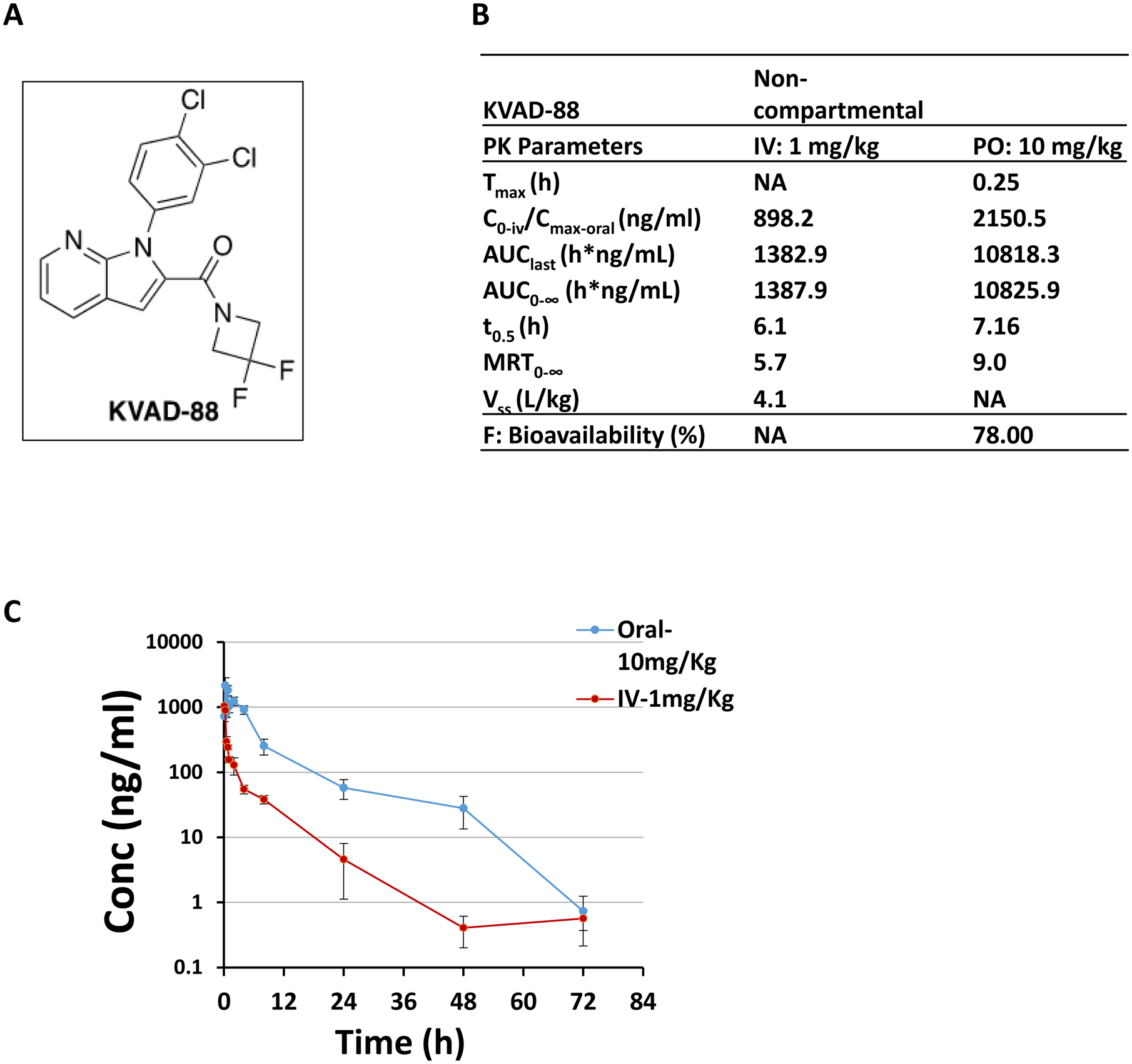
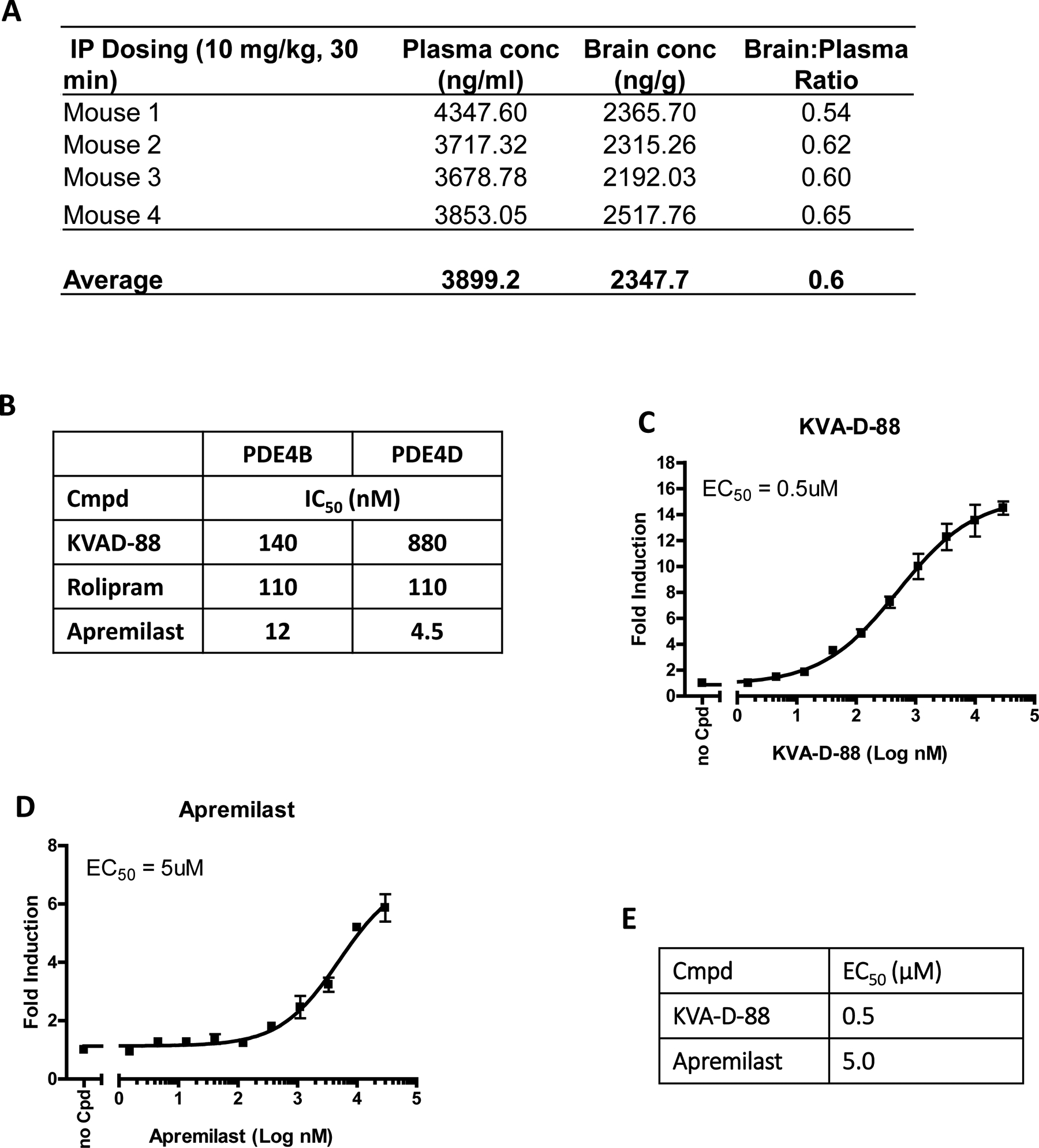
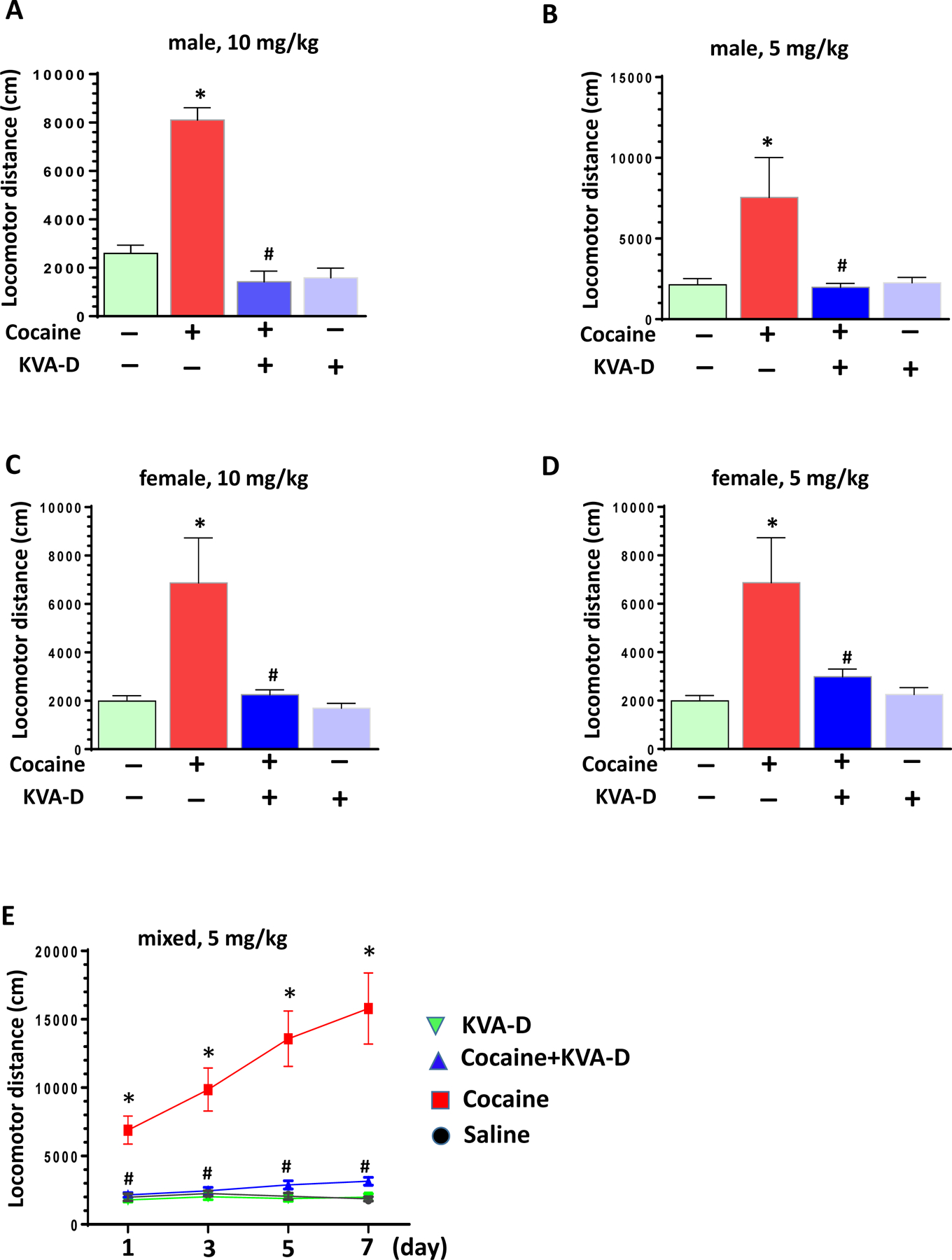
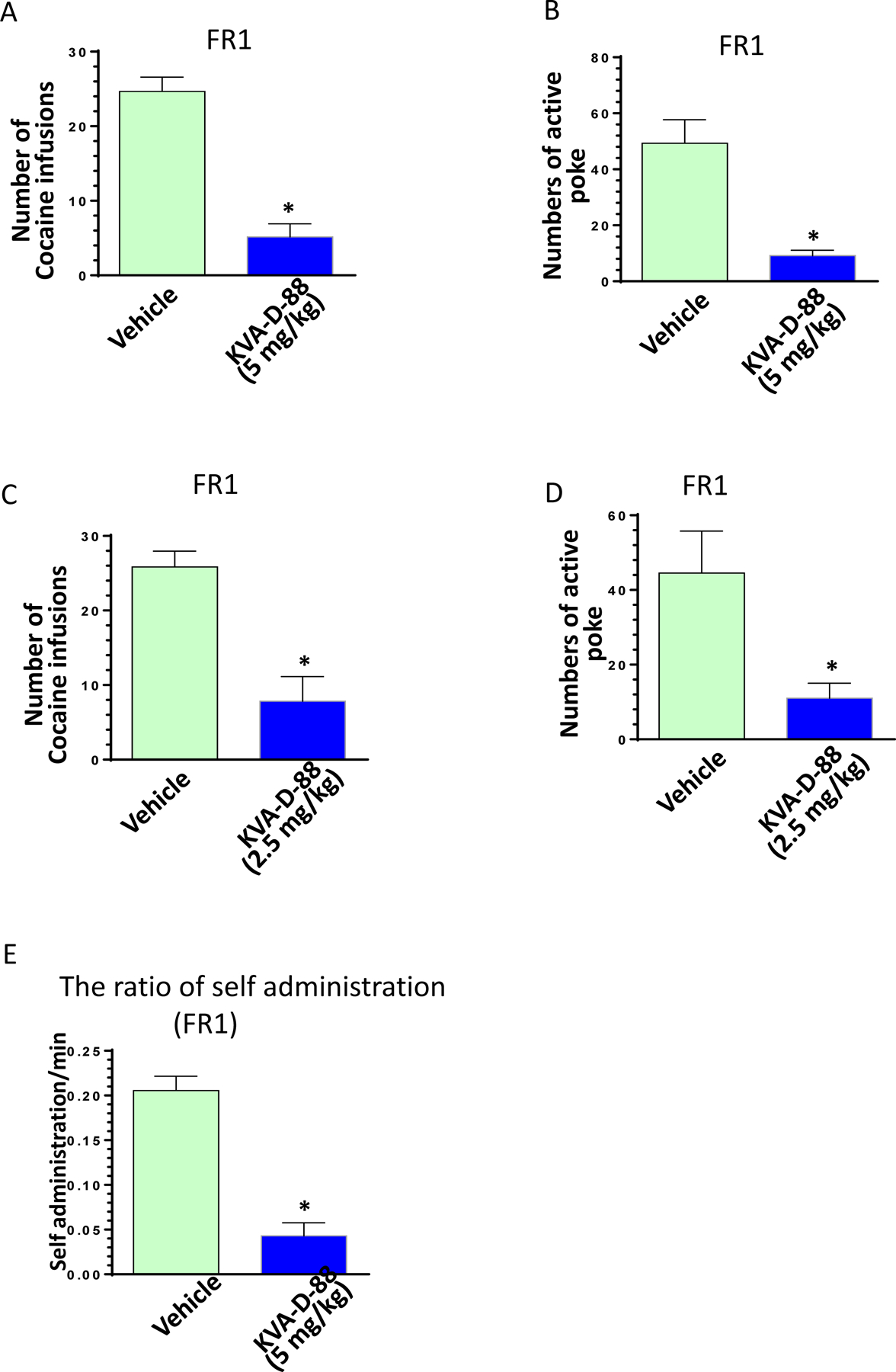
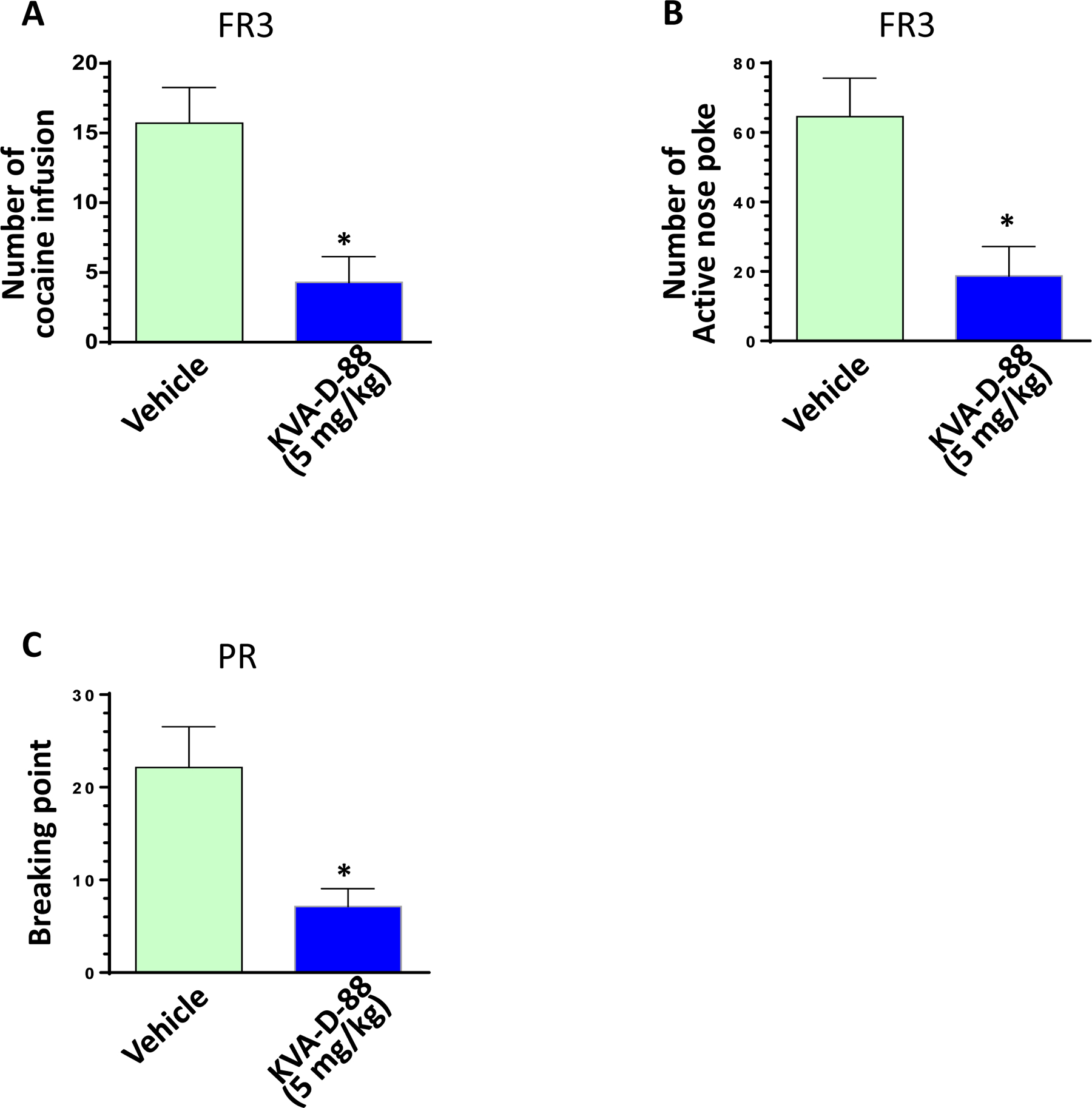
Cocaine addiction remains a major public concern throughout the world especially in developed countries. In the last three decades, significant achievements have led to a greater understanding of the signaling pathways involved in the development of cocaine addiction; however, there are no FDA-approved treatments available to reverse or block this brain disease due to either the unsatisfactory therapeutic efficacy or severe side effects. Previous studies have demonstrated that chronic exposure to cocaine elevates levels of cyclic AMP (cAMP) as a neuroadaptative response in reward-related brain regions. Phosphodiesterase 4 (PDE4) inhibitors, which elevate cAMP levels, have been shown to block cocaine-mediated behavioral changes related to psychoactive and reinforcing properties. Unfortunately, previously studied PDE4 inhibitors induce severe side-effects, which limit their clinical usage. In this study, we identified a novel PDE4B inhibitor, KVA-D-88, with an improved selectivity profile compared to previous compounds (e.g., rolipram). Pharmacokinetic studies have shown that this compound is brain penetrant and preferably acts on PDE4B compared to PDE4D in vitro, alluding to less unwanted side effects with KVA-D-88 in vivo. Interestingly, pretreatment with KVA-D-88 significantly inhibited cocaine-induced hyperlocomotor activity. In cocaine self-administering mice with differential schedules, KVA-D-88 strikingly decreased the number of active nose-pokes and cocaine infusions and reduced the break point. Taken together, our findings demonstrate that this novel PDE4 inhibitor, KVA-D-88, could inhibit cocaine-mediated rewarding effects implying its potential clinical usage for cocaine addiction.
Keywords: PDE4 inhibitors; cAMP; cocaine; drug addiction; locomotor activity; self-administration.
Conflict of interest statement
Competing financial interests:
The authors declare no competing financial interests.
Figures
References
-
- Peacock A; Leung J; Larney S; Colledge S; Hickman M; Rehm J; Giovino GA; West R; Hall W; Griffiths P; Ali R; Gowing L; Marsden J; Ferrari AJ; Grebely J; Farrell M; Degenhardt L, Global statistics on alcohol, tobacco and illicit drug use: 2017 status report. Addiction 2018, 113 (10), 1905–1926. - PubMed
-
- Milano G; Saenz E; Clark N; Busse A; Gale J; Campello G; Mattfeld E; Maalouf W; Heikkila H; Martelli A; Morales B; Gerra G, Report on the International Workshop on Drug Prevention and Treatment in Rural Settings Organized by United Nation Office on Drugs and Crime (UNODC) and World Health Organization (WHO). Subst Use Misuse 2017, 52 (13), 1801–1807. - PubMed
-
- Buchholz J; Saxon AJ, Medications to treat cocaine use disorders: current options. Curr Opin Psychiatry 2019, 32 (4), 275–281. - PubMed
-
- Hansen RT 3rd; Zhang HT, The Past, Present, and Future of Phosphodiesterase-4 Modulation for Age-Induced Memory Loss. Adv Neurobiol 2017, 17, 169–199; - PubMed
- Bolger GB, The PDE4 cAMP-Specific Phosphodiesterases: Targets for Drugs with Antidepressant and Memory-Enhancing Action. Adv Neurobiol 2017, 17, 63–102. - PubMed
-
- Lugnier C, Cyclic nucleotide phosphodiesterase (PDE) superfamily: a new target for the development of specific therapeutic agents. Pharmacol Ther 2006, 109 (3), 366–98; - PubMed
- Zhang HT, Cyclic AMP-specific phosphodiesterase-4 as a target for the development of antidepressant drugs. Curr Pharm Des 2009, 15 (14), 1688–98. - PubMed
Publication types
MeSH terms
Substances
Grants and funding
LinkOut - more resources
Full Text Sources
