Delayed Diagnosis of Hidradenitis Suppurativa and Its Effect on Patients and Healthcare System
- PMID: 32610312
- PMCID: PMC7592906
- DOI: 10.1159/000508787
Delayed Diagnosis of Hidradenitis Suppurativa and Its Effect on Patients and Healthcare System
Abstract
Background: Hidradenitis suppurativa (HS) is a neglected chronic inflammatory disease with long delay in diagnosis. Besides pain, purulent discharge, and destruction of skin architecture, HS patients experience metabolic, musculoskeletal, and psychological disorders.
Objectives: To determine the delay in HS diagnosis and its consequences for patients and the healthcare system.
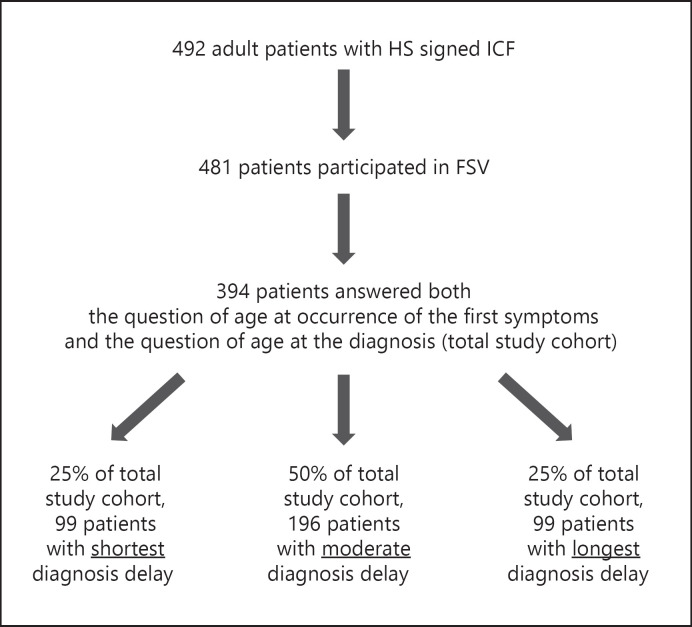
Methods: This was a prospective, multicenter, epidemiologic, non-interventional cross-sectional trial carried out in Germany and based on self-reported questionnaires and medical examinations performed by dermatologists. In total, data of 394 adult HS patients were evaluated.
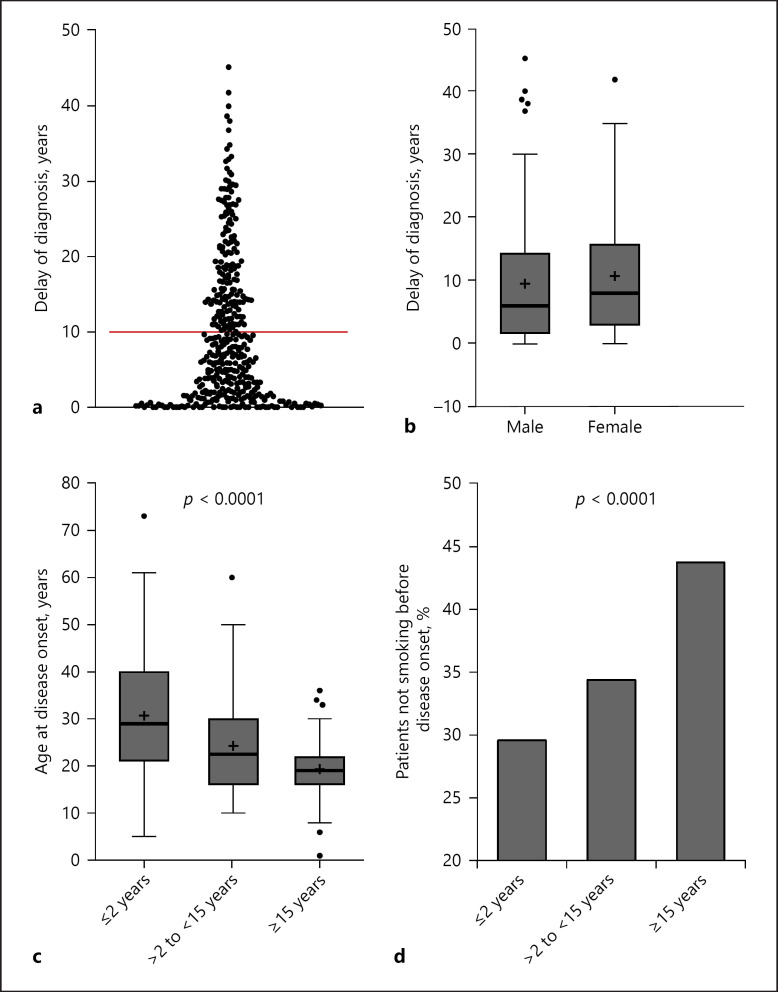
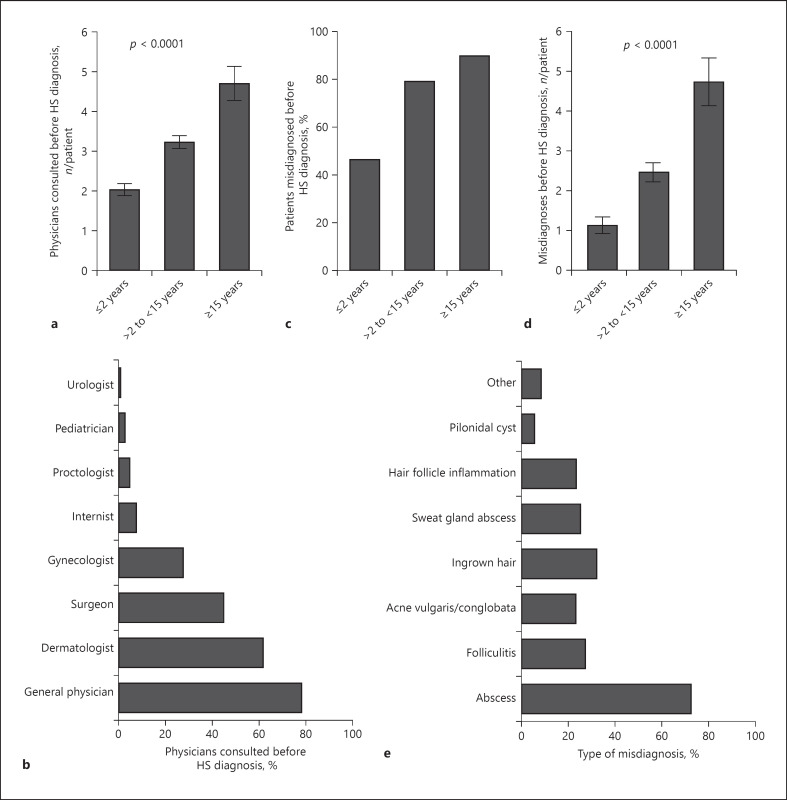
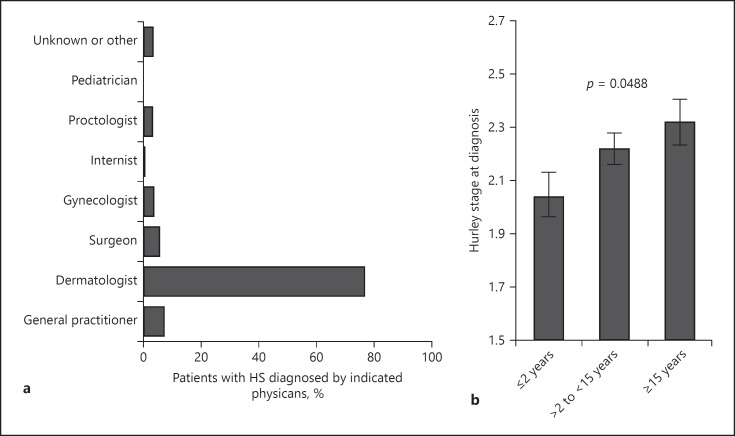
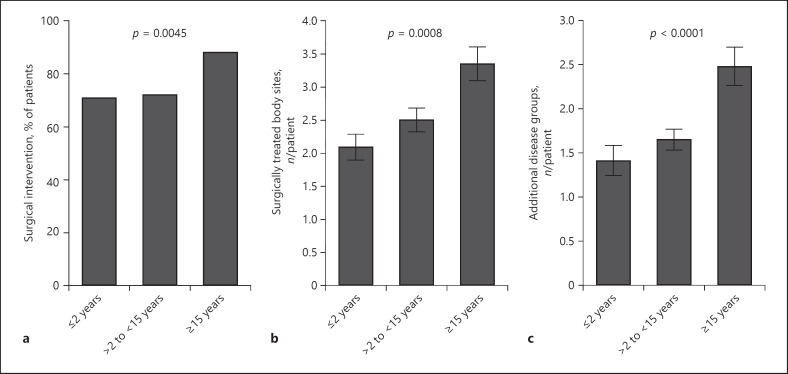
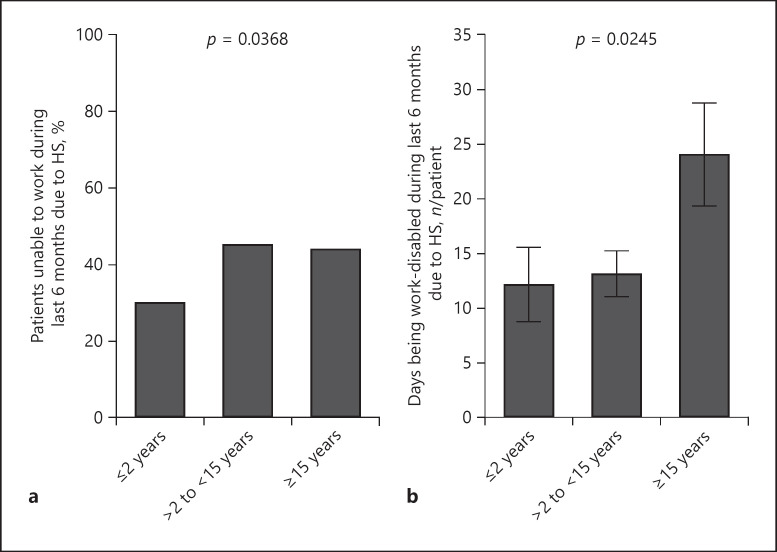
Results: The average duration from manifestation of first symptoms until HS diagnosis was 10.0 ± 9.6 (mean ± SD) years. During this time, HS patients consulted on average more than 3 different physicians - most frequently general practitioners, dermatologists, surgeons, gynecologists - and faced more than 3 misdiagnoses. Diagnosis delay was longer in younger and non-smoking patients. In most cases, HS was correctly diagnosed by dermatologists. The longer the delay of diagnosis, the greater the disease severity at diagnosis. Delayed HS diagnosis was also associated with an increased number of surgically treated sites, concomitant diseases, and days of work missed.
Conclusion: This study demonstrates an enormous delay in the diagnosis of HS, which results in more severe disease. It also shows for the first time that a delay in diagnosis of a chronic inflammatory disease leads to a higher number of concomitant systemic disorders. In addition to the impaired health status, delayed diagnosis of HS was associated with impairment of the professional life of affected people.
Keywords: Acne inversa; Comorbidity; Diagnosis; Healthcare system; Hidradenitis suppurativa.
© 2020 The Author(s) Published by S. Karger AG, Basel.
Conflict of interest statement
G.K. has received honoraria for participation in advisory boards, in clinical trials, and/or as speaker from AbbVie Deutschland GmbH & Co. KG, Abbott GmbH, Actelion Pharmaceuticals Ltd., Basilea Pharmaceutica Ltd., Bayer AG, Biogen IDEC GmbH, Celgene GmbH, Janssen-Cilag GmbH, LEO Pharma GmbH, Lilly Deutschland GmbH, MSD Sharp & Dohme GmbH, Novartis Pharma GmbH, Parexel International GmbH, Pfizer Deutschland GmbH, and UCB Pharma GmbH. K.W. has received research grants, travel grants, consulting honoraria, and/or lecturer honoraria from AbbVie Inc., AbbVie Deutschland GmbH & Co. KG, Bayer Schering Pharma AG, Celgene GmbH, Flexopharm GmbH & Co. KG, Generon Corporation Ltd., Janssen Pharmaceutica NV, Johnson & Johnson Pharmaceutical Services LLC, Novartis Pharma GmbH, Pfizer Deutschland GmbH, and UCB Pharma GmbH. S.S.-B. has received honoraria for participation in advisory boards, in clinical trials and/or as speaker from AbbVie Inc., AbbVie Deutschland GmbH & Co. KG, Novartis Pharma GmbH, and Pfizer Deutschland GmbH. S.K. has no conflicts of interest to declare. S.G.-K. is an employee of AbbVie Deutschland GmbH & Co. KG. S.B. is a former employee of AbbVie Deutschland GmbH & Co. KG. R.S. has received research grants, scientific awards, or honoraria for participation in advisory boards, clinical trials, or as speaker for one or more of the following: AbbVie Inc., AbbVie Deutschland GmbH & Co. KG, Bayer Schering Pharma AG, Biogen IDEC GmbH, Boehringer Ingelheim Pharma GmbH & Co. KG, Celgene GmbH, Celgene International II Sàrl, Charité Research Organisation GmbH, Dr. Willmar Schwabe GmbH & Co. KG, Flexopharm GmbH & Co. KG, Generon Corporation ltd., JanssenCilag GmbH, La Roche-Posay Laboratoire Dermatologique Deutschland, Novartis Pharma GmbH, Parexel International GmbH, Pfizer Deutschland GmbH, Sanofi-Aventis Deutschland GmbH, TFS Trial Form Support GmbH, UCB Pharma GmbH.
Figures
References
-
- Sabat R, Jemec GB, Matusiak Ł, Kimball AB, Prens E, Wolk K. Hidradenitis suppurativa. Nat Rev Dis Primers. 2020 Mar;6((1)):18. - PubMed
-
- Ingram JR, Jenkins-Jones S, Knipe DW, Morgan CL, Cannings-John R, Piguet V. Population-based Clinical Practice Research Datalink study using algorithm modelling to identify the true burden of hidradenitis suppurativa. Br J Dermatol. 2018 Apr;178((4)):917–24. - PubMed
-
- Kromann CB, Deckers IE, Esmann S, Boer J, Prens EP, Jemec GB. Risk factors, clinical course and long-term prognosis in hidradenitis suppurativa: a cross-sectional study. Br J Dermatol. 2014 Oct;171((4)):819–24. - PubMed
-
- Garg A, Papagermanos V, Midura M, Strunk A. Incidence of hidradenitis suppurativa among tobacco smokers: a population-based retrospective analysis in the U.S.A. Br J Dermatol. 2018 Mar;178((3)):709–14. - PubMed
-
- Karagiannidis I, Nikolakis G, Sabat R, Zouboulis CC. Hidradenitis suppurativa/Acne inversa: an endocrine skin disorder? Rev Endocr Metab Disord. 2016 Sep;17((3)):335–41. - PubMed
Publication types
MeSH terms
LinkOut - more resources
Full Text Sources
Other Literature Sources
Medical