


Comparing 3 Approaches for Making Vaccine Adoption Decisions in Thailand
- PMID: 32610741
- PMCID: PMC7719214
- DOI: 10.15171/ijhpm.2020.01
Comparing 3 Approaches for Making Vaccine Adoption Decisions in Thailand
Abstract
Background: The World Health Organization (WHO) has developed the Total System Effectiveness (TSE) framework to assist national policy-makers in prioritizing vaccines. The pilot was launched in Thailand to explore the potential use of TSE in a country with established governance structures and accountable decision-making processes for immunization policy. While the existing literature informs vaccine adoption decisions in GAVI-eligible countries, this study attempts to address a gap in the literature by examining the policy process of a non-GAVI eligible country.
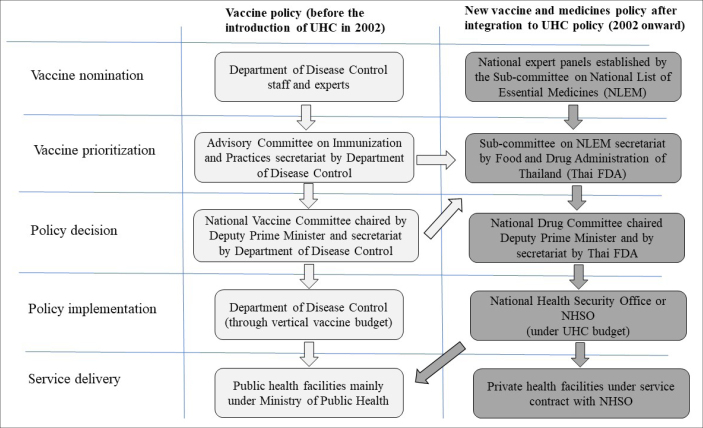
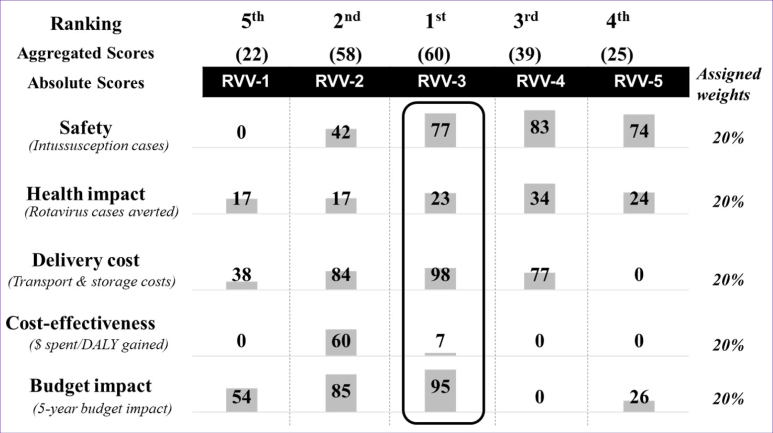
Methods: A rotavirus vaccine (RVV) test case was used to compare the decision criteria made by the existing processes (Expanded Program on Immunization [EPI], and National List of Essential Medicines [NLEM]) for vaccine prioritization and the TSE-pilot model, using Thailand specific data.
Results: The existing decision-making processes in Thailand and TSE were found to offer similar recommendations on the selection of a RVV product.
Conclusion: The authors believe that TSE can provide a well-reasoned and step by step approach for countries, especially low- and middle-income countries (LMICs), to develop a systematic and transparent decision-making process for immunization policy.
Keywords: Health Technology Assessment; Priority Setting; Thailand; Universal Health Coverage; Vaccine.
© 2020 The Author(s); Published by Kerman University of Medical Sciences. This is an open-access article distributed under the terms of the Creative Commons Attribution License (http://creativecommons.org/licenses/by/4.0), which permits unrestricted use, distribution, and reproduction in any medium, provided the original work is properly cited.
References
MeSH terms
Substances
Grants and funding
LinkOut - more resources
Full Text Sources
Medical
Miscellaneous