. 2020 Aug 1;6(8):1218-1230.
doi: 10.1001/jamaoncol.2020.2134.

Characterization of the Cancer Spectrum in Men With Germline BRCA1 and BRCA2 Pathogenic Variants: Results From the Consortium of Investigators of Modifiers of BRCA1/2 (CIMBA)

Valentina Silvestri  1 Goska Leslie  2 Daniel R Barnes  2 CIMBA GroupBjarni A Agnarsson  3   4 Kristiina Aittomäki  5 Elisa Alducci  6 Irene L Andrulis  7   8 Rosa B Barkardottir  3   9 Alicia Barroso  10 Daniel Barrowdale  2 Javier Benitez  11   12 Bernardo Bonanni  13 Ake Borg  14 Saundra S Buys  15 Trinidad Caldés  16 Maria A Caligo  17 Carlo Capalbo  1 Ian Campbell  18 Wendy K Chung  19 Kathleen B M Claes  20 Sarah V Colonna  15 Laura Cortesi  21 Fergus J Couch  22 Miguel de la Hoya  16 Orland Diez  23   24 Yuan Chun Ding  25 Susan Domchek  26 Douglas F Easton  2   27 Bent Ejlertsen  28 Christoph Engel  29 D Gareth Evans  30 Lidia Feliubadalò  31 Lenka Foretova  32 Florentia Fostira  33 Lajos Géczi  34 Anne-Marie Gerdes  35 Gord Glendon  7 Andrew K Godwin  36 David E Goldgar  37 Eric Hahnen  38   39 Frans B L Hogervorst  40 John L Hopper  41 Peter J Hulick  42   43 Claudine Isaacs  44 Angel Izquierdo  45 Paul A James  18   46 Ramunas Janavicius  47 Uffe Birk Jensen  48 Esther M John  49 Vijai Joseph  50 Irene Konstantopoulou  33 Allison W Kurian  49 Ava Kwong  51   52   53 Elisabetta Landucci  54 Fabienne Lesueur  55   56   57 Jennifer T Loud  58 Eva Machackova  32 Phuong L Mai  59 Keivan Majidzadeh-A  60 Siranoush Manoukian  61 Marco Montagna  6 Lidia Moserle  6 Anna Marie Mulligan  62   63 Katherine L Nathanson  26 Heli Nevanlinna  64 Joanne Ngeow  65   66 Liene Nikitina-Zake  67 Kenneth Offit  50   68 Edith Olah  69 Olufunmilayo I Olopade  70 Ana Osorio  10   12 Laura Papi  71 Sue K Park  72   73   74 Inge Sokilde Pedersen  75 Pedro Perez-Segura  16 Annabeth H Petersen  76 Pedro Pinto  77 Berardino Porfirio  71 Miquel Angel Pujana  78 Paolo Radice  79 Johanna Rantala  80 Muhammad U Rashid  81   82 Barak Rosenzweig  83   84 Maria Rossing  85 Marta Santamariña  86   87   88 Rita K Schmutzler  38   39 Leigha Senter  89 Jacques Simard  90 Christian F Singer  91 Angela R Solano  92 Melissa C Southey  93   94   95 Linda Steele  25 Zoe Steinsnyder  50 Dominique Stoppa-Lyonnet  96   97   98 Yen Yen Tan  99 Manuel R Teixeira  77   100 Soo H Teo  101   102 Mary Beth Terry  103 Mads Thomassen  104 Amanda E Toland  105 Sara Torres-Esquius  23 Nadine Tung  106 Christi J van Asperen  107 Ana Vega  86   87   88 Alessandra Viel  108 Jeroen Vierstraete  20 Barbara Wappenschmidt  38   39 Jeffrey N Weitzel  109 Greet Wieme  20 Sook-Yee Yoon  101 Kristin K Zorn  59 Lesley McGuffog  2 Michael T Parsons  110 Ute Hamann  81 Mark H Greene  58 Judy A Kirk  111 Susan L Neuhausen  25 Timothy R Rebbeck  112   113 Marc Tischkowitz  114   115 Georgia Chenevix-Trench  110 Antonis C Antoniou  2 Eitan Friedman  84   116 Laura Ottini  1
Affiliations

Characterization of the Cancer Spectrum in Men With Germline BRCA1 and BRCA2 Pathogenic Variants: Results From the Consortium of Investigators of Modifiers of BRCA1/2 (CIMBA)

Valentina Silvestri et al. JAMA Oncol. .

Erratum in

  • Error in Author Name.
    [No authors listed] [No authors listed] JAMA Oncol. 2020 Nov 1;6(11):1815. doi: 10.1001/jamaoncol.2020.4696. JAMA Oncol. 2020. PMID: 32910162 Free PMC article. No abstract available.

Abstract

Importance: The limited data on cancer phenotypes in men with germline BRCA1 and BRCA2 pathogenic variants (PVs) have hampered the development of evidence-based recommendations for early cancer detection and risk reduction in this population.

Objective: To compare the cancer spectrum and frequencies between male BRCA1 and BRCA2 PV carriers.

Design, setting, and participants: Retrospective cohort study of 6902 men, including 3651 BRCA1 and 3251 BRCA2 PV carriers, older than 18 years recruited from cancer genetics clinics from 1966 to 2017 by 53 study groups in 33 countries worldwide collaborating through the Consortium of Investigators of Modifiers of BRCA1/2 (CIMBA). Clinical data and pathologic characteristics were collected.

Main outcomes and measures: BRCA1/2 status was the outcome in a logistic regression, and cancer diagnoses were the independent predictors. All odds ratios (ORs) were adjusted for age, country of origin, and calendar year of the first interview.

Results: Among the 6902 men in the study (median [range] age, 51.6 [18-100] years), 1634 cancers were diagnosed in 1376 men (19.9%), the majority (922 of 1,376 [67%]) being BRCA2 PV carriers. Being affected by any cancer was associated with a higher probability of being a BRCA2, rather than a BRCA1, PV carrier (OR, 3.23; 95% CI, 2.81-3.70; P < .001), as well as developing 2 (OR, 7.97; 95% CI, 5.47-11.60; P < .001) and 3 (OR, 19.60; 95% CI, 4.64-82.89; P < .001) primary tumors. A higher frequency of breast (OR, 5.47; 95% CI, 4.06-7.37; P < .001) and prostate (OR, 1.39; 95% CI, 1.09-1.78; P = .008) cancers was associated with a higher probability of being a BRCA2 PV carrier. Among cancers other than breast and prostate, pancreatic cancer was associated with a higher probability (OR, 3.00; 95% CI, 1.55-5.81; P = .001) and colorectal cancer with a lower probability (OR, 0.47; 95% CI, 0.29-0.78; P = .003) of being a BRCA2 PV carrier.

Conclusions and relevance: Significant differences in the cancer spectrum were observed in male BRCA2, compared with BRCA1, PV carriers. These data may inform future recommendations for surveillance of BRCA1/2-associated cancers and guide future prospective studies for estimating cancer risks in men with BRCA1/2 PVs.


Conflict of interest statement

Conflict of Interest Disclosures: Dr Andrulis reported grants from National Institutes of Health (NIH) during the conduct of the study. Dr Barrowdale reported grants from Cancer Research UK during the conduct of the study. Dr Borg reported personal fees from AstraZeneca outside the submitted work. Dr Cortesi reported personal fees from Merck Sharp & Dohme, AstraZeneca, Pfizer, Novartis, Tesaro, Clovis Oncology, and Teva Pharmaceuticals outside the submitted work. Dr Couch reported grants from NIH and Breast Cancer Research Foundation during the conduct of the study, and personal fees from Ambry Genetics, AstraZeneca, and Qiagen outside the submitted work. Dr Domchek reported personal fees from AstraZeneca, Clovis Oncology, and Bristol-Myers Squibb outside the submitted work. Dr Ejlertsen reported institutional grants from NanoString, Roche, Novartis, and Oncology Venture outside the submitted work. Dr Engel reported institutional grants from German Cancer Aid during the conduct of the study. Dr Evans reported personal fees from AstraZeneca outside the submitted work. Dr Glendon reported grants from NIH, Epidemiology and Genomics Research Program/National Cancer Institute (NCI) during the conduct of the study. Dr Godwin reported grants from NIH/NCI, National Institute of General Medical Sciences, Department of Defense, Ovarian Cancer Research Alliance, Tina’s Wish, Mary Kay Foundation, and Noah’s Bandage Project, and government contracts from Leidos Biomedical Research during the conduct of the study, and personal fees from Sinochips Diagnostics, Personal Genome Diagnostics, and NanoString outside the submitted work. Dr Hahnen reported personal fees from AstraZeneca outside the submitted work. Dr Isaacs reported grants from NCI during the conduct of the study, and grants from Tesaro and personal fees from Pfizer, AstraZeneca, and Genentech outside the submitted work. Dr Kurian reported grants from Myriad Genetics to her institution outside the submitted work. Dr Kwong reported grants from the Dr. Ellen Li Charitable Foundation and Kerry Kuok Foundation during the conduct of the study, and grants from AstraZeneca Hong Kong outside the submitted work. Dr Nevanlinna reported grants from the Finnish Cancer Society, Sigrid Juselius Foundation, and Helsinki University Hospital Research Fund during the conduct of the study, and personal fees from AstraZeneca outside the submitted work. Dr Ngeow reported grants from AstraZeneca during the conduct of the study and outside the submitted work. Dr Olopade reported serving as a cofounder of CancerIQ and on a scientific advisory board for Tempus outside the submitted work. Dr Pujana reported grants from Roche Pharma during the conduct of the study. Dr Radice reported grants from the Italian Association for Cancer Research during the conduct of the study. Dr Schmutzler reported grants from the German Cancer Society during the conduct of the study. Dr Senter reported personal fees from AstraZeneca and Clovis Oncology outside the submitted work. Dr Singer reported grants from Amgen and grants and personal fees from AstraZeneca during the conduct of the study, and grants and personal fees from Amgen, AstraZeneca, and Novartis outside the submitted work. Dr Steele reported grants from NIH NCI during the conduct of the study. Dr Terry reported grants from Columbia University (U01CA16492007) during the conduct of the study. Dr Toland reported grants and nonfinancial support from The Ohio State University during the conduct of the study and funding from the NIH and the Department of Defense. Dr Weitzel reported personal fees from AstraZeneca outside the submitted work. Dr Yoon reported grants from AstraZeneca outside the submitted work. Dr McGuffog reported grants from Cancer Research UK during the conduct of the study. Dr Antoniou reported being a creator of the Breast and Ovarian Analysis of Disease Incidence and Carrier Estimation Algorithm (BOADICEA), which has been licensed to Cambridge Enterprise, with potential for royalties if commercialization is realized, outside the submitted work. Dr Ottini reported grants from Fondazione AIRC (Associazione Italiana Ricerca sul Cancro). No other disclosures were reported.

Figures

Figure 1.
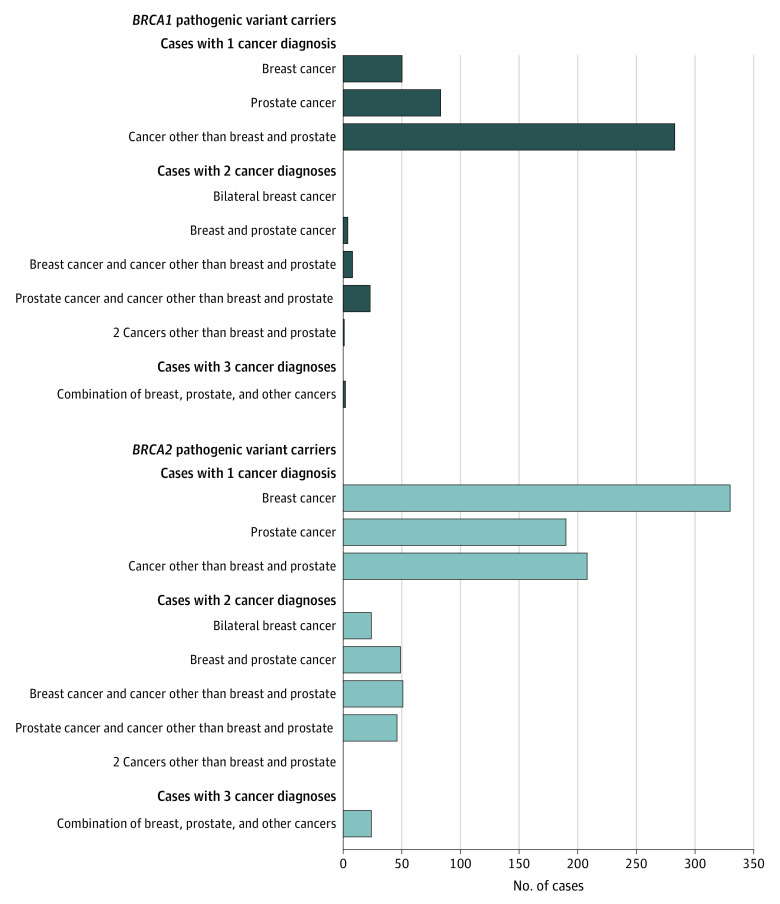
Figure 1.. Cancer Diagnoses in Male BRCA1 and BRCA2 Pathogenic Variant Carriers
Type of cancer diagnoses reported in the 1376 affected male BRCA1 (n = 454) and BRCA2 (n = 922) pathogenic variant carriers in the Consortium of Investigators of Modifiers of BRCA1/2 data set.
Figure 2.
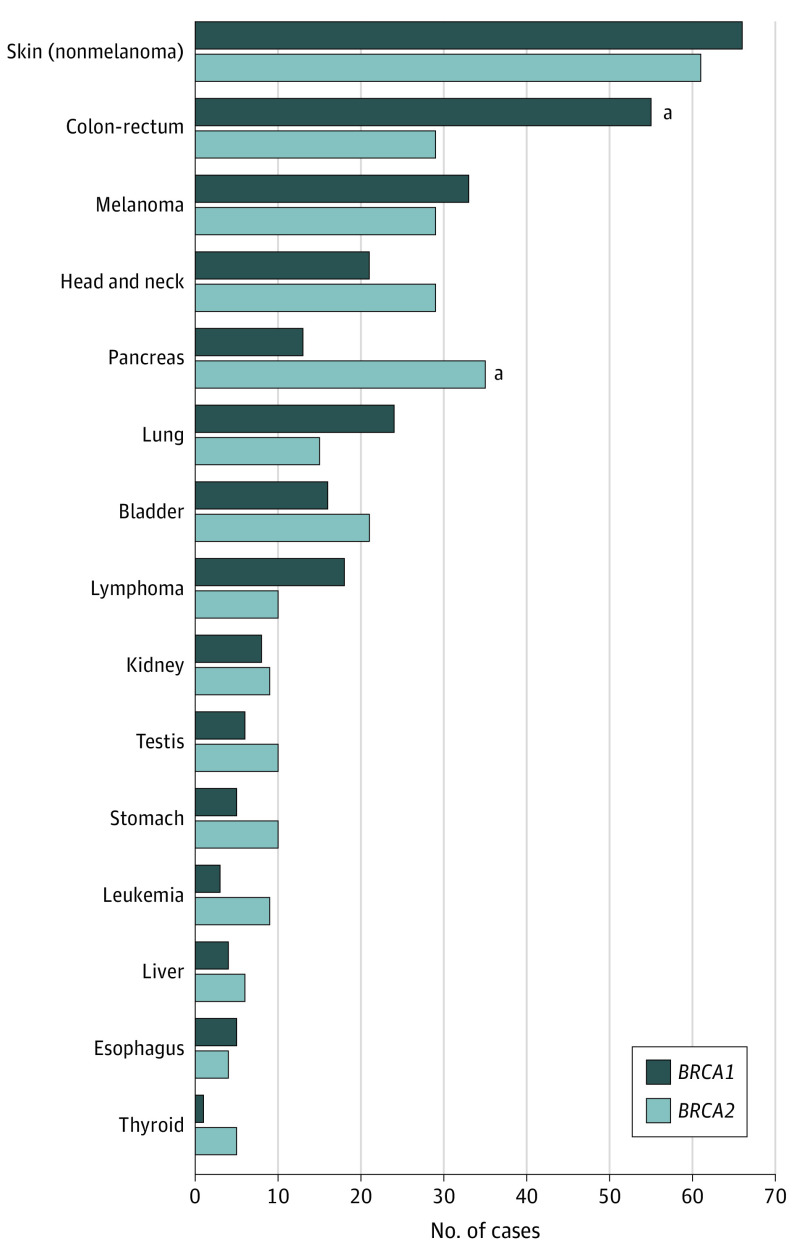
Figure 2.. Spectrum of Cancers Other Than Breast and Prostate in Male BRCA1 and BRCA2 Pathogenic Variant (PV) Carriers
Cancer sites other than breast and prostate with >5 reported diagnoses in the whole series of male BRCA1/2 PV carriers within the Consortium of Investigators of Modifiers of BRCA1/2 data set. aSignificant differences between BRCA1 and BRCA2.

References

    1. Kuchenbaecker KB, Hopper JL, Barnes DR, et al. ; BRCA1 and BRCA2 Cohort Consortium . Risks of breast, ovarian, and contralateral breast cancer for BRCA1 and BRCA2 mutation carriers. JAMA. 2017;317(23):2402-2416. doi:10.1001/jama.2017.7112 - DOI - PubMed
    1. Breast Cancer Linkage Consortium Cancer risks in BRCA2 mutation carriers. J Natl Cancer Inst. 1999;91(15):1310-1316. doi:10.1093/jnci/91.15.1310 - DOI - PubMed
    1. Thompson D, Easton DF; Breast Cancer Linkage Consortium . Cancer incidence in BRCA1 mutation carriers. J Natl Cancer Inst. 2002;94(18):1358-1365. doi:10.1093/jnci/94.18.1358 - DOI - PubMed
    1. Iqbal J, Ragone A, Lubinski J, et al. ; Hereditary Breast Cancer Study Group . The incidence of pancreatic cancer in BRCA1 and BRCA2 mutation carriers. Br J Cancer. 2012;107(12):2005-2009. doi:10.1038/bjc.2012.483 - DOI - PMC - PubMed
    1. Rizzolo P, Silvestri V, Tommasi S, et al. . Male breast cancer: genetics, epigenetics, and ethical aspects. Ann Oncol. 2013;24(suppl 8):i75–, i82.. doi:10.1093/annonc/mdt316 - DOI - PubMed