


Facile, one-pot biosynthesis and characterization of iron, copper and silver nanoparticles using Syzygium cumini leaf extract: As an effective antimicrobial and aflatoxin B1 adsorption agents
- PMID: 32614844
- PMCID: PMC7331986
- DOI: 10.1371/journal.pone.0234964
Facile, one-pot biosynthesis and characterization of iron, copper and silver nanoparticles using Syzygium cumini leaf extract: As an effective antimicrobial and aflatoxin B1 adsorption agents
Retraction in
-
Retraction: Facile, one-pot biosynthesis and characterization of iron, copper and silver nanoparticles using Syzygium cumini leaf extract: As an effective antimicrobial and aflatoxin B1 adsorption agents.PLoS One. 2025 Aug 6;20(8):e0329780. doi: 10.1371/journal.pone.0329780. eCollection 2025. PLoS One. 2025. PMID: 40768500 Free PMC article. No abstract available.
Abstract
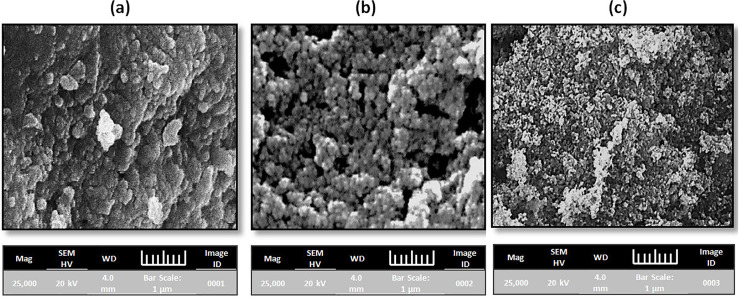
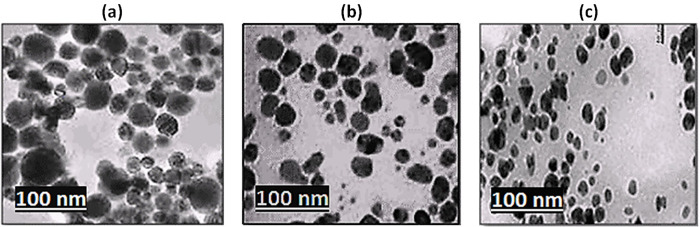
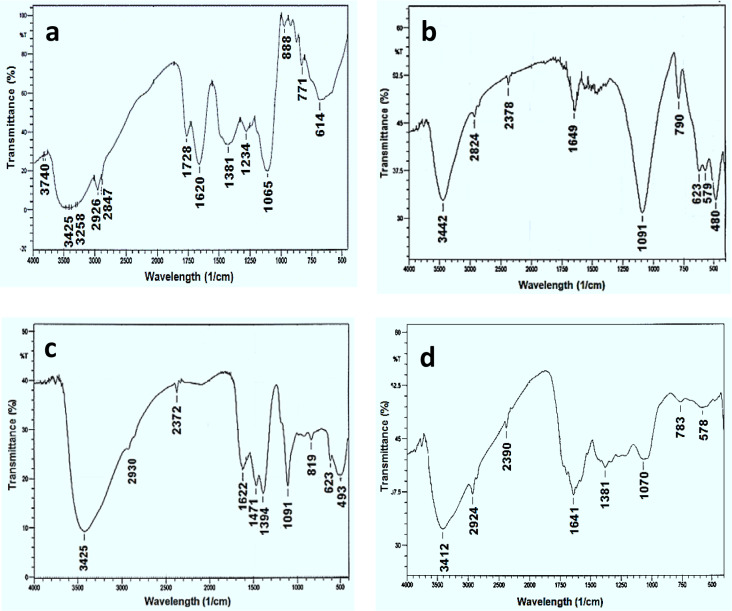
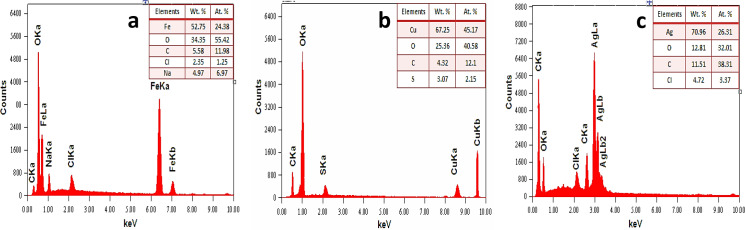
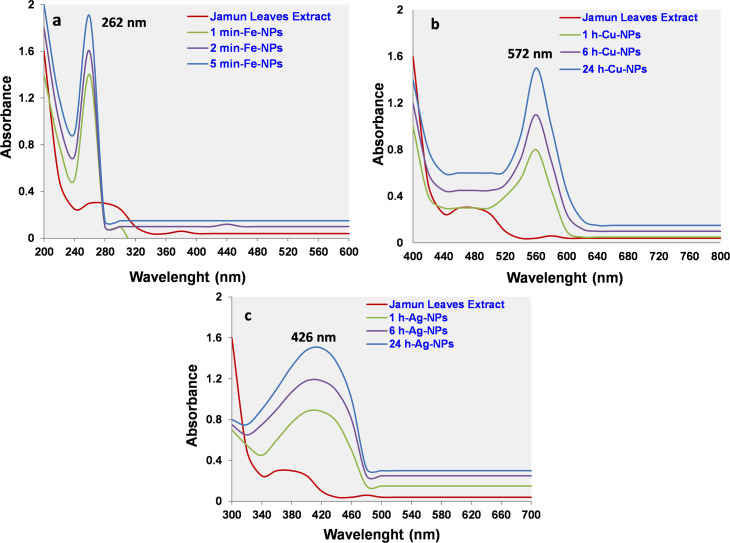
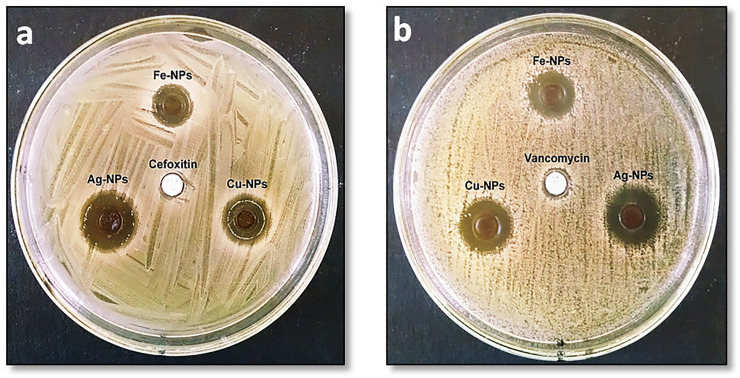
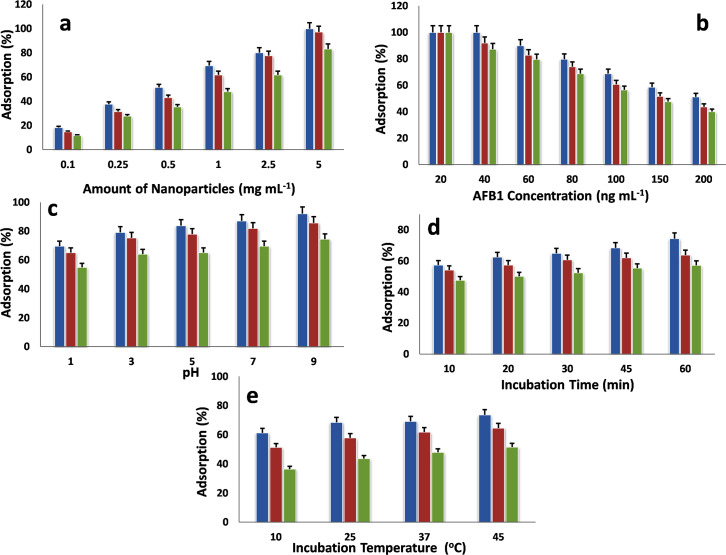
In this study, a facile, ecological and economical green method is described for the fabrication of iron (Fe), copper (Cu) and silver (Ag) nanoparticles (NPs) from the extract of Syzygium cumini leaves. The obtained metal NPs were categorized using UV/Vis, SEM, TEM, FTIR and EDX-ray spectroscopy techniques. The Fe-, Cu- and Ag-NPs were crystalline, spherical and size ranged from 40-52, 28-35 and 11-19 nm, respectively. The Ag-NPs showed excellent antimicrobial activities against methicillin- and vancomycin-resistance Staphylococcus aureus bacterial strains and Aspergillus flavus and A. parasiticus fungal species. Furthermore, the aflatoxins (AFs) production was also significantly inhibited when compared with the Fe- and Cu-NPs. In contrast, the adsorption results of NPs with aflatoxin B1 (AFB1) were observed as following order Fe->Cu->Ag-NPs. The Langmuir isotherm model well described the equilibrium data by the sorption capacity of Fe-NPs (105.3 ng mg-1), Cu-NPs (88.5 ng mg-1) and Ag-NPs (81.7 ng mg-1). The adsorption was found feasible, endothermic and follow the pseudo-second order kinetic model as revealed by the thermodynamic and kinetic studies. The present findings suggests that the green synthesis of metal NPs is a simple, sustainable, non-toxic, economical and energy-effective as compared to the others conventional approaches. In addition, synthesized metal NPs might be a promising AFs adsorbent for the detoxification of AFB1 in human and animal food/feed.
Conflict of interest statement
The authors have declared that no competing interests exist.
Figures
References
-
- Kao CH, Kuo YC, Chen CC, Chang YT, Chen YS, Wann SR, et al. Isolated pathogens and clinical outcomes of adult bacteremia in the emergency department: a retrospective study in a tertiary Referral Center. J Microbiol Immunol Infect. 2011;44:215–221. - PubMed
-
- Asghar MA, Ahmed A, Zahir E, Asghar MA, Iqbal J, Walker G. Incidence of aflatoxins contamination in dry fruits and edible nuts collected from Pakistan. Food Cont. 2017;78:169–175.
-
- Bryden WL. Mycotoxins in the food chain: human health implications. Asia Pac J Clin Nutr. 2007;16:95–101. - PubMed
-
- Martins LM, Sant'Ana AS, Iamanaka BT, Berto MI, Pitt JI, Taniwaki MH. Kinetics of aflatoxin degradation during peanut roasting. Food Res Intern. 2017;97:178–183. - PubMed
Publication types
MeSH terms
Substances
LinkOut - more resources
Full Text Sources
Medical
Research Materials
