


Schistosome and intestinal helminth modulation of macrophage immunometabolism
- PMID: 32614982
- PMCID: PMC7808165
- DOI: 10.1111/imm.13231
Schistosome and intestinal helminth modulation of macrophage immunometabolism
Abstract
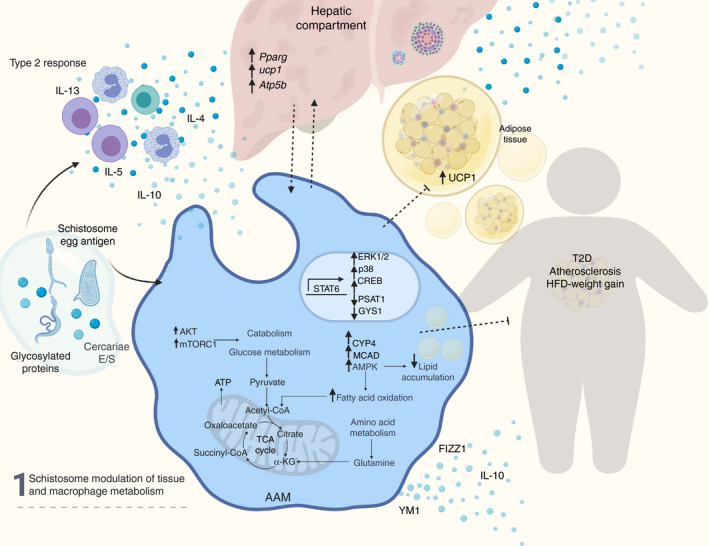
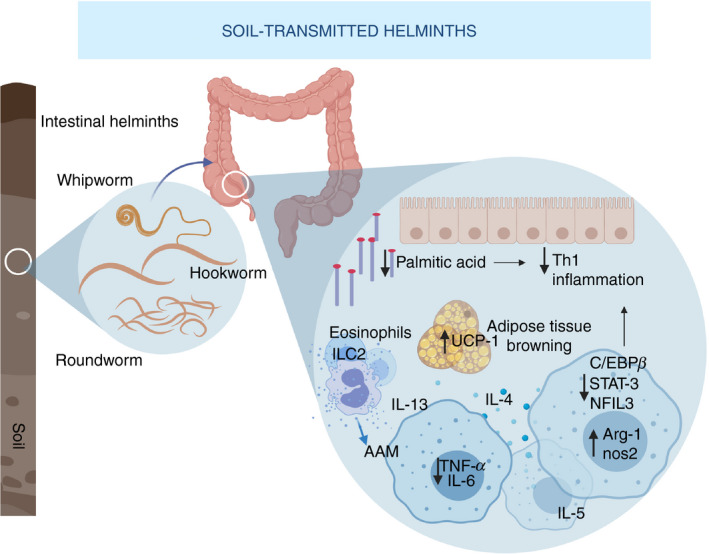
Macrophages are fundamental to sustain physiological equilibrium and to regulate the pathogenesis of parasitic and metabolic processes. The functional heterogeneity and immune responses of macrophages are shaped by cellular metabolism in response to the host's intrinsic factors, environmental cues and other stimuli during disease. Parasite infections induce a complex cascade of cytokines and metabolites that profoundly remodel the metabolic status of macrophages. In particular, helminths polarize macrophages to an M2 state and induce a metabolic shift towards reliance on oxidative phosphorylation, lipid oxidation and amino acid metabolism. Accumulating data indicate that helminth-induced activation and metabolic reprogramming of macrophages underlie improvement in overall whole-body metabolism, denoted by improved insulin sensitivity, body mass in response to high-fat diet and atherogenic index in mammals. This review aims to highlight the metabolic changes that occur in human and murine-derived macrophages in response to helminth infections and helminth products, with particular interest in schistosomiasis and soil-transmitted helminths.
Keywords: helminth; macrophage; metabolic disease; metabolism; schistosome.
© 2020 John Wiley & Sons Ltd.
Conflict of interest statement
The authors have no competing interests. Diane Cortes‐Selva is currently and employee of Janssen Biotherapeutics.
Figures
References
-
- Rahman MS, Murphy AJ, Woollard KJ. Effects of dyslipidaemia on monocyte production and function in cardiovascular disease. Nat Rev Cardiol 2017; 14:387–400. - PubMed
Publication types
MeSH terms
Substances
Grants and funding
LinkOut - more resources
Full Text Sources
