


Coronavirus disease 2019 (COVID-19): an evidence map of medical literature
- PMID: 32615936
- PMCID: PMC7330264
- DOI: 10.1186/s12874-020-01059-y
Coronavirus disease 2019 (COVID-19): an evidence map of medical literature
Abstract
Background: Since the beginning of the COVID-19 outbreak in December 2019, a substantial body of COVID-19 medical literature has been generated. As of June 2020, gaps and longitudinal trends in the COVID-19 medical literature remain unidentified, despite potential benefits for research prioritisation and policy setting in both the COVID-19 pandemic and future large-scale public health crises.
Methods: In this paper, we searched PubMed and Embase for medical literature on COVID-19 between 1 January and 24 March 2020. We characterised the growth of the early COVID-19 medical literature using evidence maps and bibliometric analyses to elicit cross-sectional and longitudinal trends and systematically identify gaps.
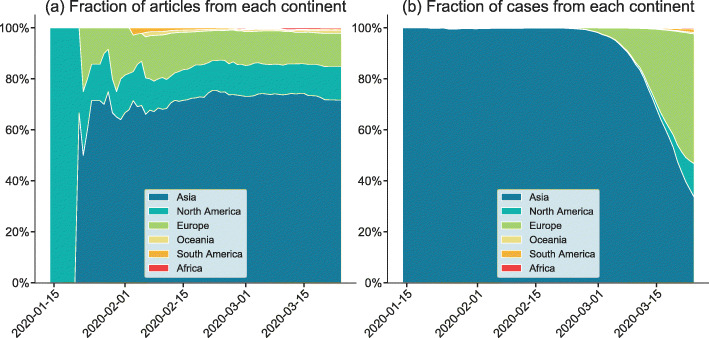
Results: The early COVID-19 medical literature originated primarily from Asia and focused mainly on clinical features and diagnosis of the disease. Many areas of potential research remain underexplored, such as mental health, the use of novel technologies and artificial intelligence, pathophysiology of COVID-19 within different body systems, and indirect effects of COVID-19 on the care of non-COVID-19 patients. Few articles involved research collaboration at the international level (24.7%). The median submission-to-publication duration was 8 days (interquartile range: 4-16).
Conclusions: Although in its early phase, COVID-19 research has generated a large volume of publications. However, there are still knowledge gaps yet to be filled and areas for improvement for the global research community. Our analysis of early COVID-19 research may be valuable in informing research prioritisation and policy planning both in the current COVID-19 pandemic and similar global health crises.
Keywords: COVID-19; Coronavirus; Evidence gap map; Review; SARS-CoV-2.
Conflict of interest statement
The authors declare that they have no competing interests.
Figures




References
-
- WHO Timeline - COVID-19. https://www.who.int/news-room/detail/27-04-2020-who-timeline---covid-19. Accessed 6 May 2020.
-
- Publications & Data: European Centre for Disease Prevention and Control. https://www.ecdc.europa.eu/en/publications-data. Accessed 14 June 2020.
-
- Zhong NS, Zheng BJ, Li YM, Poon XZH, Chan KH, Li PH, Tan SY, Chang Q, Xie JP, et al. Epidemiology and cause of severe acute respiratory syndrome (SARS) in Guangdong, People’s Republic of China, in February, 2003. Lancet. 2003;362(9393):1353–1358. doi: 10.1016/S0140-6736(03)14630-2. - DOI - PMC - PubMed
Publication types
MeSH terms
LinkOut - more resources
Full Text Sources
Research Materials
Miscellaneous
