


Ethnobotanical study on medicinal plants used by Mulam people in Guangxi, China
- PMID: 32616044
- PMCID: PMC7333293
- DOI: 10.1186/s13002-020-00387-z
Ethnobotanical study on medicinal plants used by Mulam people in Guangxi, China
Abstract
Background: The Mulam are an ethnic group native to Guangxi, and nearly 80% of the Mulam population lives in Luocheng Mulam Autonomous County, northern Guangxi, southern China. They have accumulated rich medicinal folk knowledge through practice and experience in their long-term struggles with disease and the harsh natural environment. However, their traditional medicinal knowledge is threatened due to a lack of written records, conservative inheritance patterns, and rapid economic development. Therefore, the investigation and documentation of medicinal plants and their associated indigenous wisdom are necessary.
Method: Ethnobotanical data were collected from 12 villages and five communities in Luocheng County from January 2013 to April 2017. A total of 128 informants were interviewed through semistructured interviews, field observations, group discussions, and guided field walks. Quantitative indices such as use categories, preference ranking exercises, the informant consensus factor (ICF), and the fidelity level (FL) were used to evaluate the importance of medicinal plant species. Additionally, group discussions were conducted about the conservation of and threats to medicinal plants and traditional knowledge.
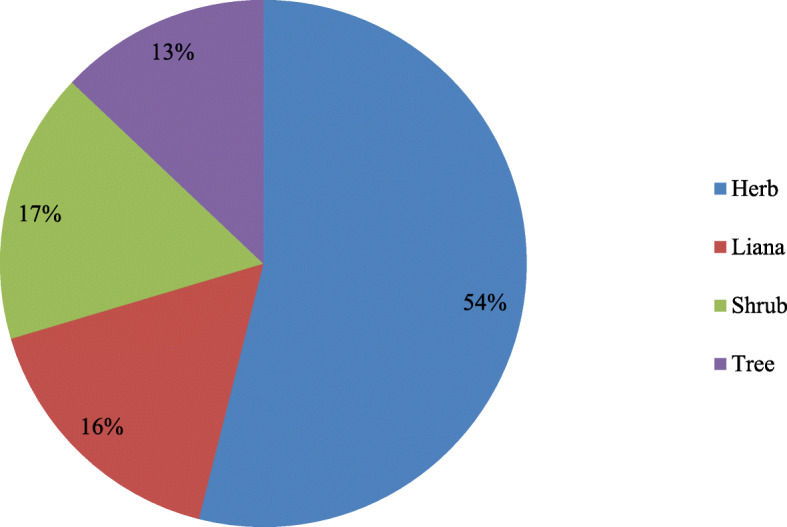
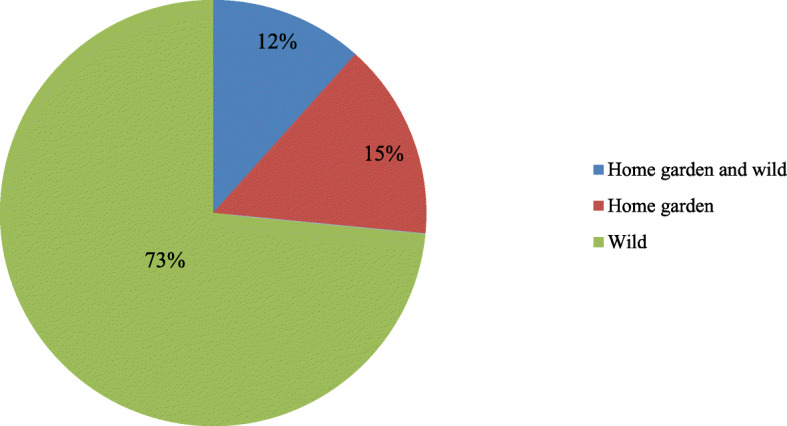
Results: A total of 456 medicinal plant species from 350 genera and 132 families were recorded and documented in our ethnobotanical investigation. Most of them (335 species, 73.47%) were obtained from wild habitats. Most of the documented species (246) were herbaceous (54%), followed by shrubs, with 76 species (17%), lianas, with 75 species (16%), and trees, with 59 species (13%). The most common method of administration was oral administration, which was used for 390 species (62.70%). The most common method of preparation was decoction (316 species, 54.11%). The plants were used to treat 312 human diseases in 12 disease categories, and most of the categories had a high ICF value. The highest ICF value was recorded for gynecological ailments (0.92), followed by nervous and psychosomatic problems (0.90) and digestive system diseases (0.89). Traditional medicinal knowledge and medicinal plants are under threat due to conservative inheritance processes and anthropogenic pressures for various reasons.
Conclusion: A rich diversity of medicinal plants is distributed in the Mulam area, and these plants play an important role in healthcare among the Mulam people. Mulam people are skilled in using the plants in their surroundings to treat diseases in their daily lives. However, their traditional medicinal knowledge and medicinal plants are greatly threatened by rapid economic development for various reasons. Thus, policies and practices for the conservation of medicinal plants and the associated traditional knowledge are necessary.
Keywords: Luocheng County; Medicinal plants; Mulam people; Traditional medicinal knowledge.
Conflict of interest statement
The authors declare that they have no competing interests.
Figures
References
-
- Huai HY, Pei SJ. Medicinal ethnobotany and its advances. Chin Bull Bot. 2002;2(19):129–136.
-
- Brandão MGL, Acúrcio FA, Montemor RLM, Marlière LDP. Complementary/alternative medicine in Latin America: Use of herbal remedies among a Brazilian metropolitan area population. J Complem Integr Med. 2006;3(1). 10.2202/1553-3840.1025.
-
- Sheldon JW, Balick MJ, Laird SA. Medicinal plants: can utilization and conservation coexist? Econ Bot. 1997;12:1–104. https://www.jstor.org/stable/4256213.
-
- World Health Organization . WHO traditional medicine strategy 2002-2005. Geneva: World Health Organization; 2002.
MeSH terms
Grants and funding
- ZY1949013/Special Funds for Local Science and Technology Development Guided by the Central Committee
- 2018GXNSFBA281162/Guangxi Natural Science Foundation
- 31870316, 31560088 & 31761143001/National Natural Science Foundation of China
- 2019HJ2096001006/Ministry of Ecology and Environment of China
- 8-3-7-20-5/Ministry of Ecology and Environment of China
LinkOut - more resources
Full Text Sources
Miscellaneous
