Meta-Analysis
. 2020 Jul 2;24(1):389.
doi: 10.1186/s13054-020-03022-1.

Acute complications and mortality in hospitalized patients with coronavirus disease 2019: a systematic review and meta-analysis

Affiliations
Meta-Analysis

Acute complications and mortality in hospitalized patients with coronavirus disease 2019: a systematic review and meta-analysis

Nicola Potere et al. Crit Care. .

Abstract

Background: The incidence of acute complications and mortality associated with COVID-19 remains poorly characterized. The aims of this systematic review and meta-analysis were to summarize the evidence on clinically relevant outcomes in hospitalized patients with COVID-19.

Methods: MEDLINE, EMBASE, PubMed, and medRxiv were searched up to April 20, 2020, for studies including hospitalized symptomatic adult patients with laboratory-confirmed COVID-19. The primary outcomes were all-cause mortality and acute respiratory distress syndrome (ARDS). The secondary outcomes included acute cardiac or kidney injury, shock, coagulopathy, and venous thromboembolism. The main analysis was based on data from peer-reviewed studies. Summary estimates and the corresponding 95% prediction intervals (PIs) were obtained through meta-analyses.

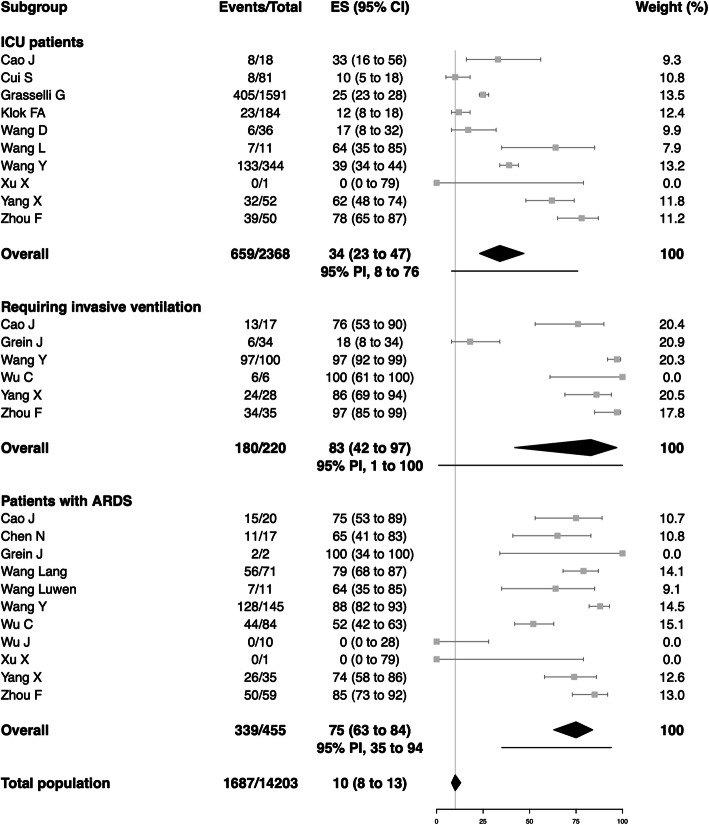
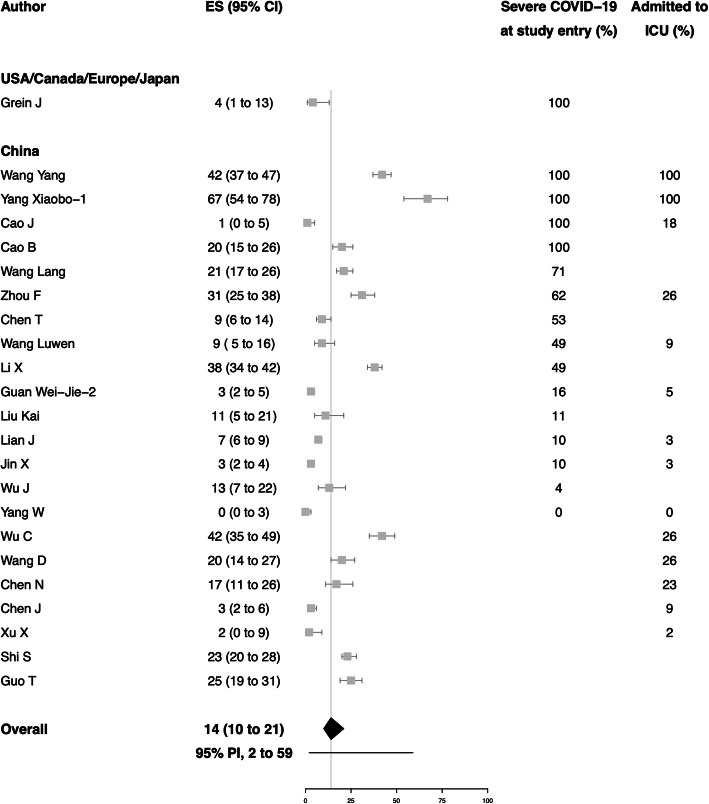
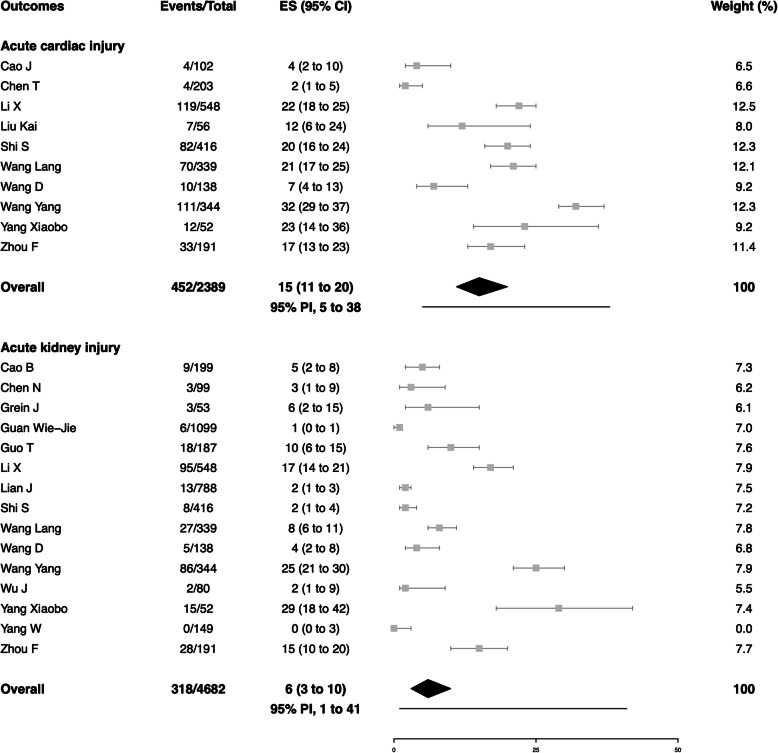
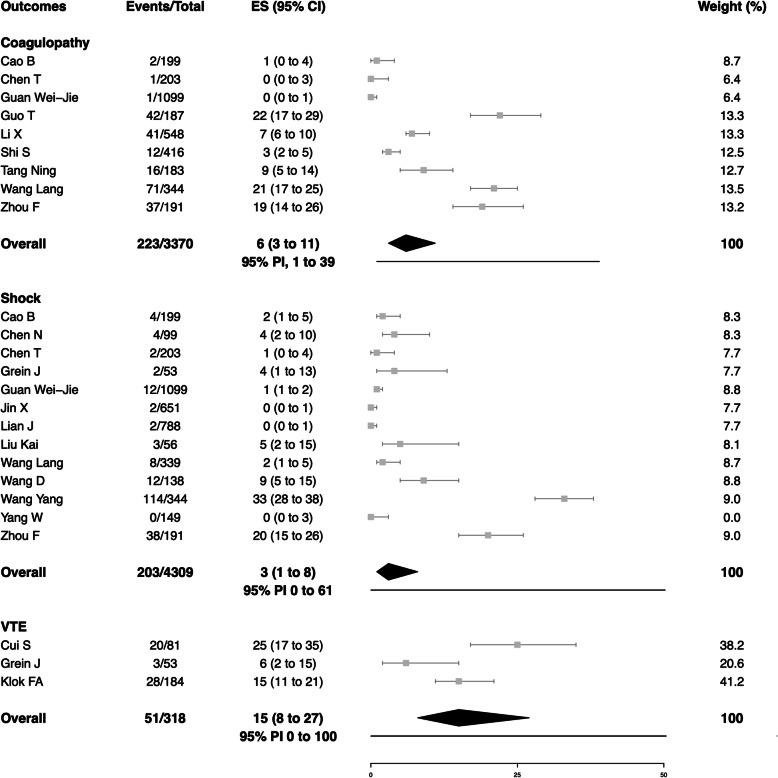
Results: A total of 44 peer-reviewed studies with 14,866 COVID-19 patients were included. In general, risk of bias was high. All-cause mortality was 10% overall (95% PI, 2 to 39%; 1687/14203 patients; 43 studies), 34% in patients admitted to intensive care units (95% PI, 8 to 76%; 659/2368 patients; 10 studies), 83% in patients requiring invasive ventilation (95% PI, 1 to 100%; 180/220 patients; 6 studies), and 75% in patients who developed ARDS (95% PI, 35 to 94%; 339/455 patients; 11 studies). On average, ARDS occurred in 14% of patients (95% PI, 2 to 59%; 999/6322 patients; 23 studies), acute cardiac injury in 15% (95% PI, 5 to 38%; 452/2389 patients; 10 studies), venous thromboembolism in 15% (95% PI, 0 to 100%; patients; 3 studies), acute kidney injury in 6% (95% PI, 1 to 41%; 318/4682 patients; 15 studies), coagulopathy in 6% (95% PI, 1 to 39%; 223/3370 patients; 9 studies), and shock in 3% (95% PI, 0 to 61%; 203/4309 patients; 13 studies).

Conclusions: Mortality was very high in critically ill patients based on very low-quality evidence due to striking heterogeneity and risk of bias. The incidence of clinically relevant outcomes was substantial, although reported by only one third of the studies suggesting considerable underreporting.

Trial registration: PROSPERO registration ID for this study is CRD42020177243 ( https://www.crd.york.ac.uk/prospero/display_record.php?RecordID=177243 ).

Keywords: Adult respiratory distress syndrome; COVID-19; Coronavirus; Oxygen inhalation therapy; SARS virus.


Conflict of interest statement

NP, EV, MC, MT, EP, AA, SS, and AR have no competing interests. MDN reports personal fees from Bayer, Daiichi Sankyo, Sanofi, Pfizer, Leo Pharma, and Aspen outside the submitted work.

Figures
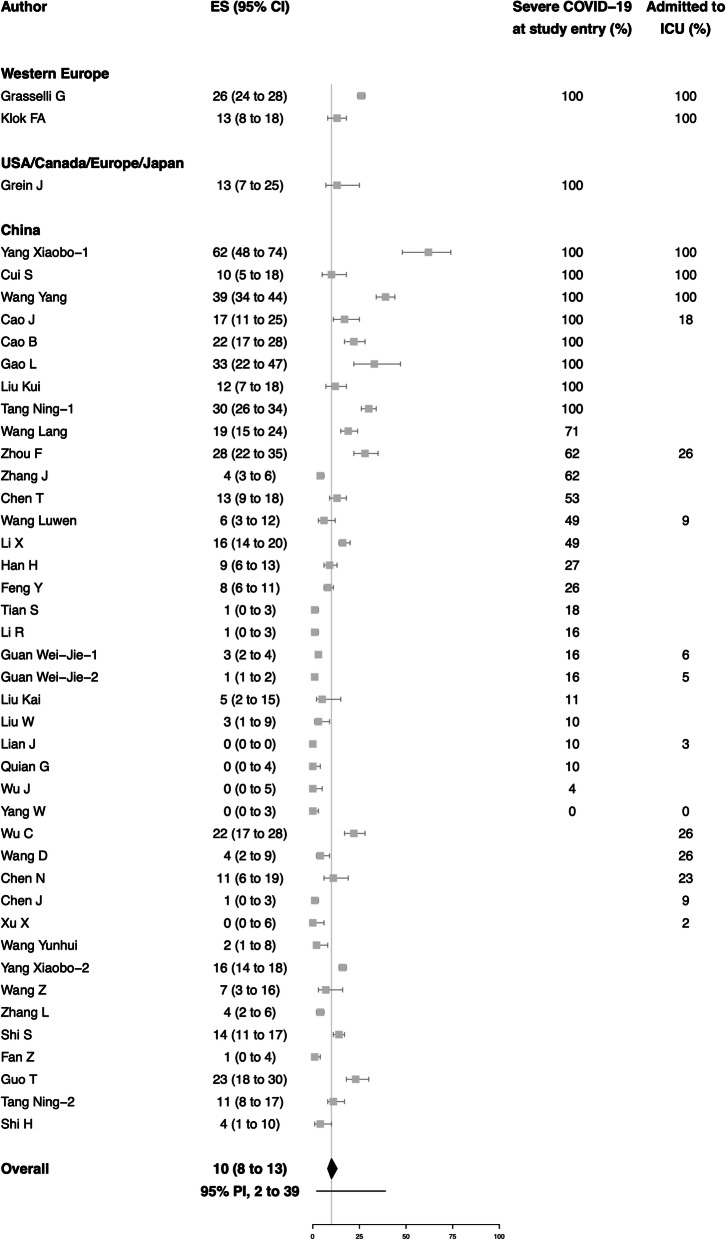
Fig. 1
Fig. 1
All-cause mortality in patients with COVID-19. All-cause mortality in peer-reviewed studies from Asian and Western countries, sorted by severity of COVID-19 at study entry and the proportion of patients admitted to ICU. The vertical line indicates the summary estimate. Gray squares indicate individual study estimates of the proportion of all-cause mortality, whereas the gray horizontal lines indicate 95% confidence intervals of the individual studies. The diamond indicates the summary estimate with 95% confidence intervals. The horizontal black line refers to the prediction intervals which are displayed numerically under the 95% confidence intervals. CI, confidence intervals; COVID-19, Coronavirus disease 2019; ES, estimates; ICU, intensive care unit; PI, prediction intervals; USA, United States of America
Fig. 2
Fig. 2
All-cause mortality in patients admitted to ICU, requiring invasive ventilation, and developing ARDS. The vertical line indicates the summary estimate for all-cause mortality in total population. Gray squares indicate individual study estimates of the proportion of all-cause mortality, whereas the gray horizontal lines indicate 95% confidence intervals of the individual studies. The diamonds indicate the summary estimates with 95% confidence intervals. The horizontal black lines refer to the prediction intervals which are displayed numerically under the 95% confidence intervals. ARDS, acute respiratory distress syndrome; CI, confidence intervals; COVID-19, Coronavirus disease 2019; ES, estimates; ICU, intensive care unit; PI, prediction intervals
Fig. 3
Fig. 3
ARDS in patients with COVID-19. ARDS in peer-reviewed studies from Asian and Western countries, sorted by severity of COVID-19 at study entry and the proportion of patients admitted to ICU. The vertical line indicates the summary estimate. Gray squares indicate individual study estimates of the proportion of ARDS, whereas the gray horizontal lines indicate 95% confidence intervals of the individual studies. The diamond indicates the summary estimate with its 95% confidence intervals. The horizontal black line refers to the prediction intervals which are displayed numerically under the 95% confidence intervals. ARDS, acute respiratory distress syndrome; CI, confidence intervals; COVID-19, Coronavirus disease 2019; ES, estimates; ICU, intensive care unit; PI, prediction intervals; USA, United States of America
Fig. 4
Fig. 4
Acute cardiac and kidney injury in patients with COVID-19. Gray squares indicate individual study estimates of the proportion of the outcomes, whereas the gray horizontal lines indicate 95% confidence intervals of the individual studies. The diamonds indicate the summary estimates with 95% confidence intervals. The horizontal black lines refer to the prediction intervals which are displayed numerically under the 95% confidence intervals. CI, confidence intervals; COVID-19, Coronavirus disease 2019; ES, estimates; PI, prediction intervals
Fig. 5
Fig. 5
Coagulopathy, shock, and venous thromboembolism in patients with COVID-19. Gray squares indicate individual study estimates of the proportion of the outcomes, whereas the gray horizontal lines indicate 95% confidence intervals of the individual studies. The diamonds indicate the summary estimates with 95% confidence intervals. The horizontal black lines refer to the prediction intervals which are displayed numerically under the 95% confidence intervals. CI, confidence intervals; COVID-19, Coronavirus disease 2019; ES, estimates; PI, prediction intervals; VTE, venous thromboembolism

References

    1. Chen N, Zhou M, Dong X, Qu J, Gong F, Han Y, et al. Epidemiological and clinical characteristics of 99 cases of 2019 novel coronavirus pneumonia in Wuhan, China: a descriptive study. Lancet. 2020;395(10223):507–513. doi: 10.1016/S0140-6736(20)30211-7. - DOI - PMC - PubMed
    1. Siddiqi HK, Mehra MR. COVID-19 illness in native and immunosuppressed states: a clinical-therapeutic staging proposal. The Journal of Heart and Lung Transplantation. 2020;39(5):405-407. - PMC - PubMed
    1. Mehta P, McAuley DF, Brown M, Sanchez E, Tattersall RS, Manson JJ, et al. COVID-19: consider cytokine storm syndromes and immunosuppression. Lancet. 2020;395(10229):1033–1034. doi: 10.1016/S0140-6736(20)30628-0. - DOI - PMC - PubMed
    1. Wu Z, McGoogan JM. Characteristics of and important lessons from the coronavirus disease 2019 (COVID-19) outbreak in China: summary of a report of 72314 cases from the Chinese Center for Disease Control and Prevention. JAMA. 2020. - PubMed
    1. Rodriguez-Morales AJ, Cardona-Ospina JA, Gutierrez-Ocampo E, Villamizar-Pena R, Holguin-Rivera Y, Escalera-Antezana JP, et al. Clinical, laboratory and imaging features of COVID-19: a systematic review and meta-analysis. Travel Med Infect Dis. 2020;34:101623. - PMC - PubMed