


Physiological dynamics of chemosynthetic symbionts in hydrothermal vent snails
- PMID: 32616905
- PMCID: PMC7490688
- DOI: 10.1038/s41396-020-0707-2
Physiological dynamics of chemosynthetic symbionts in hydrothermal vent snails
Abstract
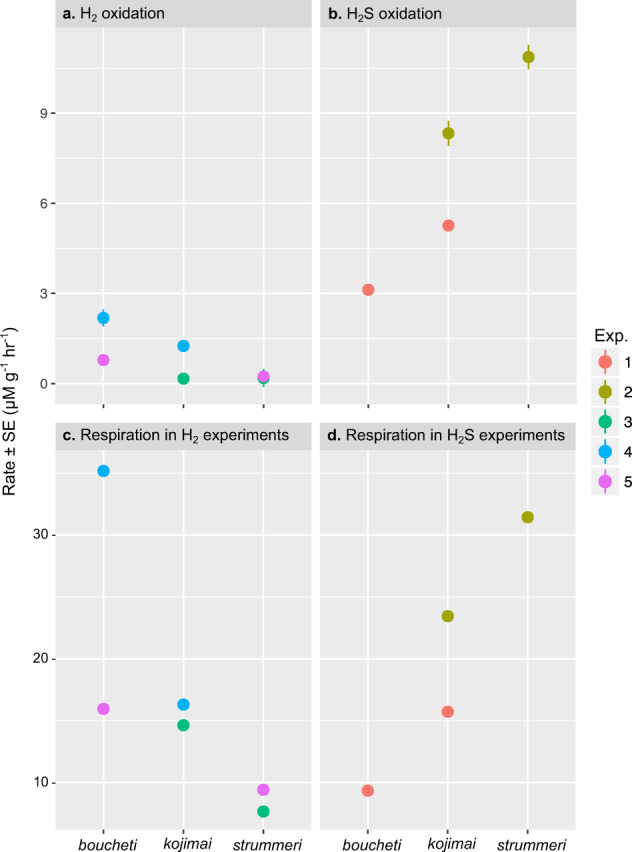
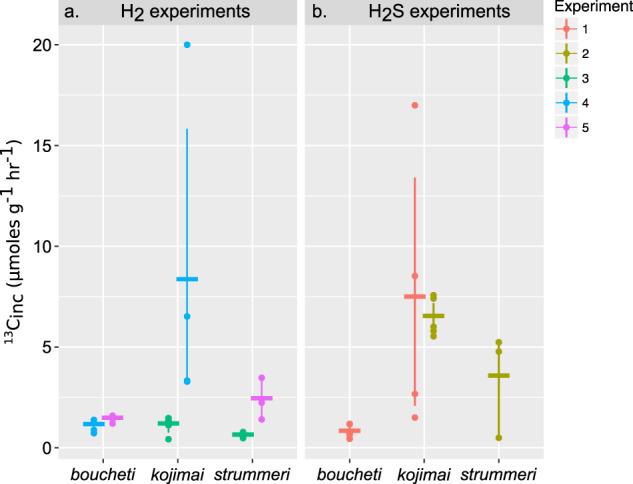
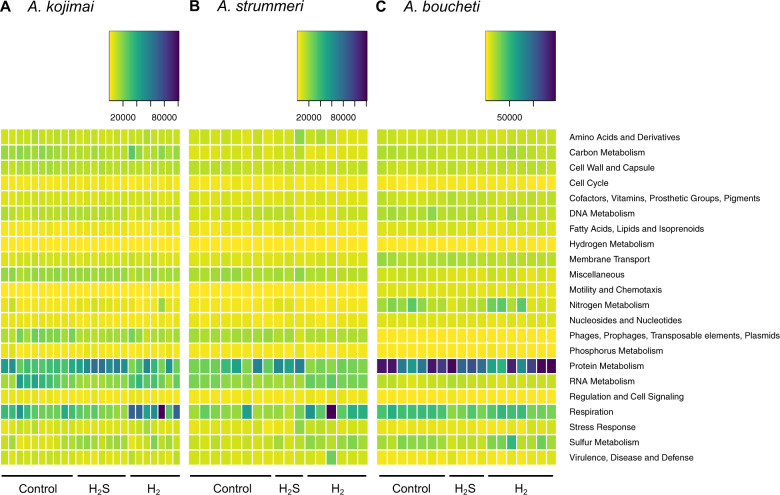
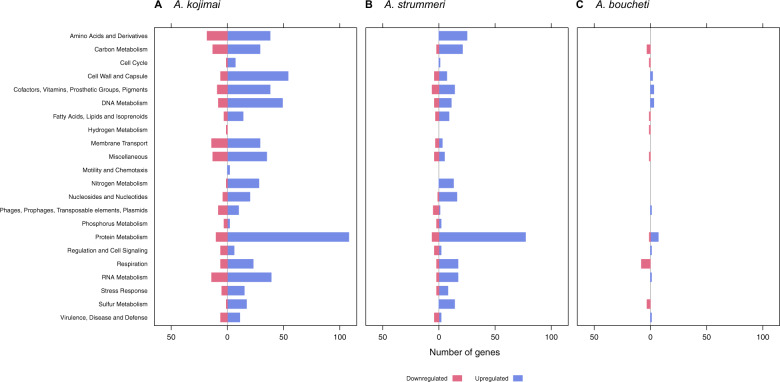
Symbioses between invertebrate animals and chemosynthetic bacteria form the basis of hydrothermal vent ecosystems worldwide. In the Lau Basin, deep-sea vent snails of the genus Alviniconcha associate with either Gammaproteobacteria (A. kojimai, A. strummeri) or Campylobacteria (A. boucheti) that use sulfide and/or hydrogen as energy sources. While the A. boucheti host-symbiont combination (holobiont) dominates at vents with higher concentrations of sulfide and hydrogen, the A. kojimai and A. strummeri holobionts are more abundant at sites with lower concentrations of these reductants. We posit that adaptive differences in symbiont physiology and gene regulation might influence the observed niche partitioning between host taxa. To test this hypothesis, we used high-pressure respirometers to measure symbiont metabolic rates and examine changes in gene expression among holobionts exposed to in situ concentrations of hydrogen (H2: ~25 µM) or hydrogen sulfide (H2S: ~120 µM). The campylobacterial symbiont exhibited the lowest rate of H2S oxidation but the highest rate of H2 oxidation, with fewer transcriptional changes and less carbon fixation relative to the gammaproteobacterial symbionts under each experimental condition. These data reveal potential physiological adaptations among symbiont types, which may account for the observed net differences in metabolic activity and contribute to the observed niche segregation among holobionts.
Conflict of interest statement
The authors declare that they have no conflict of interest.
Figures

References
-
- Bongaerts P, Frade PR, Ogier JJ, Hay KB, van Bleijswijk J, Englebert N, et al. Sharing the slope: depth partitioning of agariciid corals and associated Symbiodinium across shallow and mesophotic habitats (2-60 m) on a Caribbean reef. BMC Evol Biol. 2013;13:205. doi: 10.1186/1471-2148-13-205. - DOI - PMC - PubMed
