


Comparative Effects of Isokinetic Training and Virtual Reality Training on Sports Performances in University Football Players with Chronic Low Back Pain-Randomized Controlled Study
- PMID: 32617104
- PMCID: PMC7315304
- DOI: 10.1155/2020/2981273
Comparative Effects of Isokinetic Training and Virtual Reality Training on Sports Performances in University Football Players with Chronic Low Back Pain-Randomized Controlled Study
Abstract
Objective: The objective of this study is to find and compare the effects of isokinetic training and virtual reality training on sports performances in university football players with chronic low back pain.
Design: This is a randomized, double-blinded controlled study.
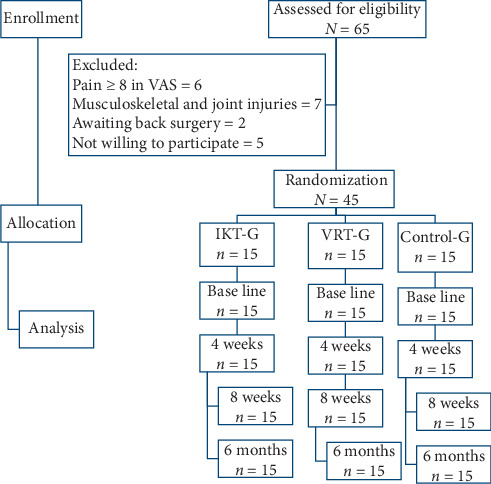
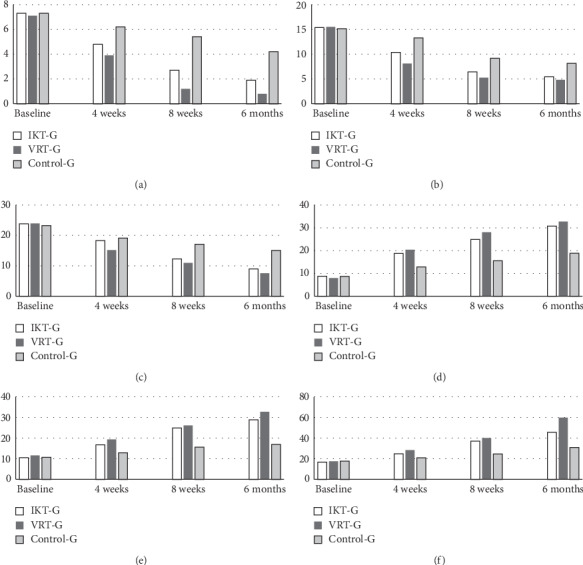
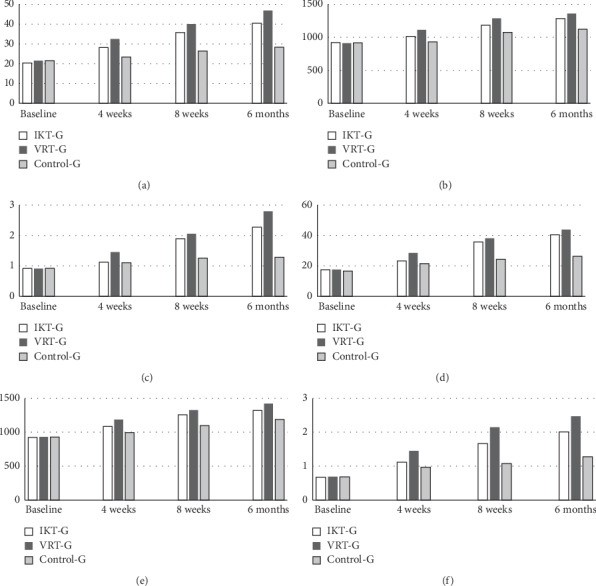
Methods: The study was conducted on 45LBP participants at university hospital. First group (n = 15) received isokinetic training, second group (n = 15) received virtual reality training, and the control group (n = 15) received conventional training exercises for four weeks. Clinical (pain intensity and player wellness) and sports performance (40 m sprint, 4 × 5 m sprint, submaximal shuttle running, countermovement jump, and squat jump) scores were measured at baseline, after 4 weeks, 8 weeks, and 6 months.
Results: Four weeks following training VRT group shows more significant changes in pain intensity and player wellness scores than IKT and control groups (p ≤ 0.001). Sports performance variables (such as 40 m sprint, 4 × 5 m sprint, submaximal shuttle running, countermovement jump, and squat jump) scores also show significant improvement in VRT group than the other two groups (p ≤ 0.001).
Conclusion: Overall, our study suggests that strength training through virtual reality training protocol improves pain and sports performances than isokinetic training and other conventional trainings in university football players with chronic low back pain.
Copyright © 2020 Gopal Nambi et al.
Conflict of interest statement
The authors declare that they have no conflicts of interest.
Figures
References
LinkOut - more resources
Full Text Sources
