


Spatiotemporal dynamics of the COVID-19 pandemic in the State of Kuwait
- PMID: 32619761
- PMCID: PMC7326444
- DOI: 10.1016/j.ijid.2020.06.078
Spatiotemporal dynamics of the COVID-19 pandemic in the State of Kuwait
Abstract
Objectives: Prompt understanding of the temporal and spatial patterns of the COVID-19 pandemic on a national level is a critical step for the timely allocation of surveillance resources. Therefore, this study explored the temporal and spatiotemporal dynamics of the COVID-19 pandemic in Kuwait using daily confirmed case data collected between the 23 February and 07 May 2020.
Methods: The pandemic progression was quantified using the time-dependent reproductive number (R(t)). The spatiotemporal scan statistic model was used to identify local clustering events. Variability in transmission dynamics was accounted for within and between two socioeconomic classes: citizens-residents and migrant workers.
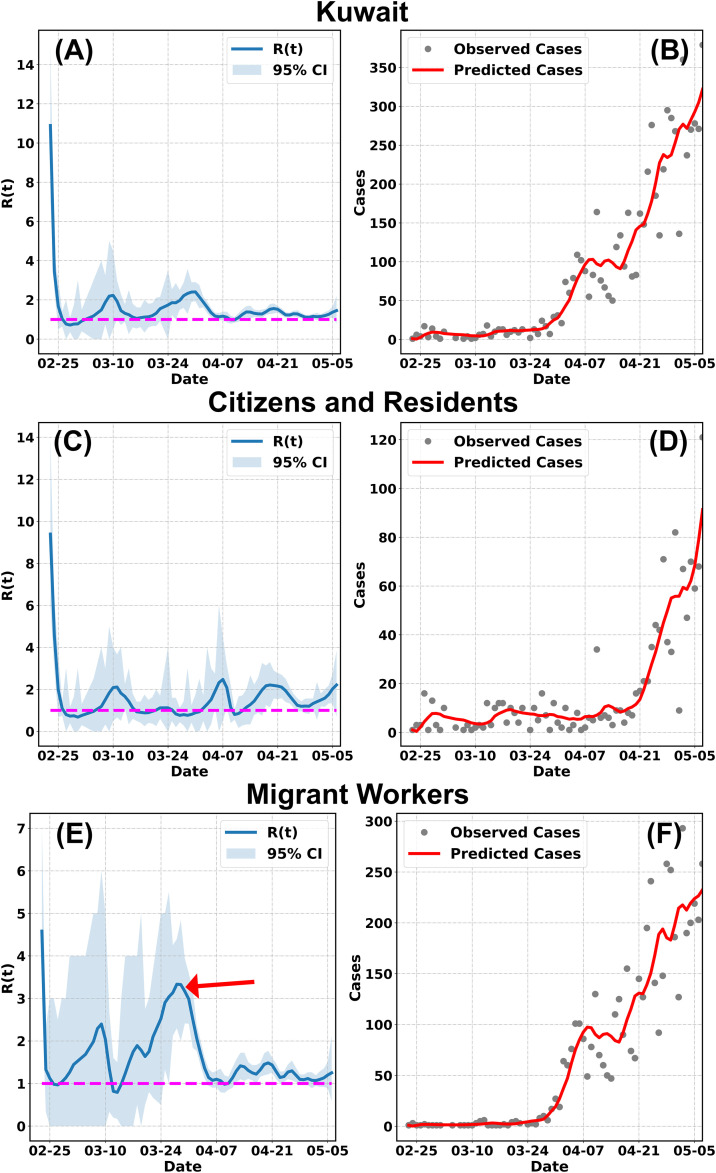
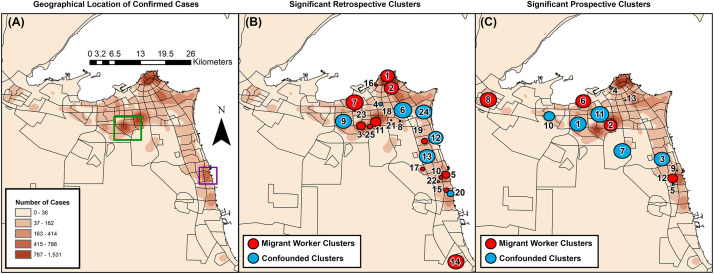
Results: The pandemic size in Kuwait continues to grow (R(t)s ≥2), indicating significant ongoing spread. Significant spreading and clustering events were detected among migrant workers, due to their densely populated areas and poor living conditions. However, the government's aggressive intervention measures have substantially lowered pandemic growth in migrant worker areas. However, at a later stage of the study period, active spreading and clustering events among both socioeconomic classes were found.
Conclusions: This study provided deeper insights into the epidemiology of COVID-19 in Kuwait and provided an important platform for rapid guidance of decisions related to intervention activities.
Keywords: COVID-19; Migrant worker; Spatiotemporal cluster; Surveillance; Time-dependent reproductive number.
Copyright © 2020 The Author(s). Published by Elsevier Ltd.. All rights reserved.
Figures

References
-
- Alkhamis M., Willeberg P., Carlsson U., Carpenter T., Perez A. Alternative scan-based approaches to identify space-time clusters of highly pathogenic avian influenza virus H5N1 in wild birds in Denmark and Sweden in 2006. Avian Dis. 2012;56(Suppl. 4):1040–1048. - PubMed
-
- Central Statistical Bureau of Kuwait (CSBoK) 2018. Annual Statistical Abstract 2017–2018.https://www.csb.gov.kw/Pages/Statistics_en?ID=13&ParentCatID=1 [Accessed 1 February 2020]
-
- Cristina Rapone I.B. 2020. Migrant Workers and the covid-19 Pandemic. United Nations Food and Agriculture Organization.http://www.fao.org/documents/card/en/c/ca8559en/ [Accessed 1 March 2020]
-
- International Labour Organization (ILO) 2020. Protecting Migrant Workers During the COVID-19 Pandemic: Recommendations for Policy Makers and Constituents.https://www.ilo.org/global/topics/labour-migration/publications/WCMS_743... [Accessed 2 May 2020]
MeSH terms
LinkOut - more resources
Full Text Sources
