


Food waste management during the COVID-19 outbreak: a holistic climate, economic and nutritional approach
- PMID: 32619842
- PMCID: PMC7319639
- DOI: 10.1016/j.scitotenv.2020.140524
Food waste management during the COVID-19 outbreak: a holistic climate, economic and nutritional approach
Abstract
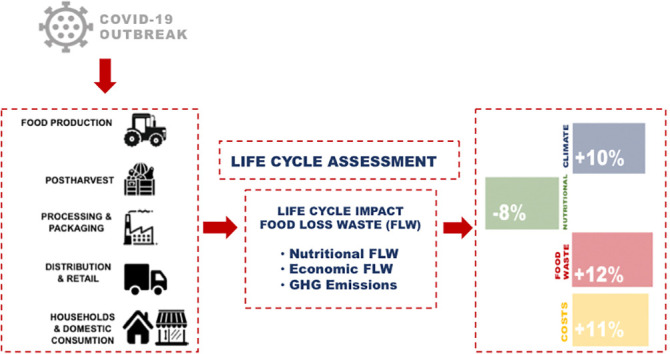
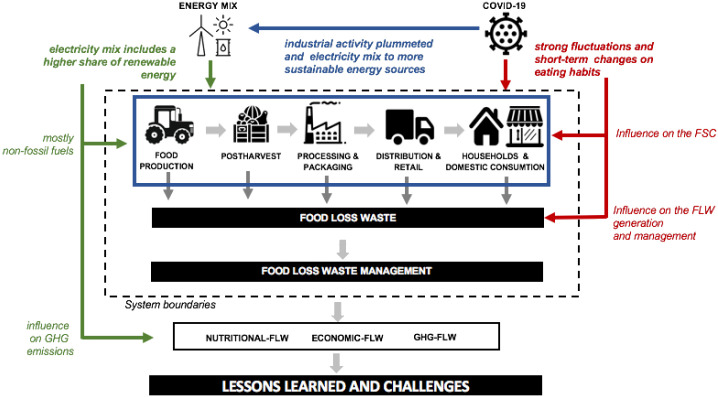
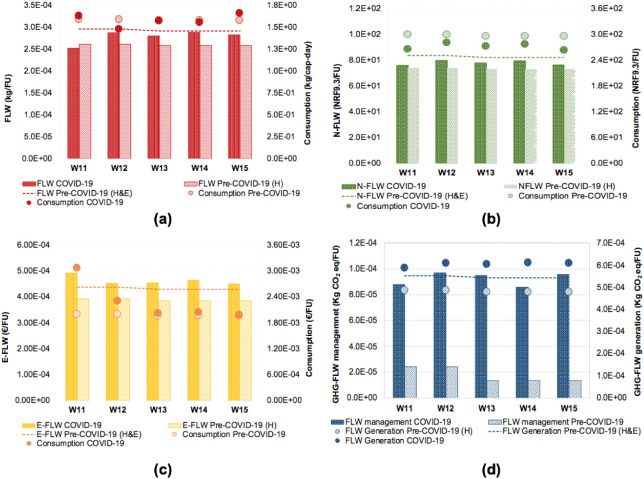
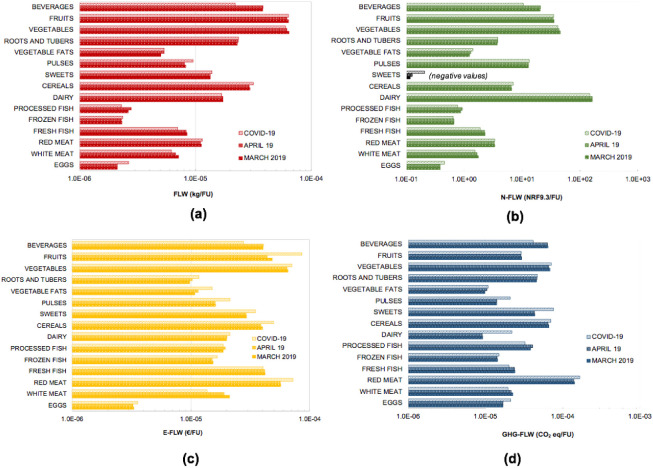
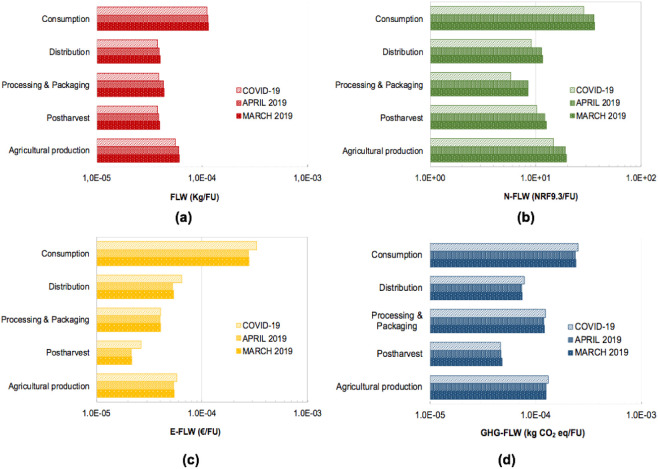
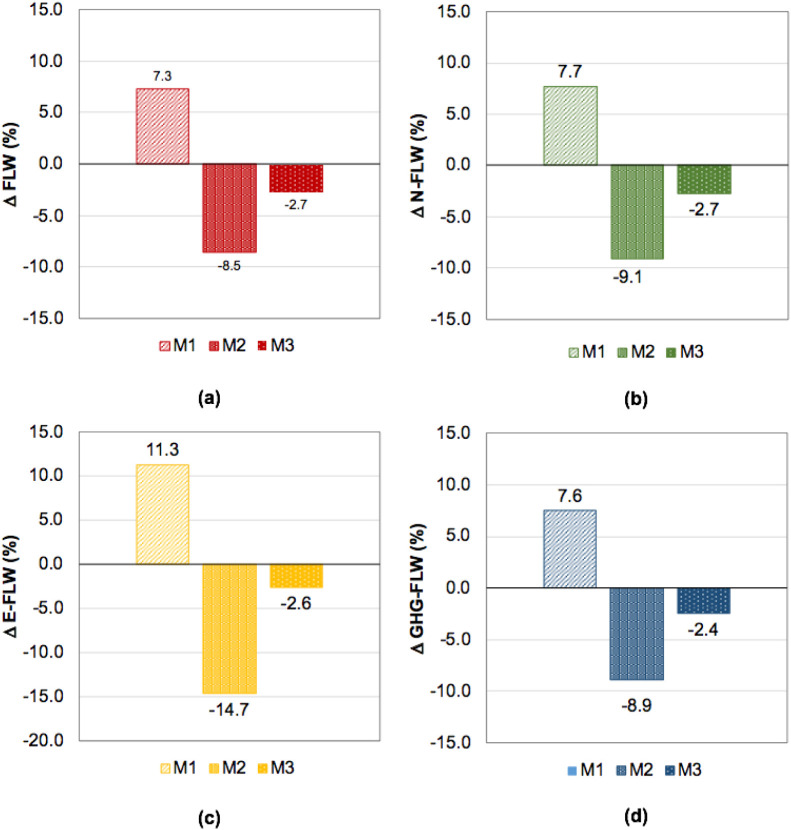
Improving the food supply chain efficiency has been identified as an essential means to enhance food security, while reducing pressure on natural resources. Adequate food loss and waste (FLW) management has been proposed as an approach to meet these objectives. The main hypothesis of this study is to consider that the "strong fluctuations and short-term changes" on eating habits may have major consequences on potential FLW generation and management, as well as on GHG emissions, all taking into account the nutritional and the economic cost. Due to the exceptional lockdown measures imposed by the Spanish government, as a consequence of the emerging coronavirus disease, COVID-19, food production and consumption systems have undergone significant changes, which must be properly studied in order to propose strategies from the lessons learned. Taking Spain as a case study, the methodological approach included a deep analysis of the inputs and outputs of the Spanish food basket, the supply chain by means of a Material Flow Analysis, as well as an economic and comprehensive nutritional assessment, all under a life cycle thinking approach. The results reveal that during the first weeks of the COVID-19 lockdown, there was no significant adjustment in overall FLW generation, but a partial reallocation from extra-domestic consumption to households occurred (12% increase in household FLW). Moreover, the economic impact (+11%), GHG emissions (+10%), and the nutritional content (-8%) complete the multivariable impact profile that the COVID-19 outbreak had on FLW generation and management. Accordingly, this study once again highlights that measures aimed at reducing FLW, particularly in the household sector, are critical to make better use of food surpluses and FLW prevention and control, allowing us to confront future unforeseen scenarios.
Keywords: COVID-19; Eating habits; Food loss waste (FLW); GHG emissions; Life cycle assessment (LCA); Nutritional impact.
Copyright © 2020 Elsevier B.V. All rights reserved.
Conflict of interest statement
Declaration of competing interest The authors declare that they have no known competing financial interests or personal relationships that could have appeared to influence the work reported in this paper.
Figures
References
-
- Abejón R., Laso J., Margallo M., Aldaco R., Blanca-Alcubilla G., Bala A., Fullana-i-Palmer P. Environmental impact assessment of the implementation of a deposit-refund system for packaging waste in Spain: a solution or an additional problem? Sci. Total Environ. 2020;721 doi: 10.1016/j.scitotenv.2020.137744. - DOI - PubMed
-
- Abín R., Laca A., Laca A., Díaz M. Environmental assessment of intensive egg production: a Spanish case study. J. Clean. Prod. 2018;179:160–168. doi: 10.1016/j.jclepro.2018.01.067. - DOI
-
- Batlle-Bayer L., Bala A., García-Herrero I., Lemaire E., Song G., Aldaco R., Fullana-i-Palmer P. The Spanish dietary guidelines: a potential tool to reduce greenhouse gas emissions of current dietary patterns. J. Clean. Prod. 2019;213:588–598. doi: 10.1016/j.jclepro.2018.12.215. - DOI
-
- Batlle-Bayer L., Bala A., Lemaire E., Albertí J., García-Herrero I., Aldaco R., Fullana-i-Palmer P. An energy- and nutrient-corrected functional unit to compare LCAs of diets. Sci. Total Environ. 2019;671:175–179. - PubMed
-
- Batlle-Bayer L., Bala A., Roca M., Lemaire E., Aldaco R., Fullana-i-Palmer P. Nutritional and environmental co-benefits of shifting to “planetary health” Spanish tapas. J. Clean. Prod. 2020 (in press)
MeSH terms
LinkOut - more resources
Full Text Sources
Research Materials
