


Association between musculoskeletal function deterioration and locomotive syndrome in the general elderly population: a Japanese cohort survey randomly sampled from a basic resident registry
- PMID: 32620119
- PMCID: PMC7334862
- DOI: 10.1186/s12891-020-03469-x
Association between musculoskeletal function deterioration and locomotive syndrome in the general elderly population: a Japanese cohort survey randomly sampled from a basic resident registry
Abstract
Background: Locomotive syndrome (LoS) is defined as the loss of mobility due to age-related impairment of motor organs. The purpose of this study was to evaluate the prevalence and severity of LoS, muscular strength and balancing ability, and prevalence of sarcopenia in relation to the presence of LoS according to sex and age groups ranging between 50 and 89 years.
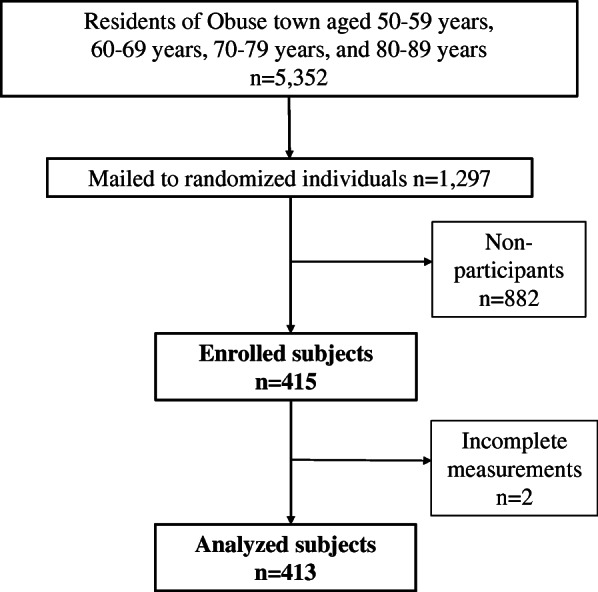
Methods: Male and female participants between the ages of 50-89 were randomly selected in the resident registry of a cooperating town. Calls for participation continued until approximately 50 consenting participants were successfully recruited for each age group and sex. A total of 413 participants (203 male and 210 female) were enrolled for undergoing a LoS risk test and measuring their physical function. Physical function was compared to participants with or without LoS.
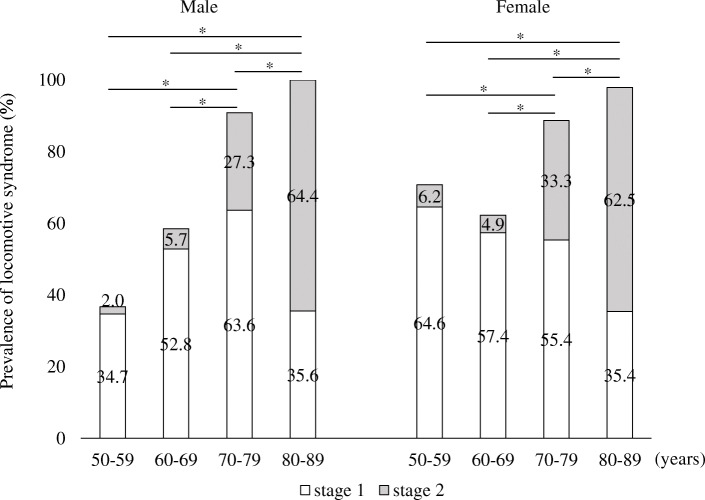
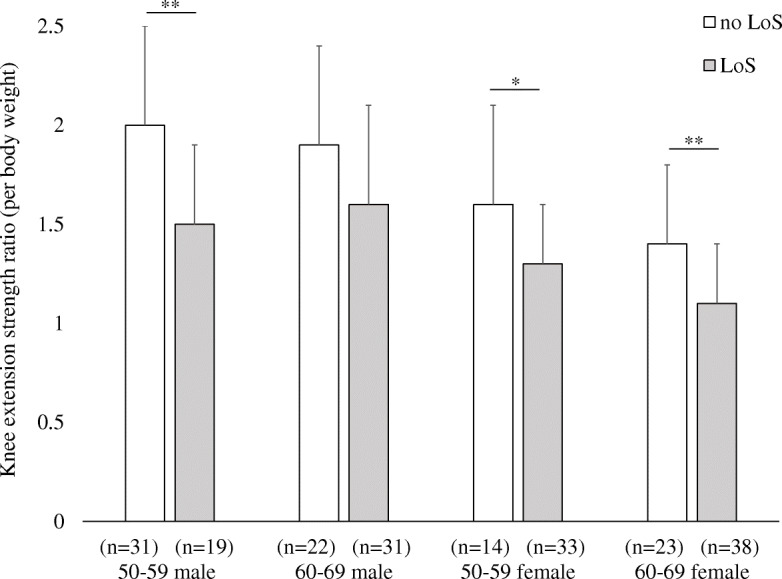
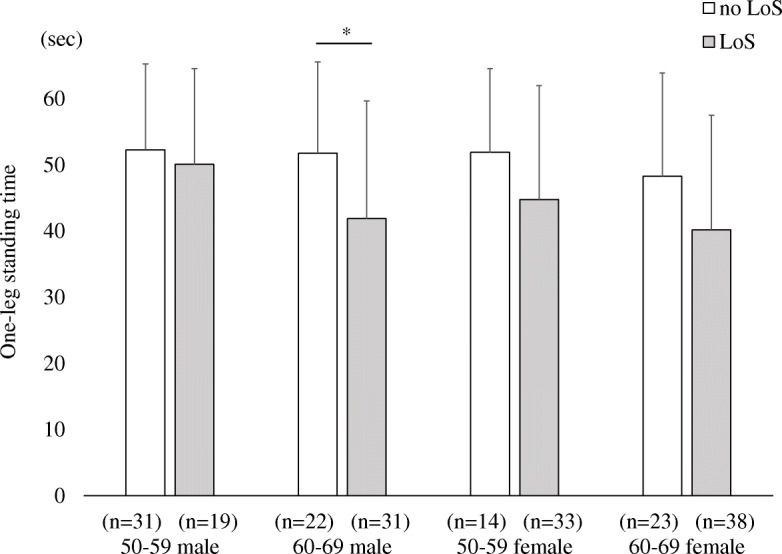
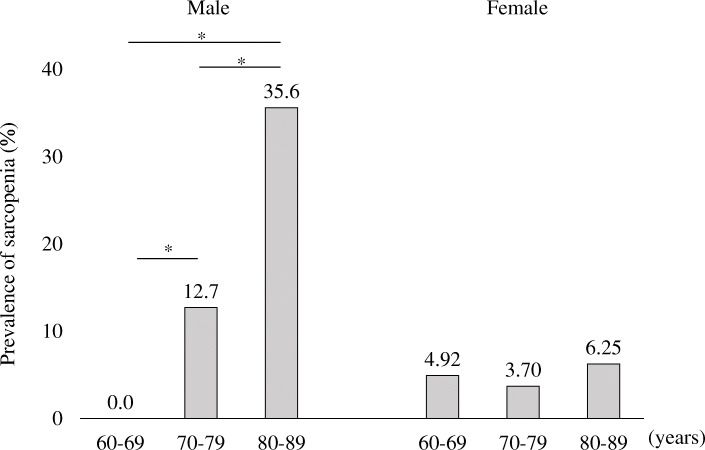
Results: A total of 312 patients (75.5%) were diagnosed as LoS, of which 144 (46.2%) were male and 168 (53.8%) were female. The severity of LoS for the 312 patients were 210 (67.3%) for stage 1 and 102 (32.7%) for stage 2. The prevalence of LoS in males were 37, 59, 91, and 100% in the 50s, 60s, 70s, and 80s age strata, respectively. The prevalence of LoS in females were 71, 62, 89, and 98% in the 50s, 60s, 70s, and 80s age strata, respectively. The prevalence of sarcopenia was significantly higher as the age strata in males grew higher. Knee extension strength was significantly lower for participants in their 50s and females in addition to females in their 60s with LoS. The 31 patients diagnosed as sarcopenia included 29 (93.5%) with LoS, 11 (35.4%) classified as LoS stage 1, and 18 (58.1%) classified as stage 2.
Conclusions: The prevalence of LoS was high in participants over 70 years of age. In males, the prevalence of sarcopenia was higher as the age strata grew higher. Patients with LoS exhibited lower knee extension strength. We believe that some measures to prevent or improve LoS may require exercise to increase the muscle strength of the lower limbs.
Keywords: Cross-sectional survey; Epidemiological study; Locomotion, physical examination; Prevalence; Sarcopenia.
Conflict of interest statement
The authors declare that they have no competing interests.
Figures
References
MeSH terms
Grants and funding
LinkOut - more resources
Full Text Sources
