


When Is a Plasmodium-Infected Mosquito an Infectious Mosquito?
- PMID: 32620501
- PMCID: PMC7386819
- DOI: 10.1016/j.pt.2020.05.011
When Is a Plasmodium-Infected Mosquito an Infectious Mosquito?
Abstract
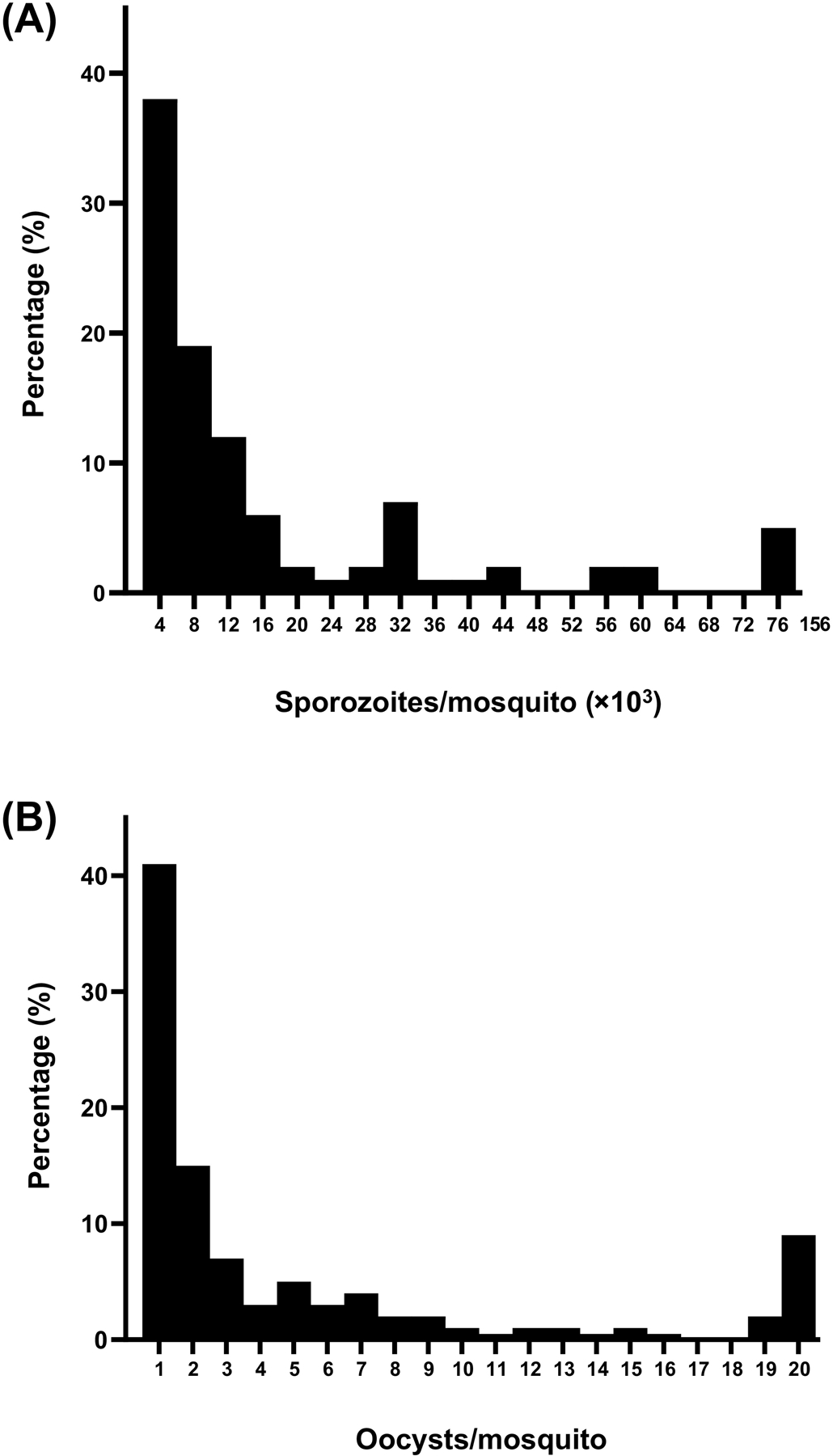
Plasmodium parasites experience significant bottlenecks as they transit through the mosquito and are transmitted to their mammalian host. Oocyst prevalence on mosquito midguts and sporozoite prevalence in salivary glands are nevertheless commonly used to confirm successful malaria transmission, assuming that these are reliable indicators of the mosquito's capacity to give rise to secondary infections. Here we discuss recent insights in sporogonic development and transmission bottlenecks for Plasmodium. We highlight critical gaps in our knowledge and frame their importance in understanding the human and mosquito reservoirs of infection. A better understanding of the events that lead to successful inoculation of infectious sporozoites by mosquitoes is critical to designing effective interventions to shrink the malaria map.
Keywords: Anopheles; gametocyte; mosquitoes; oocyst; salivary glands; sporozoite.
Copyright © 2020 The Authors. Published by Elsevier Ltd.. All rights reserved.
Conflict of interest statement
Competing financial interests
The authors declare no competing financial interests.
Figures

References
Publication types
MeSH terms
Grants and funding
LinkOut - more resources
Full Text Sources
Medical
