A qualitative study of the vocational and psychological perceptions and issues of transdisciplinary nurses during the COVID-19 outbreak
- PMID: 32620713
- PMCID: PMC7377893
- DOI: 10.18632/aging.103533
A qualitative study of the vocational and psychological perceptions and issues of transdisciplinary nurses during the COVID-19 outbreak
Abstract
Background: Due to its high infectivity and concealment, the coronavirus disease 2019 (COVID-19) outbreak that occurred in Wuhan attracted global attention. A special nursing group of transdisciplinary nurses (TNs) who had not worked in respiratory medicine, infection departments, or emergency and intensive medicine but who accounted for a large proportion of all nurses also drew our attention. Few studies have examined this special group of TNs. Therefore, this study collected the experiences and views of TNs at the forefront of the COVID-19 outbreak to investigate their potential problems.
Results: Twenty-five TNs and 19 nurses with experience in infectious diseases (non-TNs) were enrolled in the study. Compared with non-TNs, TNs showed higher levels of perceived stress and relatively less perceived social support. For TNs, the ambiguous roles, transition of operating mode, unfamiliar work content, and reversal of their daily schedule were the most common vocational problems. Additionally, most TNs had psychological problems such as anxiety, pain and insomnia. The incomprehension of parents, concern for family members and long-term isolation were the most common causes of psychological stress.
Conclusion: This survey is the first to focus on the group of TNs at the forefront of the COVID-19 outbreak and to investigate their experiences, vocational issues and psychological stresses qualitatively and quantificationally. We found that TNs had more perceived stress and less perceived social support than non-TNs. The vocational and psychological issues of TNs should be highlighted. These findings identify important issues and offer insights into the underlying issues to help TNs ultimately win the battle against novel coronavirus epidemics.
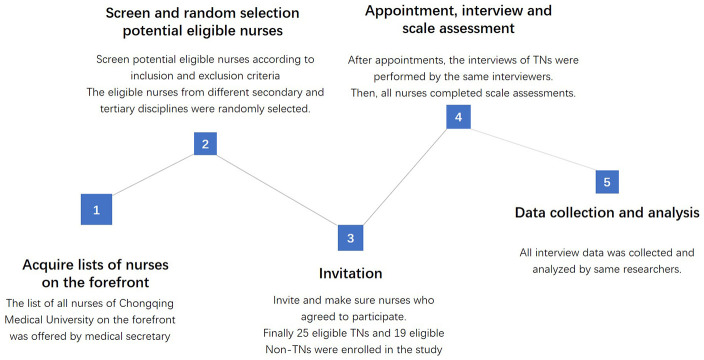
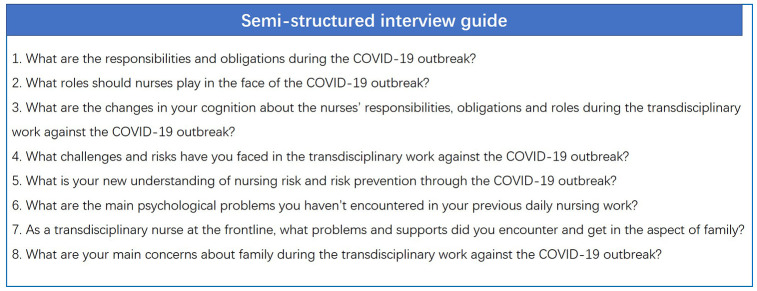
Methods: Semi-structured and face-to-face individual interviews and quantitative assessments were conducted. The Braun Clarke Thematic Analysis method and the strategy outlined by Miles and Huberman were used in the data analysis process of the qualitative study. The perceived stress scale and perceived social support scale were utilized to quantificationally evaluate the perceived stress level and the amount of perceived social support. Both qualitative and quantitative methods were adopted to assess the vocational and psychological perceptions and issues.
Keywords: COVID-19; interview; psychological issues; transdisciplinary nurses; vocational problems.
Conflict of interest statement
Figures
References
MeSH terms
LinkOut - more resources
Full Text Sources
Medical
Miscellaneous