


Predicting and affecting response to cancer therapy based on pathway-level biomarkers
- PMID: 32620799
- PMCID: PMC7335104
- DOI: 10.1038/s41467-020-17090-y
Predicting and affecting response to cancer therapy based on pathway-level biomarkers
Abstract
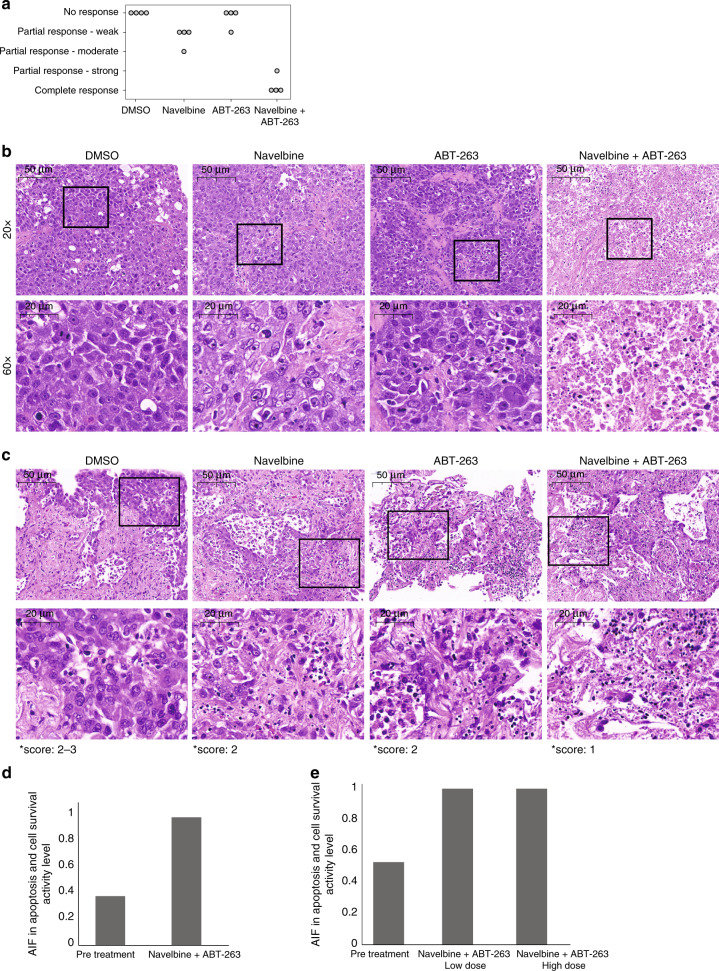
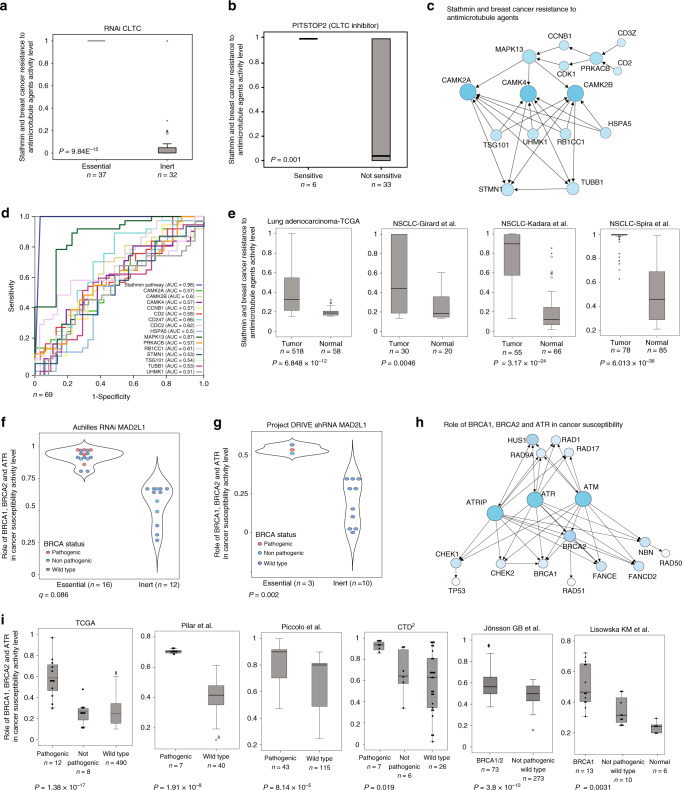
Identifying robust, patient-specific, and predictive biomarkers presents a major obstacle in precision oncology. To optimize patient-specific therapeutic strategies, here we couple pathway knowledge with large-scale drug sensitivity, RNAi, and CRISPR-Cas9 screening data from 460 cell lines. Pathway activity levels are found to be strong predictive biomarkers for the essentiality of 15 proteins, including the essentiality of MAD2L1 in breast cancer patients with high BRCA-pathway activity. We also find strong predictive biomarkers for the sensitivity to 31 compounds, including BCL2 and microtubule inhibitors (MTIs). Lastly, we show that Bcl-xL inhibition can modulate the activity of a predictive biomarker pathway and re-sensitize lung cancer cells and tumors to MTI therapy. Overall, our results support the use of pathways in helping to achieve the goal of precision medicine by uncovering dozens of predictive biomarkers.
Conflict of interest statement
R.S. and N.G. serve as external consultants to CuResponse and in such context have been issued equity incentives in the company. G.G. receives research funds from IBM and Pharmacyclics. G.G. is an inventor on patent applications related to bioinformatic tools such as MuTect, MutSig, ABSOLUTE, and POLYSOLVER. G.G. is a founder, consultant and holds privately held equity in Scorpion Therapeutics. R.B, G.G. and R.S. are inventors on a patent application related to this work. All other authors declare no competing interests.
Figures
References
-
- Davies H, et al. Mutations of the BRAF gene in human cancer. Nature. 2002;417:949. - PubMed
Publication types
MeSH terms
Substances
LinkOut - more resources
Full Text Sources
Medical
Research Materials
Miscellaneous
