


Neurobiology of coronaviruses: Potential relevance for COVID-19
- PMID: 32622086
- PMCID: PMC7329662
- DOI: 10.1016/j.nbd.2020.105007
Neurobiology of coronaviruses: Potential relevance for COVID-19
Abstract
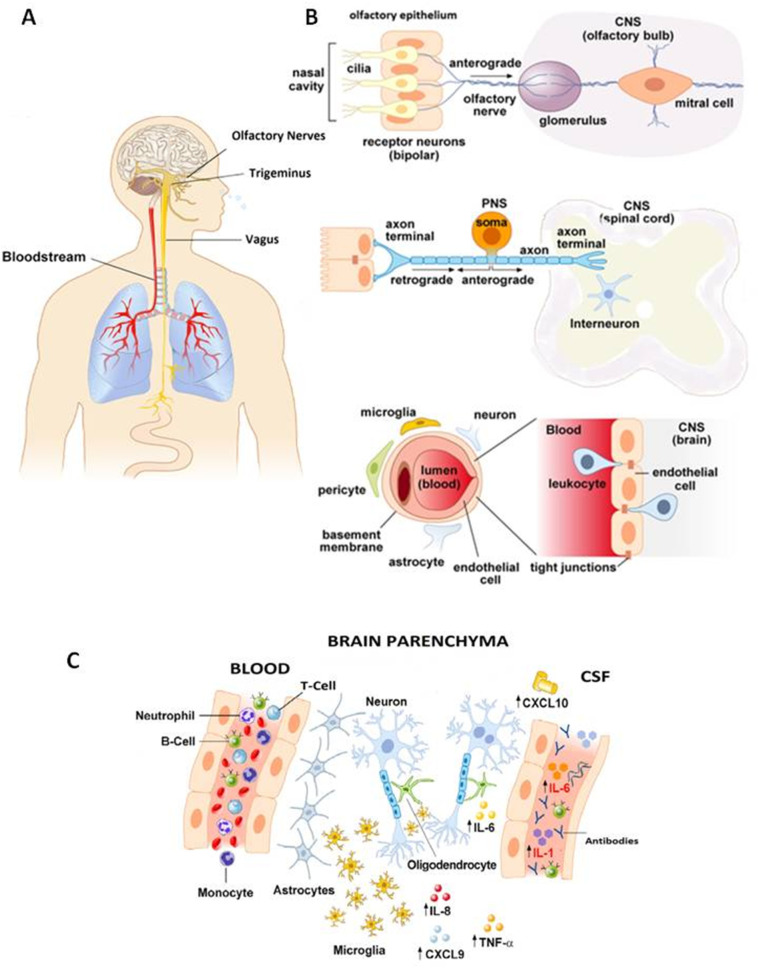
In the first two decades of the 21st century, there have been three outbreaks of severe respiratory infections caused by highly pathogenic coronaviruses (CoVs) around the world: the severe acute respiratory syndrome (SARS) by the SARS-CoV in 2002-2003, the Middle East respiratory syndrome (MERS) by the MERS-CoV in June 2012, and Coronavirus Disease 2019 (COVID-19) by the SARS-CoV-2 presently affecting most countries In all of these, fatalities are a consequence of a multiorgan dysregulation caused by pulmonary, renal, cardiac, and circulatory damage; however, COVID patients may show significant neurological signs and symptoms such as headache, nausea, vomiting, and sensory disturbances, the most prominent being anosmia and ageusia. The neuroinvasive potential of CoVs might be responsible for at least part of these symptoms and may contribute to the respiratory failure observed in affected patients. Therefore, in the present manuscript, we have reviewed the available preclinical evidence on the mechanisms and consequences of CoVs-induced CNS damage, and highlighted the potential role of CoVs in determining or aggravating acute and long-term neurological diseases in infected individuals. We consider that a widespread awareness of the significant neurotropism of CoVs might contribute to an earlier recognition of the signs and symptoms of viral-induced CNS damage. Moreover, a better understanding of the cellular and molecular mechanisms by which CoVs affect CNS function and cause CNS damage could help in planning new strategies for prognostic evaluation and targeted therapeutic intervention.
Keywords: COVID-19; Coronaviruses; Neuroinflammation; SARS; Viral encephalitis.
Copyright © 2020. Published by Elsevier Inc.
Conflict of interest statement
Declaration of Competing Interest M.C., G.P., and M.T. have nothing to disclose.
Figures
References
-
- Aarli J.A. Role of cytokines in neurological disorders. Curr. Med. Chem. 2003;10:1931–1937. - PubMed
-
- Allan S.M., Tyrrell P.J., Rothwell N.J. Interleukin-1 and neuronal injury. Nat. Rev. Immunol. 2005;5:629–640. - PubMed
-
- Andries K., Pensaert M.B. Virus isolated and immunofluorescence in different organs of pigs infected with hemagglutinating encephalomyelitis virus. Am. J. Vet. Res. 1980;41:215–218. - PubMed
Publication types
MeSH terms
LinkOut - more resources
Full Text Sources
Medical
Molecular Biology Databases
Miscellaneous
