


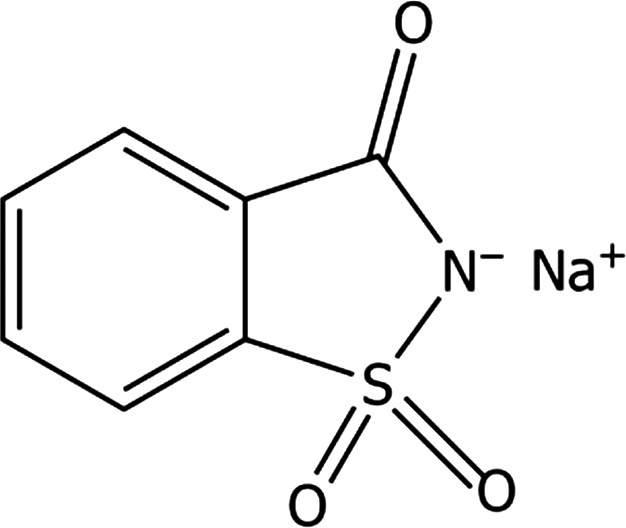
Safety and efficacy of sodium saccharin when used as a feed flavour for piglets, pigs for fattening, calves for rearing and calves for fattening
- PMID: 32625841
- PMCID: PMC7009548
- DOI: 10.2903/j.efsa.2018.5208
Safety and efficacy of sodium saccharin when used as a feed flavour for piglets, pigs for fattening, calves for rearing and calves for fattening
Abstract
Sodium saccharin is intended to be used as a sweetener in feed and water for drinking for piglets, pigs for fattening and veal calves. The Panel on Additives and Products or Substances used in Animal Feed (FEEDAP) considers the proposed maximum use level of 150 mg sodium saccharin/kg feed as safe for calves and pigs for fattening. For piglets (sucking and weaned piglets), a lower level of 100 mg sodium saccharin/kg complete feed is considered safe. The corresponding maximum safe concentrations in water for drinking are 30 mg/L for piglets and 50 mg/L for pigs for fattening, respectively. The maximum safe concentrations of sodium saccharin in feed and water for drinking are derived under the premise that only one source, feed or water for drinking, contains the additive. The FEEDAP Panel concludes that no concern for the consumer would result from the use of sodium saccharin in feed and water for drinking at the dose considered safe for the target species. The precautions for handling the product proposed by the applicant are considered to be sufficient to ensure user safety. The FEEDAP Panel concludes that the use of sodium saccharin at the dose considered safe for target species is unlikely to have detrimental effects on the terrestrial and freshwater compartments. The high mobility and relative persistence of saccharin and the high persistency of its degradation product 4-hydroxysaccharin indicate that groundwater contamination above 0.1 μg/L is likely to occur. Since the function of sodium saccharin in feed for the target species is essentially the same as that in food, the FEEDAP Panel concludes that no demonstration of efficacy is necessary.
Keywords: Sensory additives; flavouring compounds; piglets; pigs; safety; sodium saccharin; veal calves.
© 2018 European Food Safety Authority. EFSA Journal published by John Wiley and Sons Ltd on behalf of European Food Safety Authority.
Figures
References
-
- Buerge IJ, Keller M, Buser HR, Muller MD and Poiger T, 2011. Saccharin and other artificial sweeteners in soils: estimated inputs from agriculture and households, degradation, and leaching to groundwater. Environmental Science & Technology, 45, 615–621. - PubMed
-
- EFSA (European Food Safety Authority), 2005. Conclusions regarding the peer review of the pesticide risk assessment of the active substance tribenuron. EFSA Journal 2005;3(3):1–52, 52 pp. 10.2903/j.efsa.2005.15r - DOI
-
- EFSA (European Food Safety Authority), 2007. Scientific Opinion of the Panel on Food Additives, Flavourings, Processing Aids and Materials in Contact with Food (AFC) on the presence of 1,2‐benzisothiazolin‐3‐one as an impurity in saccharin used as food additive. EFSA Journal 2007;5(1):416, 7 pp. 10.2903/j.efsa.2007.416 - DOI
-
- EFSA (European Food Safety Authority), 2008. Technical Guidance of the Scientific Panel on Additives and Products or Substances used in Animal Feed (FEEDAP) for assessing the safety of feed additives for the environment. EFSA Journal 2008;6(10):842, 28 pp. 10.2903/j.efsa.2008.842 - DOI
-
- EFSA (European Food Safety Authority), 2015. Conclusion on the peer review of the pesticide risk assessment of the active substance metsulfuron‐methyl. EFSA Journal 2015;13(1):3936, 106 pp. 10.2903/j.efsa.2015.3936 - DOI
LinkOut - more resources
Full Text Sources