


The neurobiological reward system in Prolonged Grief Disorder (PGD): A systematic review
- PMID: 32629197
- PMCID: PMC7442719
- DOI: 10.1016/j.pscychresns.2020.111135
The neurobiological reward system in Prolonged Grief Disorder (PGD): A systematic review
Abstract
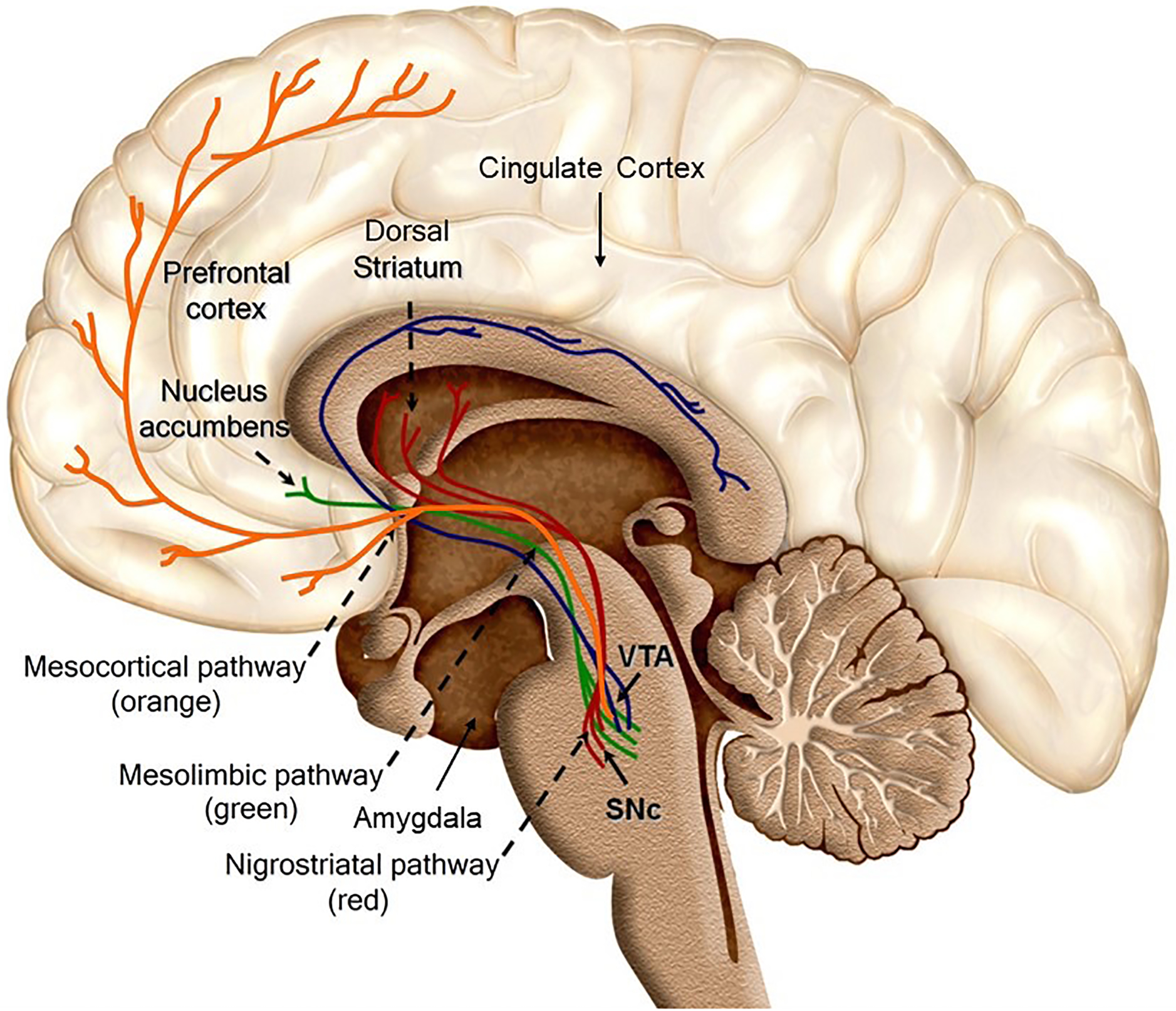
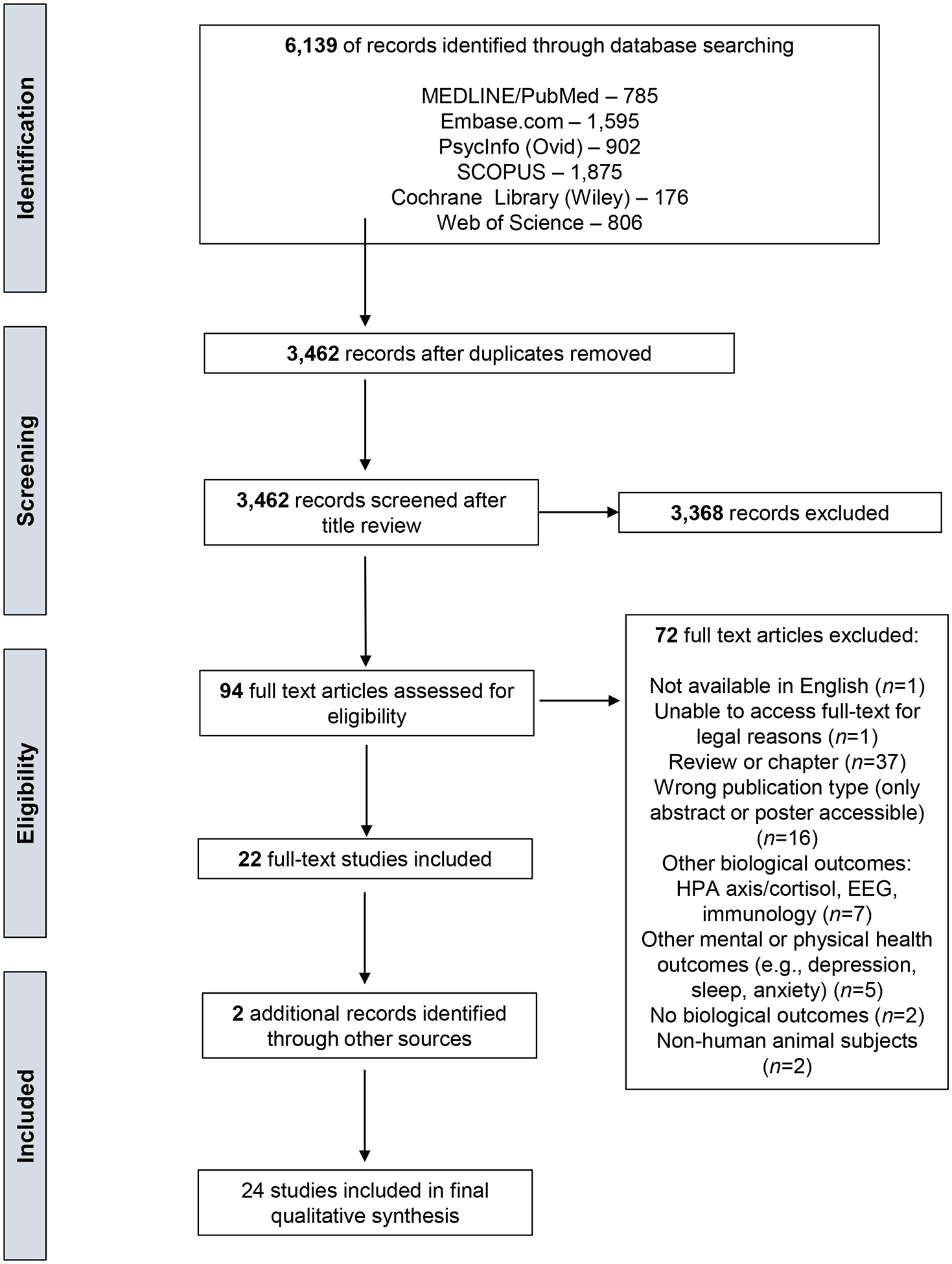
Prolonged Grief Disorder (PGD) is a debilitating condition affecting between 7% and 10% of bereaved individuals. Past imaging and psychological studies have proposed links between PGD's characteristic symptoms - in particular, profound yearning - and the neural reward system. We conducted a systematic review to investigate this connection. On December 19, 2019, we searched six bibliographic databases for data on the neurobiology of grief and disordered grief. We excluded studies of the hypothalamic-pituitary-adrenal (HPA) axis, animal studies, and reviews. After abstract and full-text screening, twenty-four studies were included in the final review. We found diverse evidence for the activation of several reward-related regions of the brain in PGD. The data reviewed suggest that compared to normative grief, PGD involves a differential pattern of activity in the amygdala and orbitofrontal cortex (OFC); likely differential activity in the posterior cingulate cortex (PCC), rostral or subgenual anterior cingulate cortex (ACC), and basal ganglia overall, including the nucleus accumbens (NAc); and possible differential activity in the insula. It also appears that oxytocin signaling is altered in PGD, though the exact mechanism is unclear. Our findings appear to be consistent with, though not confirmative of, conceptualizing PGD as a disorder of reward, and identify directions for future research.
Keywords: Bereavement; Complicated Grief (CG); Neuroimaging; Nneurobiology; Prolonged Grief Disorder (PGD).
Copyright © 2020 Elsevier B.V. All rights reserved.
Conflict of interest statement
Conflicts of Interest Statement
Declarations of interest: none.
Figures
References
-
- Arizmendi B, 2018. The effect of intranasal oxytocin on neural functioning in widow(er)s. Dissertation Abstracts International: Section B: The Sciences and Engineering.
Publication types
MeSH terms
Grants and funding
- T32 AG049666/AG/NIA NIH HHS/United States
- R21 NR018693/NR/NINR NIH HHS/United States
- P30 CA008748/CA/NCI NIH HHS/United States
- R01 CA106370/CA/NCI NIH HHS/United States
- P30 AG022845/AG/NIA NIH HHS/United States
- R01 MH063892/MH/NIMH NIH HHS/United States
- R21 MH121886/MH/NIMH NIH HHS/United States
- R21 CA218313/CA/NCI NIH HHS/United States
- R21 MH095378/MH/NIMH NIH HHS/United States
- R35 CA197730/CA/NCI NIH HHS/United States
- R01 MD007652/MD/NIMHD NIH HHS/United States
- T32 CA009461/CA/NCI NIH HHS/United States
- UL1 TR002384/TR/NCATS NIH HHS/United States
LinkOut - more resources
Full Text Sources
Medical
Miscellaneous
