Review
. 2020 Jun 25;10(6):94.
doi: 10.3390/life10060094.

The Clinical Use of Platelet-Rich Plasma in Knee Disorders and Surgery-A Systematic Review and Meta-Analysis

Affiliations
Review

The Clinical Use of Platelet-Rich Plasma in Knee Disorders and Surgery-A Systematic Review and Meta-Analysis

Ewa Trams et al. Life (Basel). .

Abstract

In recent years, the interest in biological treatment of knee lesions has increased, especially the application of platelet-rich plasma is of particular note. The number of articles evaluating platelet-rich plasma (PRP) efficacy in the recovery of knee disorders and during knee surgery has exponentially increased over the last decade. A systematic review with meta-analyses was performed by assessing selected studies of local PRP injections to the knee joint. The study was completed in accordance with 2009 Preferred Reporting Items for Systematic Reviews and Meta-Analyses (PRISMA) statement. A multistep search of PubMed, Embase, Cochrane Database of Systematic Reviews, and Clinicaltrials.gov was performed to identify studies on knee surgery and knee lesion treatment with PRP. Of the 4004 articles initially identified, 357 articles focusing on knee lesions were selected and, consequently, only 83 clinical trials were analyzed using the revised Cochrane risk-of-bias tool to evaluate risk. In total, seven areas of meta-analysis reported a positive effect of PRP. Among them, 10 sub-analyses demonstrated significant differences in favor of PRP when compared to the control groups (p < 0.05). This study showed the positive effects of PRP, both on the recovery of knee disorders and during knee surgery; however further prospective and randomized studies with a higher number of subjects and with lower biases are needed.

Keywords: PRP; anterior cruciate ligament (ACL); arthroscopy; knee lesion; meniscal repair; meniscus; osteoarthritis; osteoarthritis (OA); platelet-rich plasma; tendinopathy; total knee arthroplasty.


Conflict of interest statement

The authors declare no conflicts of interest.

Figures
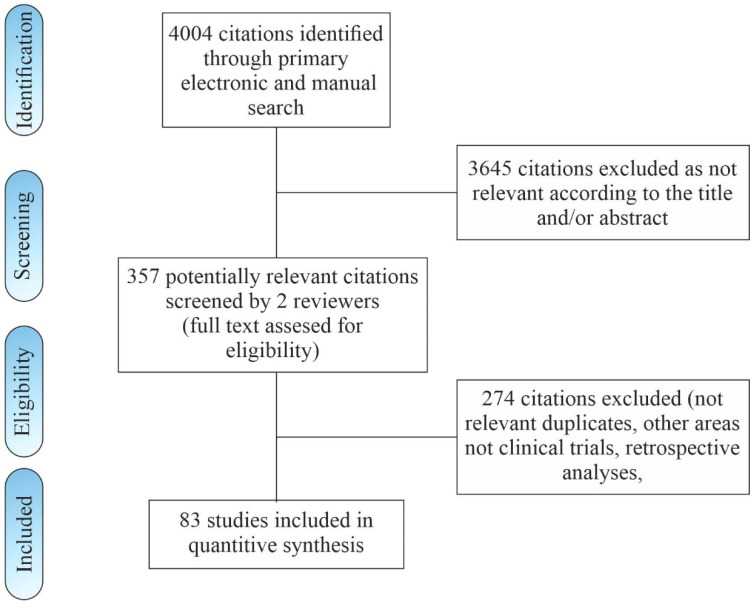
Figure 1
Figure 1
Flow chart of study inclusion.
Figure 2
Figure 2
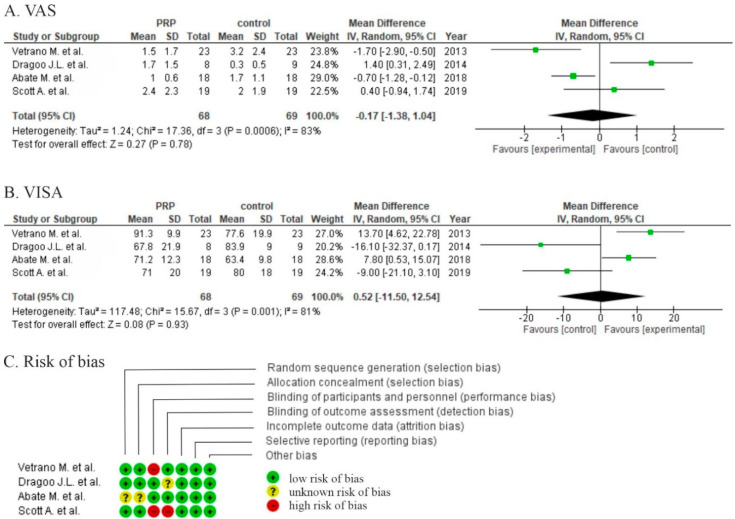
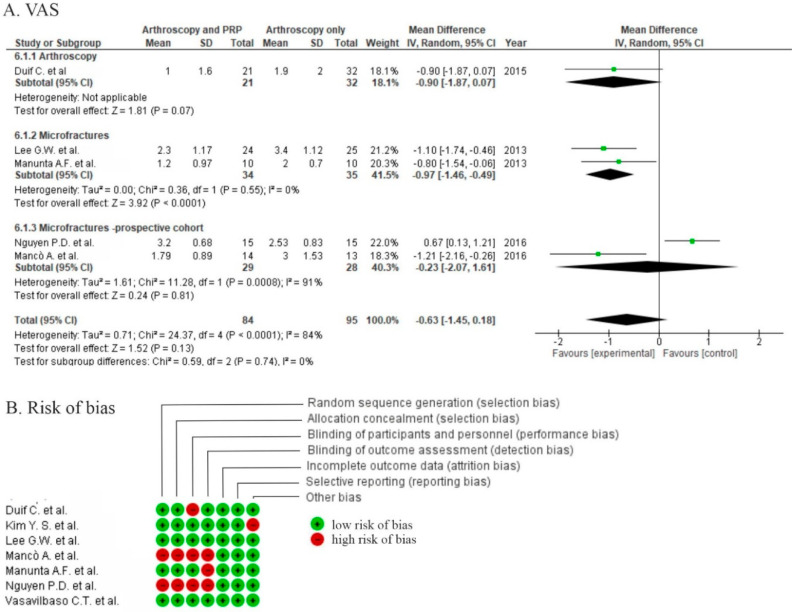
Forest plot for (A) visual analog scale (VAS) scores and (B) Victorian Institute of Sport Assessment (VISA) (CI: confidence interval; IV: inverse variance; SD: standard deviation.). (C) Risk of bias analysis.
Figure 3
Figure 3
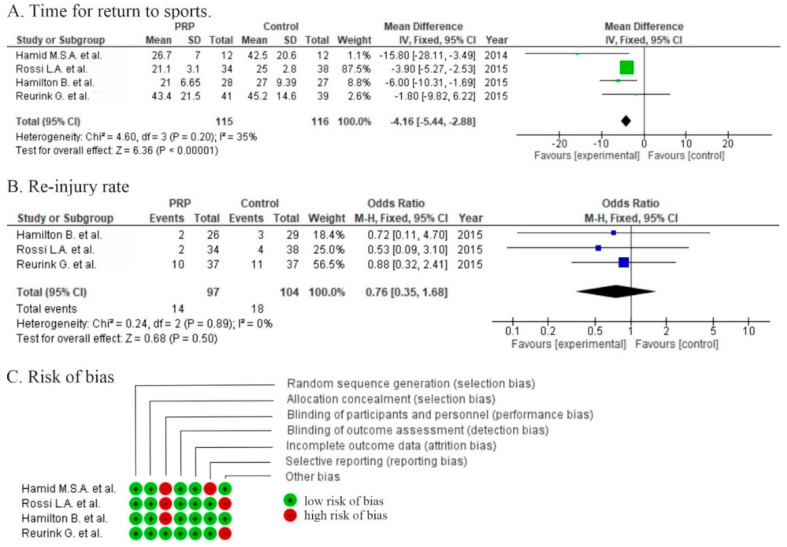
Forest plot for (A) time for return to sport (RTS) and (B) re-injury rate (CI: confidence interval; IV: inverse variance; SD: standard deviation). (C) Risk of bias analysis.
Figure 4
Figure 4
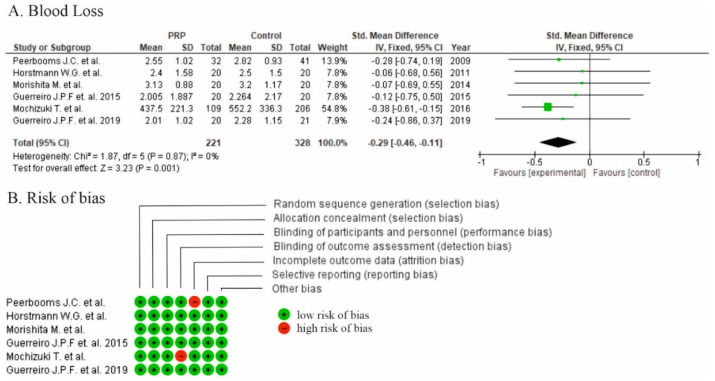
(A) Forest plot of time for blood loss analysis after total knee arthroplasty (TKA) (CI: confidence interval; IV: inverse variance; SD: standard deviation). (B) Risk of bias analysis.
Figure 5
Figure 5
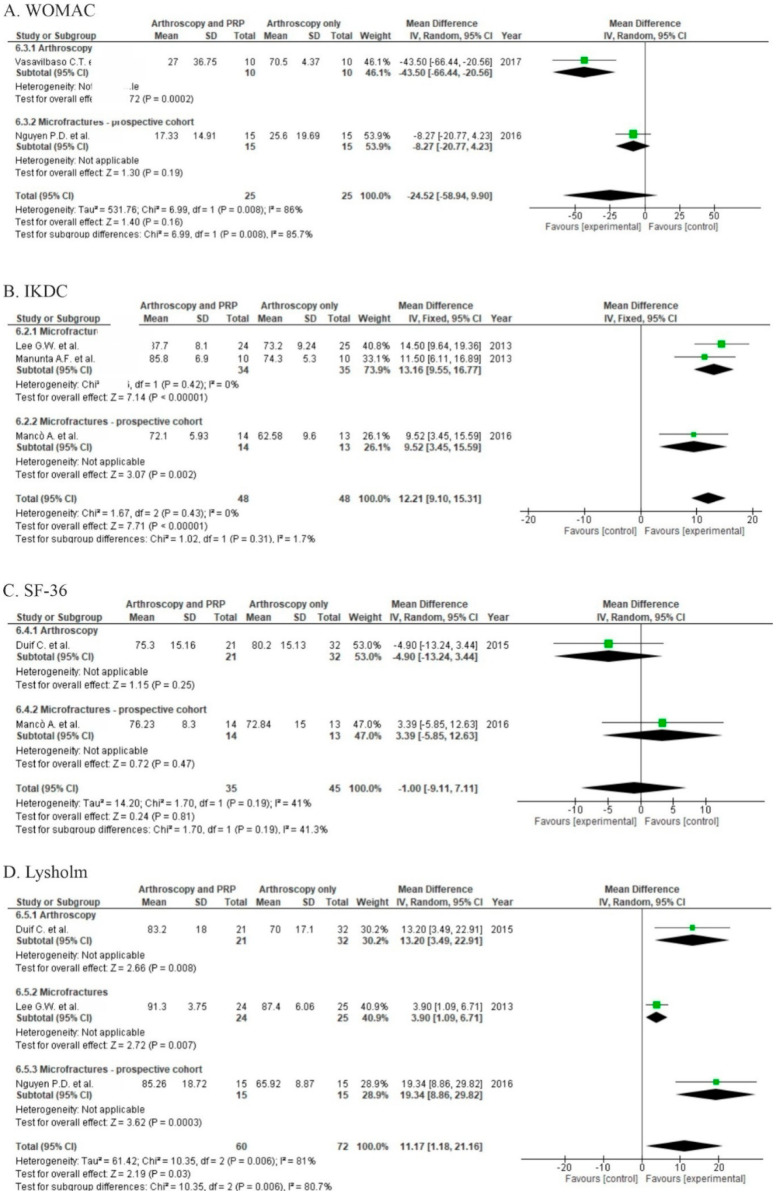
Forest plot for (A) Western Ontario and McMaster Universities Osteoarthritis Index (WOMAC), (B) International Knee Documentation Committee (IKDC), (C) 36-Item Short Form Survey (SF-36), and (D) Lysholm scores (D) (CI: confidence interval; IV: inverse variance; SD: standard deviation).
Figure 6
Figure 6
(A) Forest plot pain intensity for VAS (CI: confidence interval; IV: inverse variance; SD: standard deviation). (B) Risk of bias analysis.
Figure 7
Figure 7
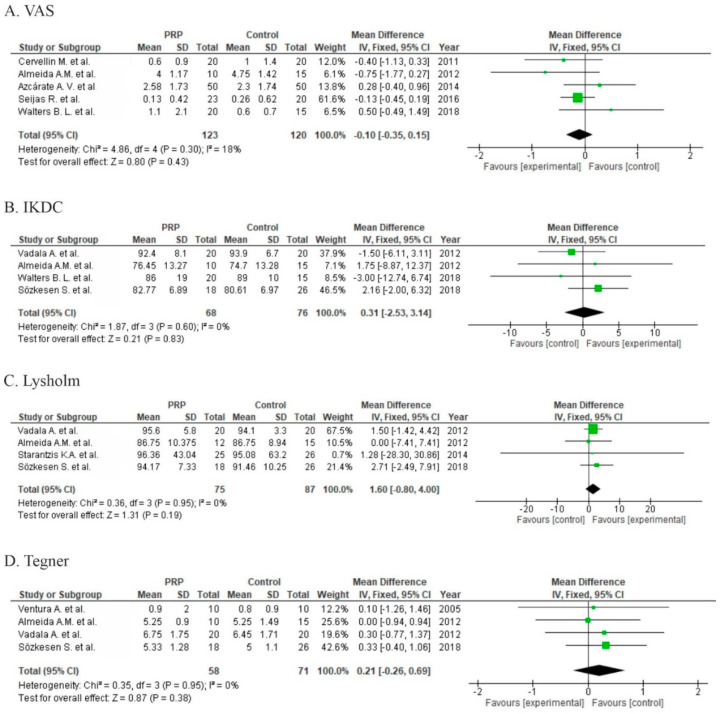
Forest plot for (A) VAS, (B) IKDC, (C) Lysholm score, and (D) Tegner scores (CI: confidence interval; IV: inverse variance; SD: standard deviation).
Figure 8
Figure 8
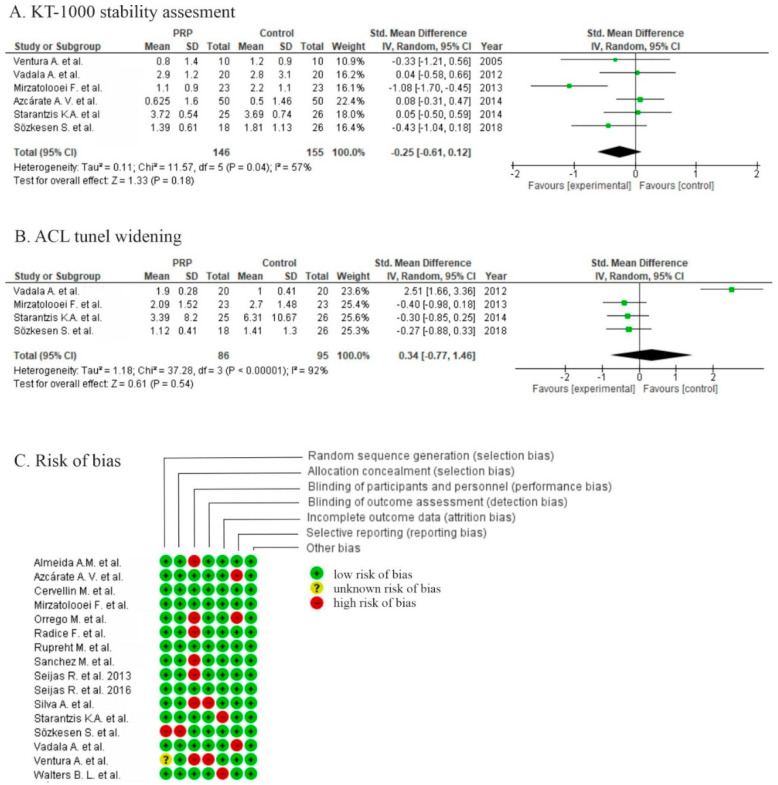
Forest plot for (A) KT-1000 (knee arthrometer) stability assessment and (B) tunnel widening (CI: confidence interval; IV: inverse variance; SD: standard deviation). (C) Risk of bias analysis.
Figure 9
Figure 9
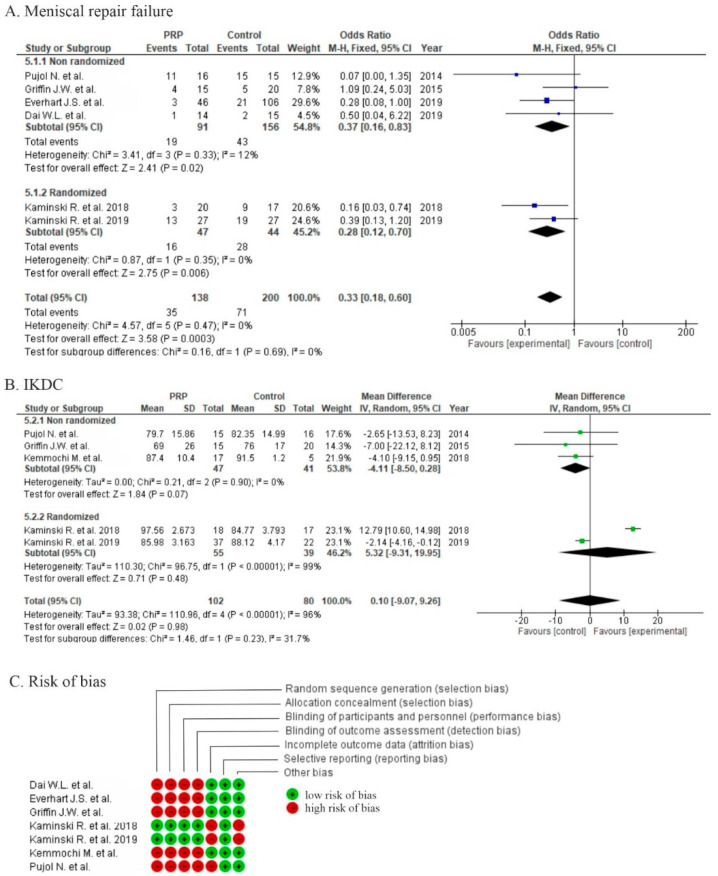
Forest plot for (A) meniscal repair failure and (B) IKDC (CI: confidence interval; IV: inverse variance; SD: standard deviation). (C) Risk of bias analysis.
Figure 10
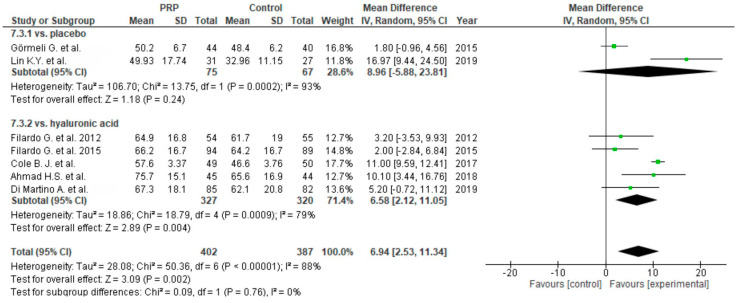
Figure 10
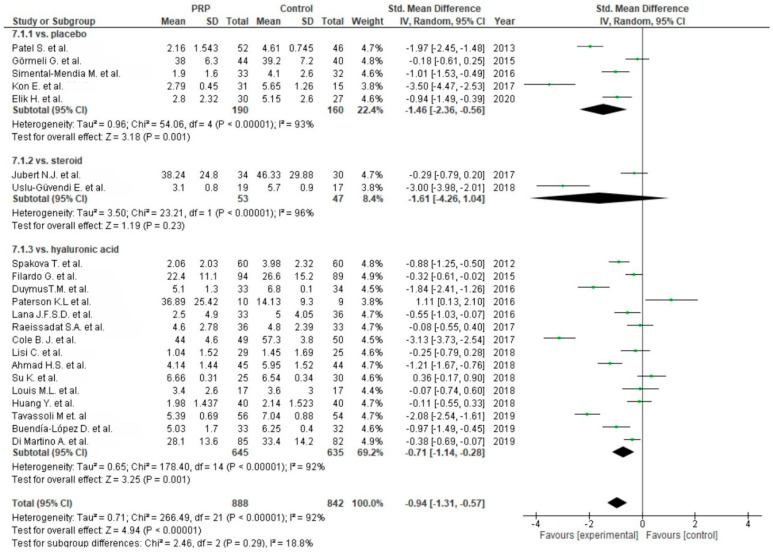
Forest plot for VAS comparing platelet-rich plasma (PRP) versus control (CI: confidence interval; IV: inverse variance; SD: standard deviation).
Figure 11
Figure 11
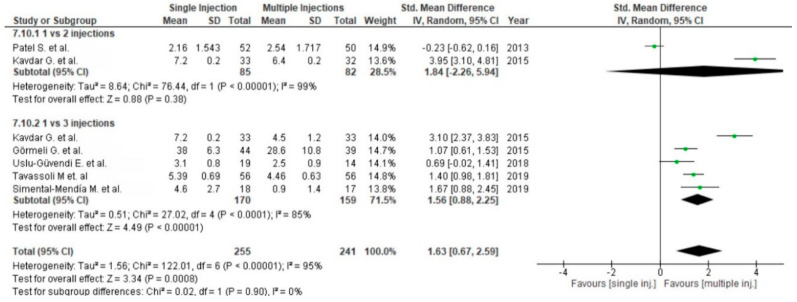
Forest plot for VAS comparing single versus multiple injections of PRP (CI: confidence interval; IV: inverse variance; SD: standard deviation).
Figure 12
Figure 12
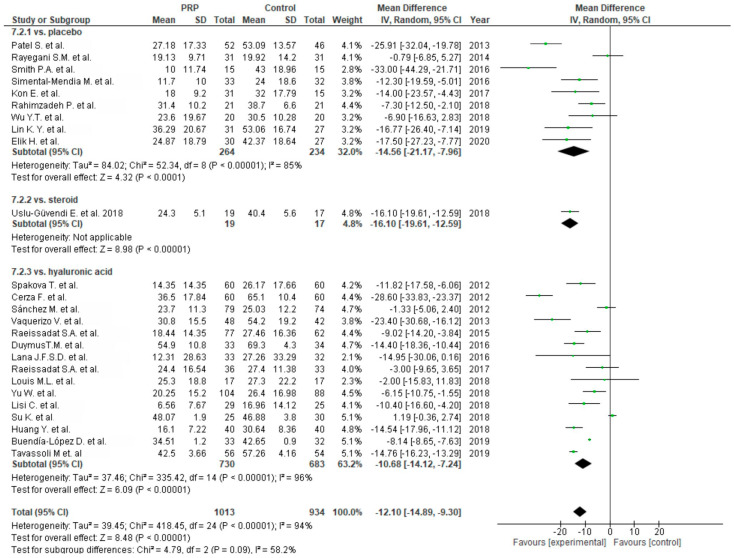
Forest plot for WOMAC scores (CI: confidence interval; IV: inverse variance; SD: standard deviation).
Figure 13
Figure 13
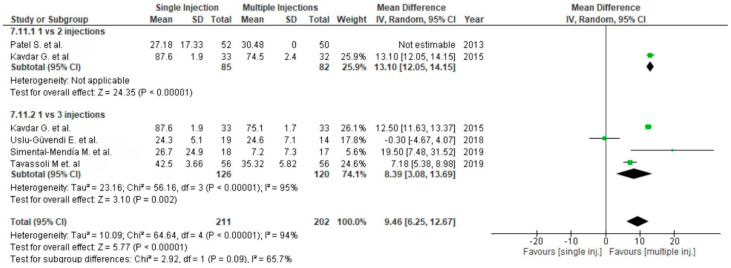
Forest plot for WOMAC scores comparing single PRP injection versus multiple PRP injections (CI: confidence interval; IV: inverse variance; SD: standard deviation).
Figure 14
Figure 14
Forest plot for IKDC scores (CI: confidence interval; IV: inverse variance; SD: standard deviation).
Figure 15
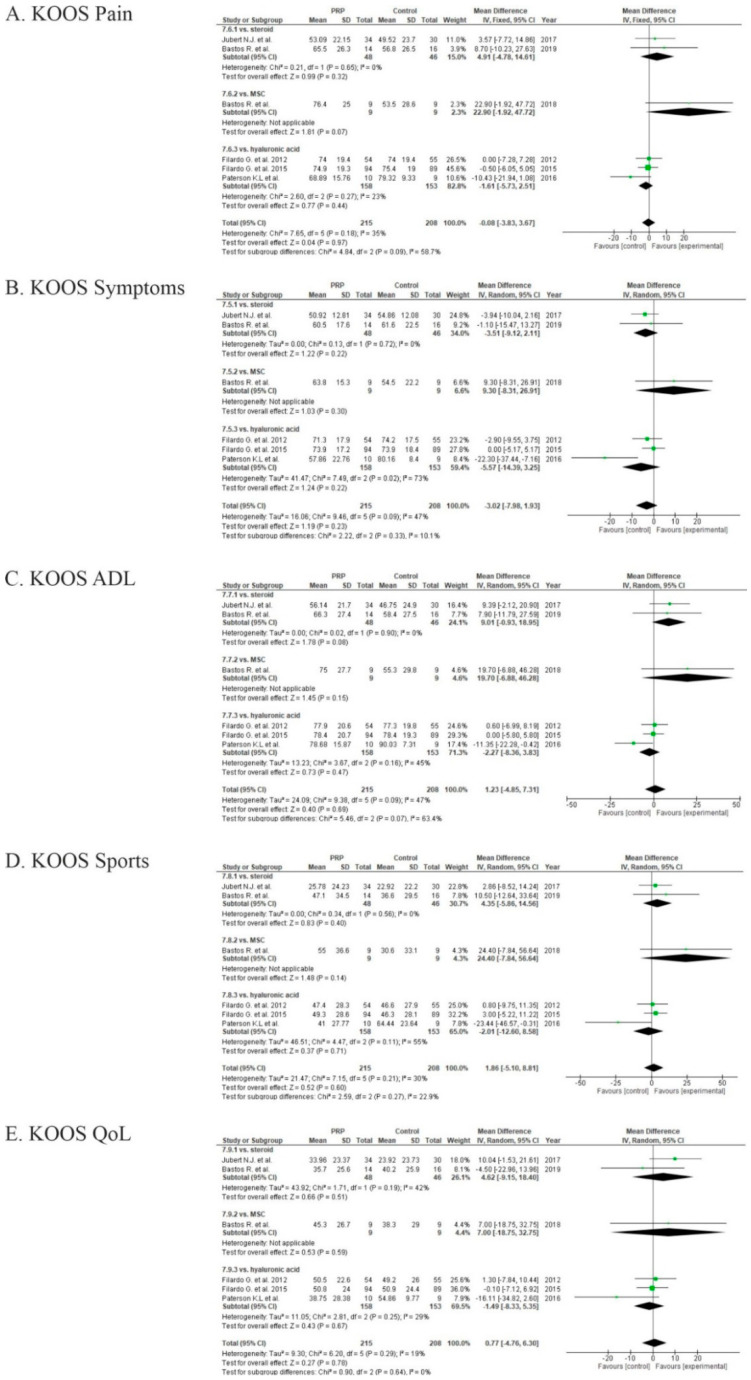
Figure 15
Forest plot for Knee injury and Osteoarthritis Outcome Score (KOOS) sub-scores: (A) pain; (B) symptoms; (C) activities of daily living (ADL); (D) sports; (E) quality of life (QoL). (CI: confidence interval; IV: inverse variance; SD: standard deviation).
Figure 16
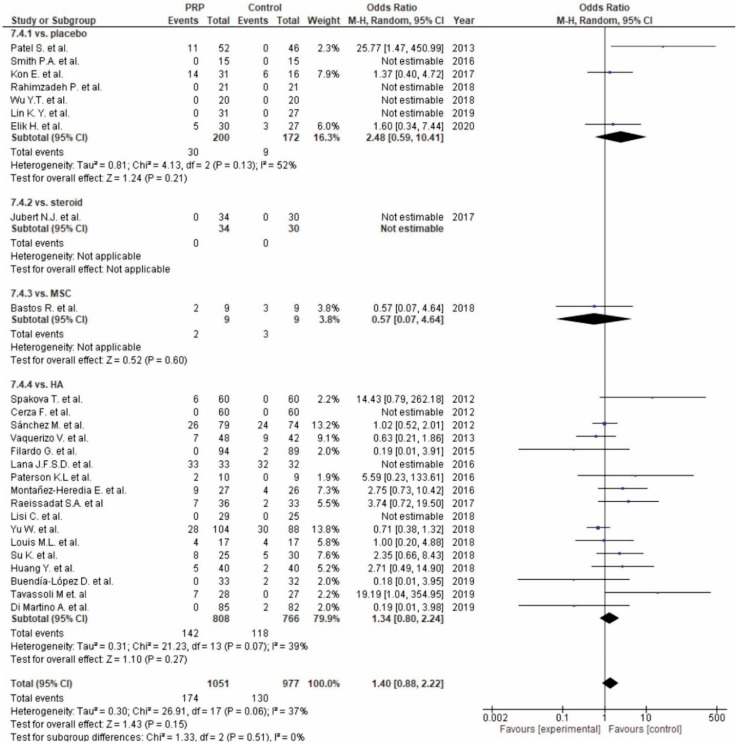
Figure 16
Forest plot for adverse events (CI: confidence interval).
Figure 17
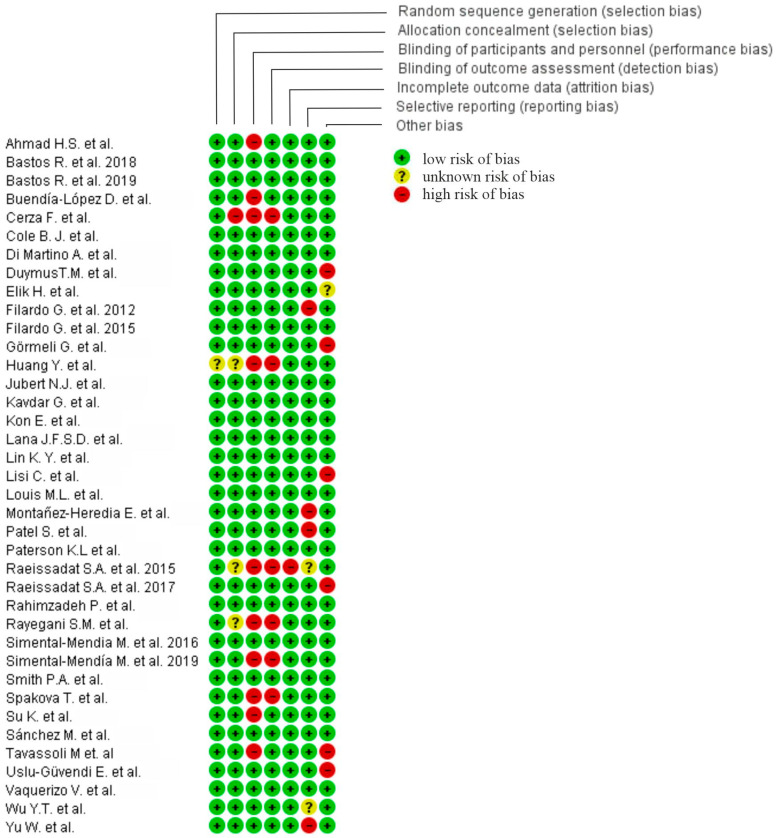
Figure 17
Risk of bias analysis for PRP application in osteoarthritis.

References

    1. Gobbi A., Espregueira-Mendes J., Lane J.G., Karahan M. Bio-Orthopaedics: A New Approach. Springer; Berlin/Heidelberg, Germany: 2018.
    1. Andia I., Maffulli N. Platelet-rich plasma for managing pain and inflammation in osteoarthritis. Nat. Rev. Rheumatol. 2013;9:721–730. doi: 10.1038/nrrheum.2013.141. - DOI - PubMed
    1. Alves R., Grimalt R. A Review of Platelet-Rich Plasma: History, Biology, Mechanism of Action, and Classification. Skin Appendage Disord. 2018;4:18–24. doi: 10.1159/000477353. - DOI - PMC - PubMed
    1. Cozma C.N., Raducu L., Jecan C.R. Platelet Rich Plasma—Mechanism of action and clinical applications. J. Clin. Invest. Surg. 2016;1:41–46. doi: 10.25083/2559.5555.12.16. - DOI
    1. Canata G.L., D’Hooghe P., Hunt K.J. Muscle and Tendon Injuries: Evaluation and Management. Springer; Berlin/Heidelberg, Germany: 2017.