


Statin Treatment-Induced Development of Type 2 Diabetes: From Clinical Evidence to Mechanistic Insights
- PMID: 32630698
- PMCID: PMC7369709
- DOI: 10.3390/ijms21134725
Statin Treatment-Induced Development of Type 2 Diabetes: From Clinical Evidence to Mechanistic Insights
Abstract
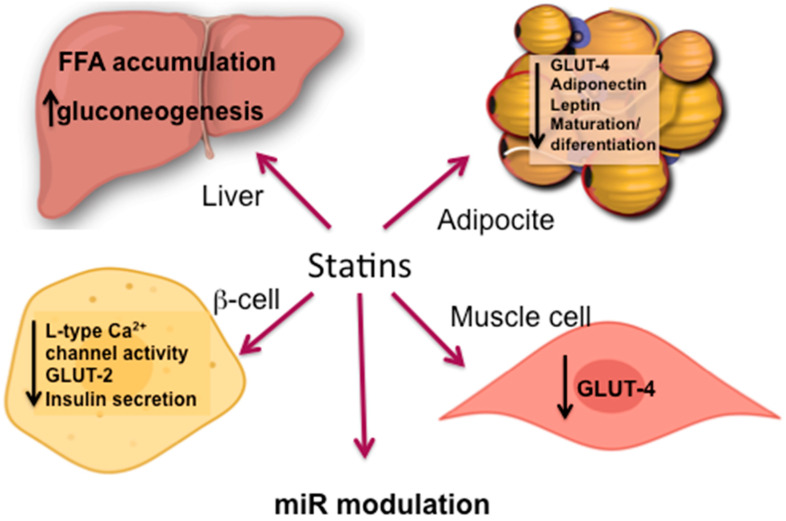
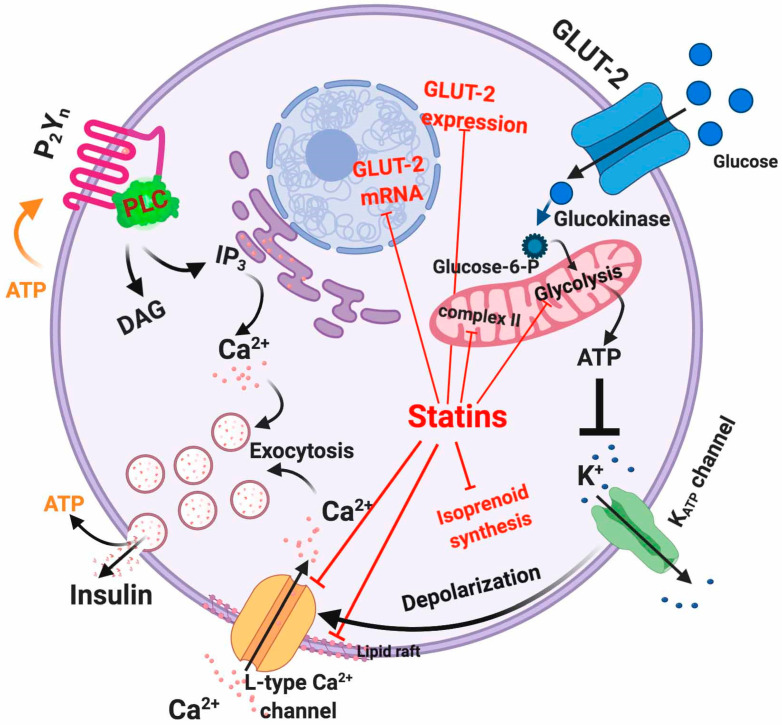
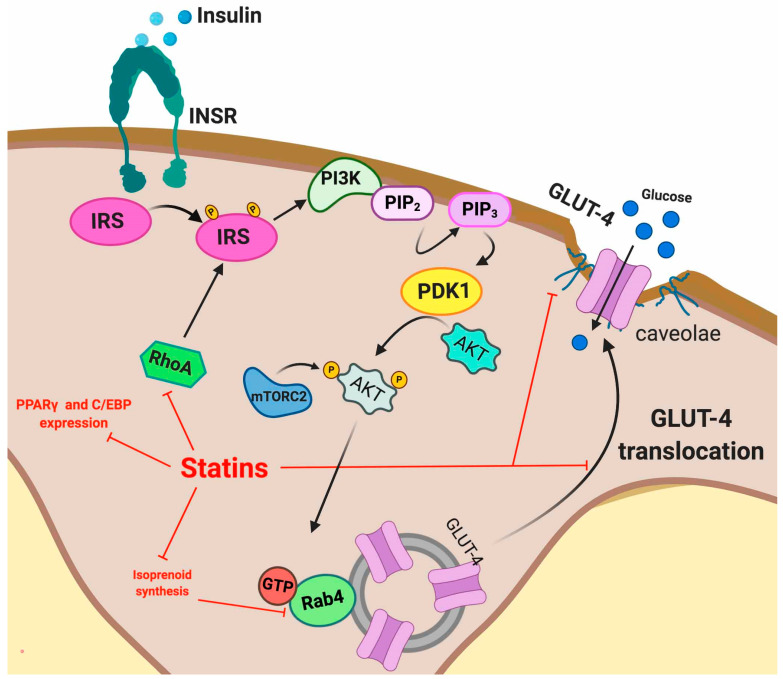
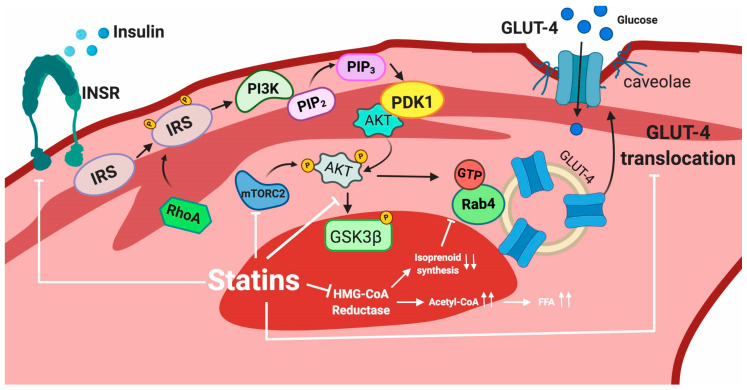
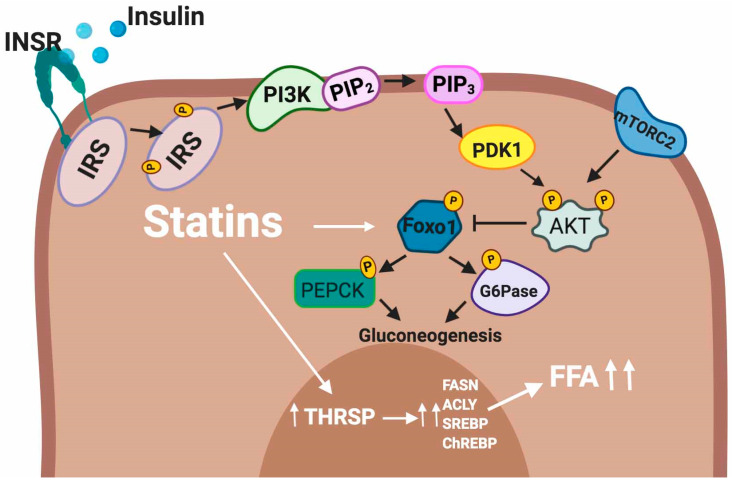
Statins are the gold-standard treatment for the prevention of primary and secondary cardiovascular disease, which is the leading cause of mortality worldwide. Despite the safety and relative tolerability of statins, observational studies, clinical trials and meta-analyses indicate an increased risk of developing new-onset type 2 diabetes mellitus (T2DM) after long-term statin treatment. It has been shown that statins can impair insulin sensitivity and secretion by pancreatic β-cells and increase insulin resistance in peripheral tissues. The mechanisms involved in these processes include, among others, impaired Ca2+ signaling in pancreatic β-cells, down-regulation of GLUT-4 in adipocytes and compromised insulin signaling. In addition, it has also been described that statins' impact on epigenetics may also contribute to statin-induced T2DM via differential expression of microRNAs. This review focuses on the evidence and mechanisms by which statin therapy is associated with the development of T2DM. This review describes the multifactorial combination of effects that most likely contributes to the diabetogenic effects of statins. Clinically, these findings should encourage clinicians to consider diabetes monitoring in patients receiving statin therapy in order to ensure early diagnosis and appropriate management.
Keywords: clinical trial; insulin resistance; microRNA; statin; type 2 diabetes mellitus.
Conflict of interest statement
The authors declare no conflict of interest.
Figures
References
-
- Baigent C., Keech A., Kearney P.M., Blackwell L., Buck G., Pollicino C., Kirby A., Sourjina T., Peto R., Collins R., et al. Efficacy and safety of cholesterol-lowering treatment: Prospective meta-analysis of data from 90,056 participants in 14 randomised trials of statins. Lancet. 2005;366:1267–1278. doi: 10.1016/S0140-6736(05)67394-1. - DOI - PubMed
-
- Colhoun H.M., Betteridge D.J., Durrington P.N., Hitman G.A., Neil H.A.W., Livingstone S.J., Thomason M.J., Mackness M.I., Charlton-Menys V., Fuller J.H. Primary prevention of cardiovascular disease with atorvastatin in type 2 diabetes in the Collaborative Atorvastatin Diabetes Study (CARDS): Multicentre randomised placebo-controlled trial. Lancet. 2004;364:685–696. doi: 10.1016/S0140-6736(04)16895-5. - DOI - PubMed
-
- Cederberg H., Stancakova A., Yaluri N., Modi S., Kuusisto J., Laakso M. Increased risk of diabetes with statin treatment is associated with impaired insulin sensitivity and insulin secretion: A 6 year follow-up study of the METSIM cohort. Diabetologia. 2015;58:1109–1117. doi: 10.1007/s00125-015-3528-5. - DOI - PubMed
Publication types
MeSH terms
Substances
LinkOut - more resources
Full Text Sources
Medical
Miscellaneous
