


doi: 10.1164/rccm.202006-2598LE.
COVID-19-associated Acute Respiratory Distress Syndrome Clarified: A Vascular Endotype?
Affiliations
- PMID: 32631071
- PMCID: PMC7462395
- DOI: 10.1164/rccm.202006-2598LE
Item in Clipboard
COVID-19-associated Acute Respiratory Distress Syndrome Clarified: A Vascular Endotype?
Am J Respir Crit Care Med.
.
No abstract available
Figures
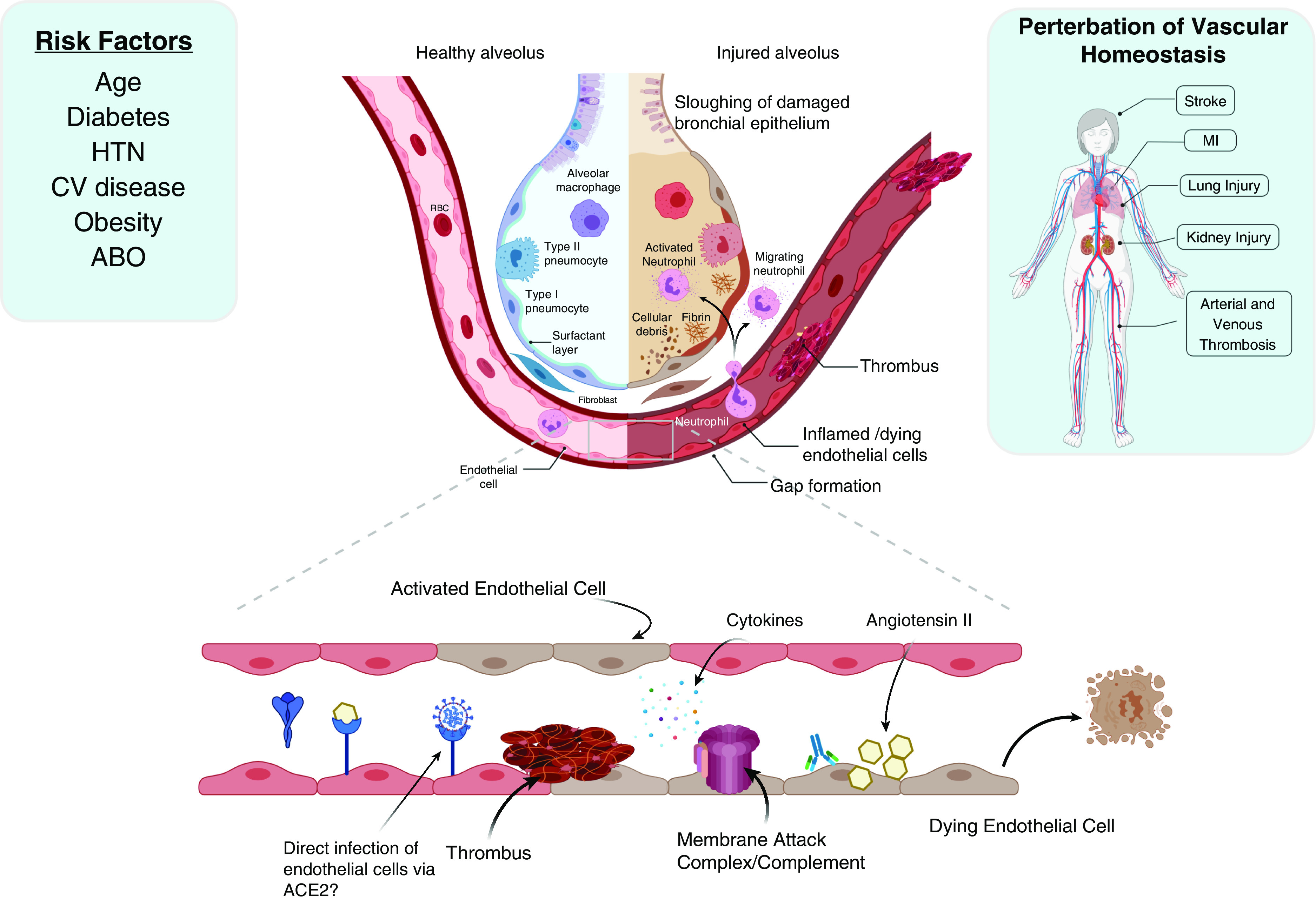
Risk factors and disease manifestations of coronavirus disease (COVID-19) suggest the central involvement of the pulmonary vasculature. Although some risk factors (age and obesity) are common for undifferentiated acute respiratory distress syndrome, others, including cardiovascular disease and diabetes, are overrepresented with regard to severe COVID-19. Regarding viral pathogenesis at the tissue level, the epithelium represents the primary cell type affected as with most respiratory viruses. However, severe acute respiratory syndrome coronavirus 2 (SARS-CoV-2) infection is notable for the induction of microthrombi. Multiple mechanisms are likely to promote endothelial injury, including viral competition for ACE2 (angiotensin-converting enzyme 2) binding (thus increasing angiotensin II) and direct activation of complement by SARS-CoV-2 structural proteins, in addition to elevated cytokines and complement activation and cell death observed in acute respiratory distress syndrome and sepsis. These vascular perturbations likely contribute to systemic thrombosis and organ injury in susceptible hosts. CV = cardiovascular; HTN = hypertension; MI = myocardial infarction; RBC = red blood cell.
References
-
- Ranieri VM, Rubenfeld GD, Thompson BT, Ferguson ND, Caldwell E, Fan E, et al. ARDS Definition Task Force. Acute respiratory distress syndrome: the Berlin definition. JAMA. 2012;307:2526–2533. - PubMed
-
- Cheng Y, Cheng G, Chui CH, Lau FY, Chan PK, Ng MH, et al. ABO blood group and susceptibility to severe acute respiratory syndrome. JAMA. 2005;293:1450–1451. [Published erratum appears in JAMA 294:794.] - PubMed
Publication types
MeSH terms
LinkOut - more resources
Full Text Sources
