


The impact of HIV knowledge and attitudes on HIV testing acceptance among patients in an emergency department in the Eastern Cape, South Africa
- PMID: 32631297
- PMCID: PMC7339484
- DOI: 10.1186/s12889-020-09170-x
The impact of HIV knowledge and attitudes on HIV testing acceptance among patients in an emergency department in the Eastern Cape, South Africa
Abstract
Background: Transmission of HIV in South Africa continues to be high due to a large proportion of individuals living with undiagnosed HIV. Uptake of HIV testing is influenced by a multitude of factors including the patient's knowledge and beliefs about HIV.
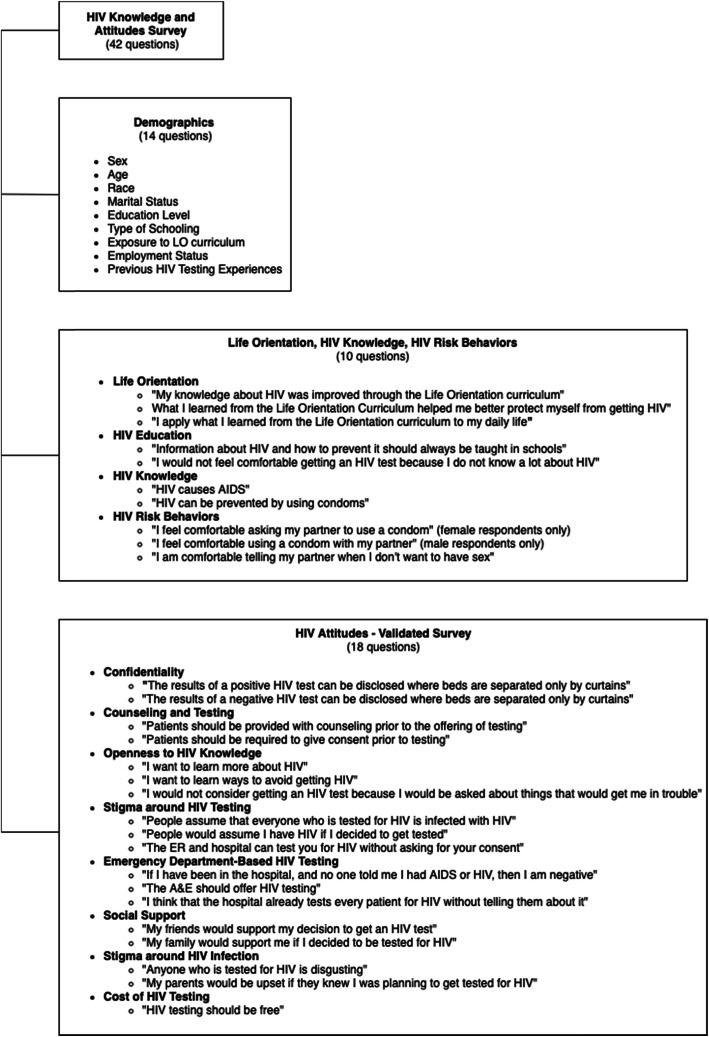
Methods: This study sought to quantify the impact of knowledge and attitudes on HIV testing acceptance in an emergency department by co-administering a validated HIV knowledge and attitudes survey to patients who were subsequently offered HIV testing.
Results: During the study period 223 patients were interviewed and offered HIV testing. Individuals reporting more negative overall attitudes (p = 0.006), higher levels of stigma to HIV testing (p < 0.001), and individuals who believed their test was confidential (p < 0.001) were more likely to accept an HIV test.
Conclusions: Interventions focused on improving patient perceptions around testing confidentiality will likely have the greatest impact on testing acceptance in the emergency department.
Keywords: Emergency departments; HIV attitudes; HIV knowledge; HIV testing; Testing acceptance.
Conflict of interest statement
The authors declare no competing interests.
References
-
- Joint United Nations Programme on, HIV/AIDS (UNAIDS) No title. 90–90-90—an ambitious treatment target to help end the AIDS epidemic. Geneva: UNAIDS; 2014; 2017.
-
- Department of Health. NATIONAL HIV COUNSELLING AND TESTING POLICY GUIDELINES. 2015 May. Retrieved from: https://aidsfree.usaid.gov/sites/default/files/hts_south_africa_2015.pdf.
-
- Department of Basic Education . Curriculum and Assessment Policy Statement, Grades 10–12: Life Orientation. 2011.
MeSH terms
Grants and funding
LinkOut - more resources
Full Text Sources
Medical
