


Reduced DNA methylation of the oxytocin receptor gene is associated with obsessive-compulsive disorder
- PMID: 32631409
- PMCID: PMC7336407
- DOI: 10.1186/s13148-020-00890-w
Reduced DNA methylation of the oxytocin receptor gene is associated with obsessive-compulsive disorder
Abstract
Background: Oxytocin is an important neuromodulator involved in cognition and socio-emotional processing that exerts its central activities via oxytocin receptors. Epigenetic alterations in the oxytocin receptor gene (OXTR) may be a molecular mechanism in the pathogenesis of obsessive-compulsive disorder (OCD). This study investigated the association between OXTR DNA methylation and the OCD status of a Korean population.
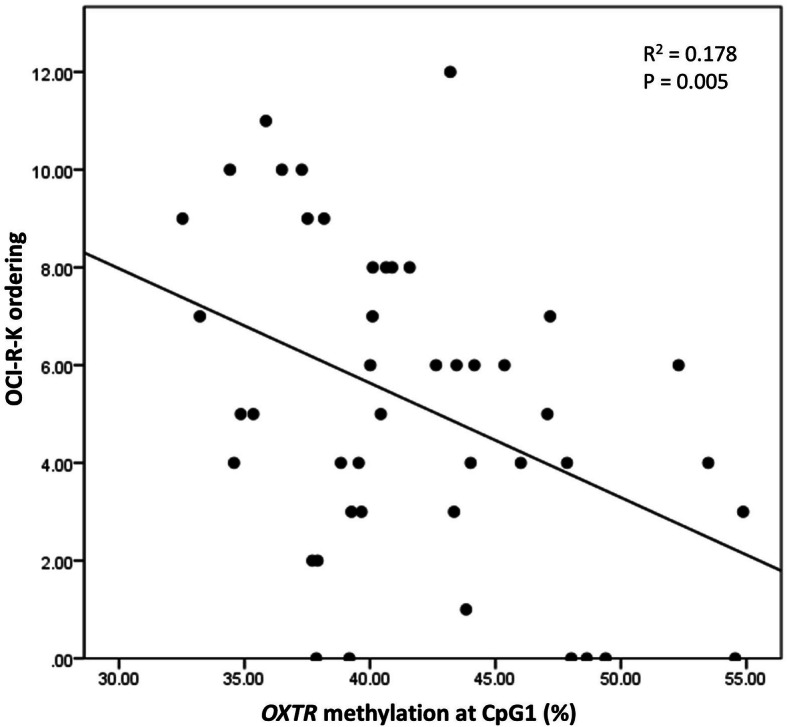
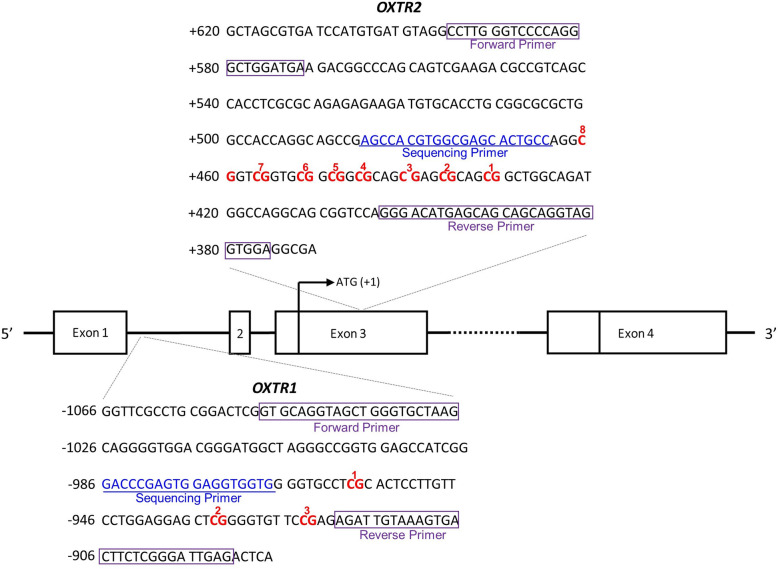
Results: Quantitative leukocyte DNA methylation levels of three cytosine-phosphate-guanine (CpG) sites in the 5' untranslated region (UTR) of OXTR exon 2 and eight CpG sites within OXTR exon 3 were analyzed using the pyrosequencing method in 151 patients with OCD (including 45 drug-naïve patients) and 108 healthy controls. DNA methylation levels were compared between the groups using multiple analyses of covariance separately by sex after controlling for age and educational level. Patients with OCD showed significantly lower methylation levels at CpG1 and CpG2 sites on the UTR of OXTR exon 2 than those of healthy controls for both sexes. In a subset of 45 drug-naïve patients with OCD, the DNA methylation levels also remained significantly lower than those in the controls and their CpG1 methylation levels were significantly negatively associated with the ordering symptom dimension.
Conclusions: Our findings suggest that epigenetic OXTR alterations may affect the pathophysiology of OCD. The potential role of the oxytocin system in OCD development and treatment warrants further investigation.
Keywords: DNA methylation; Epigenetics; OXTR; Obsessive-compulsive disorder; Oxytocin.
Conflict of interest statement
The authors declare that they have no competing interests.
Figures
References
-
- Bachner-Melman R, Ebstein RP. The role of oxytocin and vasopressin in emotional and social behaviors. Handb Clin Neurol. 2014;124:53–68. - PubMed
-
- Neumann ID. Brain oxytocin: a key regulator of emotional and social behaviours in both females and males. J Neuroendocrinol. 2008;20(6):858–865. - PubMed
-
- Feldman R, Monakhov M, Pratt M, Ebstein RP. Oxytocin pathway genes: evolutionary ancient system impacting on human affiliation, sociality, and psychopathology. Biol Psychiatry. 2016;79(3):174–184. - PubMed
Publication types
MeSH terms
Substances
LinkOut - more resources
Full Text Sources
Medical
