


Transmission patterns of COVID-19 in the mainland of China and the efficacy of different control strategies: a data- and model-driven study
- PMID: 32631426
- PMCID: PMC7338105
- DOI: 10.1186/s40249-020-00709-z
Transmission patterns of COVID-19 in the mainland of China and the efficacy of different control strategies: a data- and model-driven study
Abstract
Background: The coronavirus disease 2019 (COVID-19) outbreak has seriously endangered the health and lives of Chinese people. In this study, we predicted the COVID-19 epidemic trend and estimated the efficacy of several intervention strategies in the mainland of China.
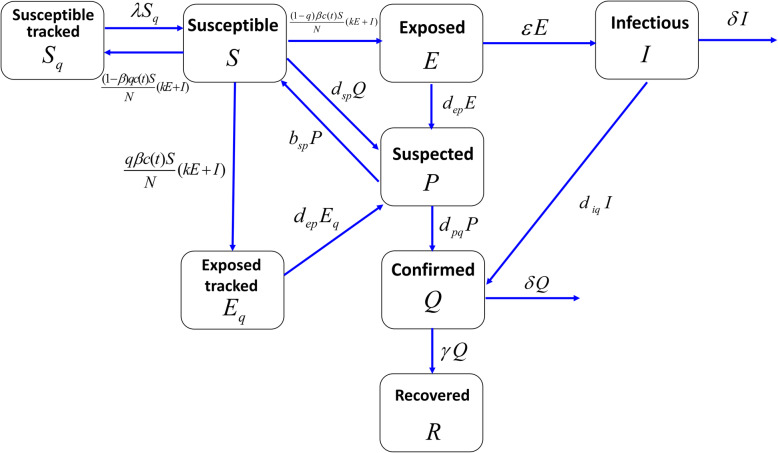
Methods: According to the COVID-19 epidemic status, we constructed a compartmental model. Based on reported data from the National Health Commission of People's Republic of China during January 10-February 17, 2020, we estimated the model parameters. We then predicted the epidemic trend and transmission risk of COVID-19. Using a sensitivity analysis method, we estimated the efficacy of several intervention strategies.
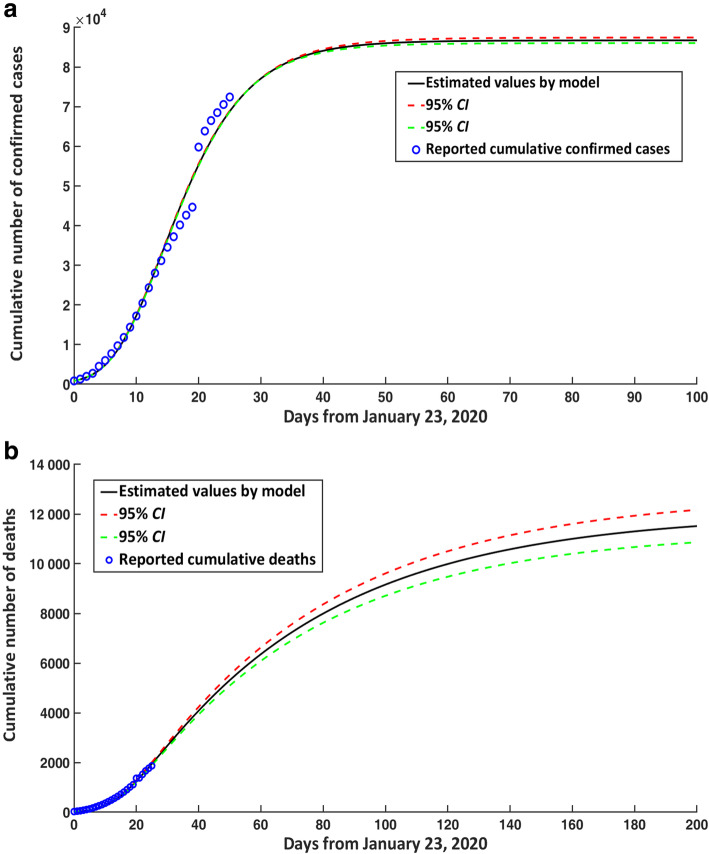
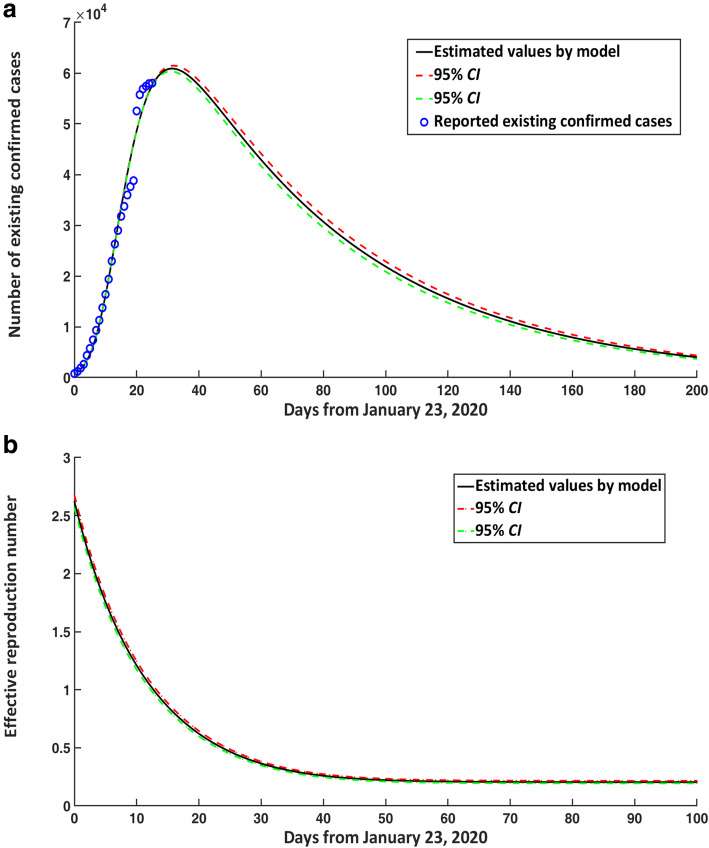
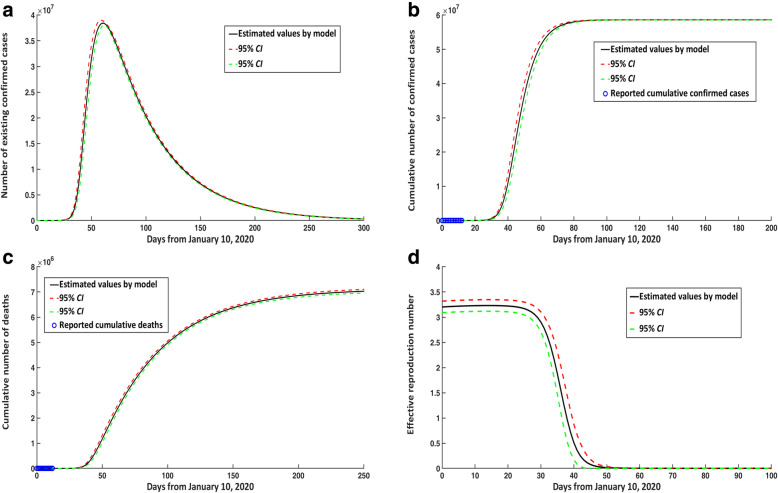
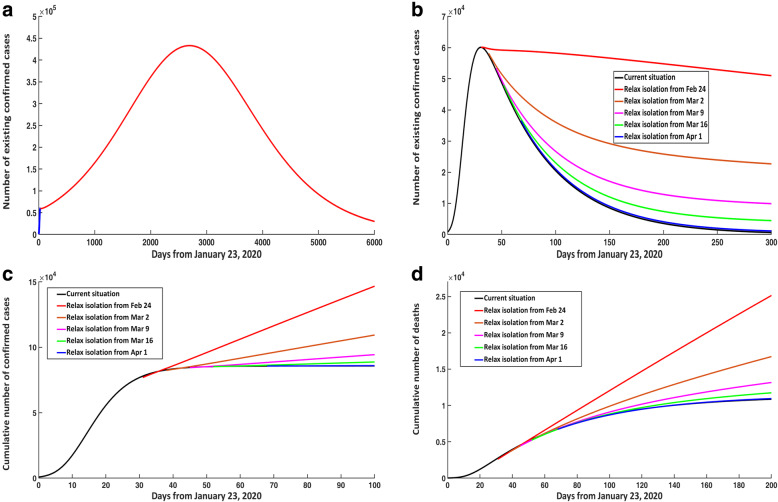
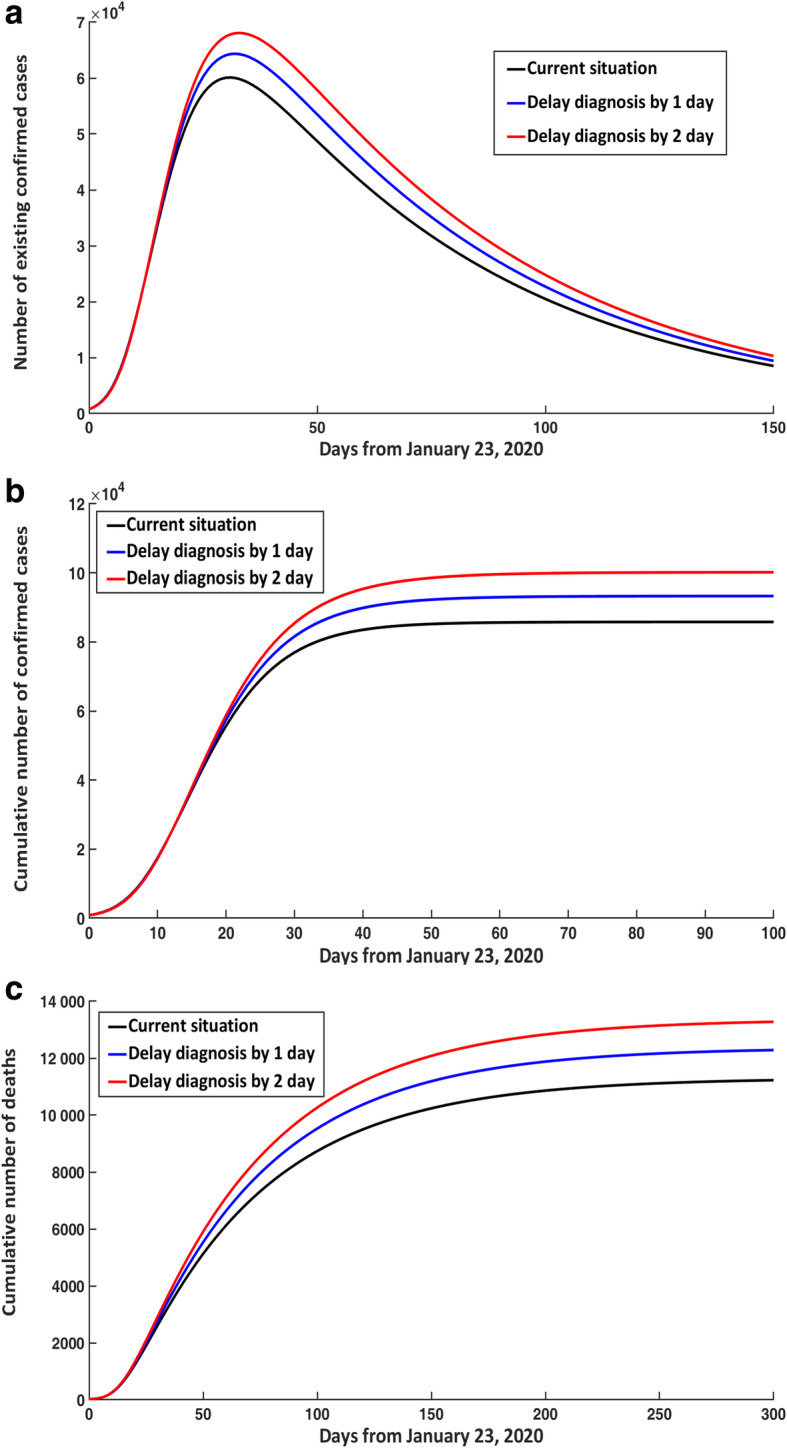
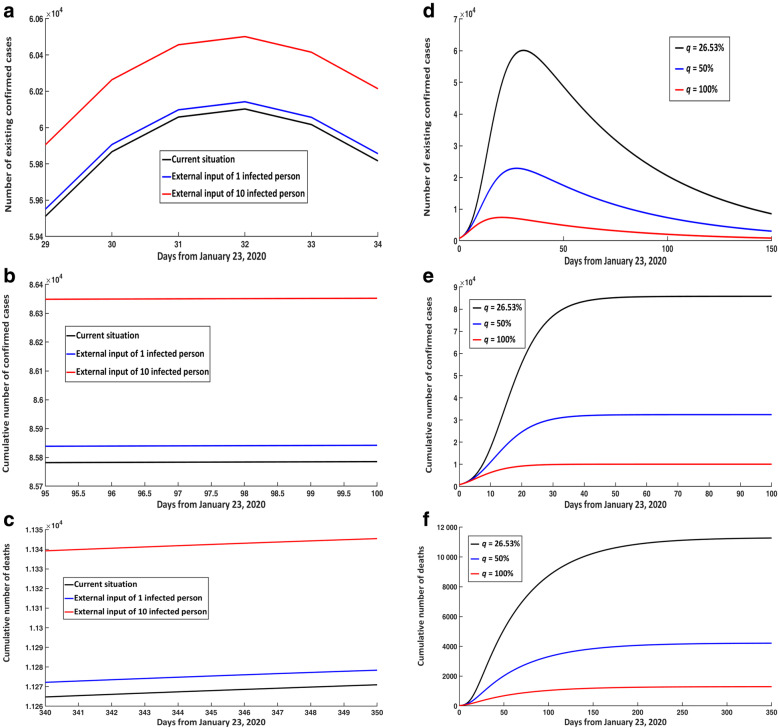
Results: The cumulative number of confirmed cases in the mainland of China will be 86 763 (95% CI: 86 067-87 460) on May 2, 2020. Up until March 15, 2020, the case fatality rate increased to 6.42% (95% CI: 6.16-6.68%). On February 23, 2020, the existing confirmed cases reached its peak, with 60 890 cases (95% CI: 60 350-61 431). On January 23, 2020, the effective reproduction number was 2.620 (95% CI: 2.567-2.676) and had dropped below 1.0 since February 5, 2020. Due to governmental intervention, the total number of confirmed cases was reduced by 99.85% on May 2, 2020. Had the isolation been relaxed from February 24, 2020, there might have been a second peak of infection. However, relaxing the isolation after March 16, 2020 greatly reduced the number of existing confirmed cases and deaths. The total number of confirmed cases and deaths would increase by 8.72 and 9.44%, respectively, due to a 1-day delayed diagnosis in non-isolated infected patients. Moreover, if the coverage of close contact tracing was increased to 100%, the cumulative number of confirmed cases would be decreased by 88.26% on May 2, 2020.
Conclusions: The quarantine measures adopted by the Chinese government since January 23, 2020 were necessary and effective. Postponing the relaxation of isolation, early diagnosis, patient isolation, broad close-contact tracing, and strict monitoring of infected persons could effectively control the COVID-19 epidemic. April 1, 2020 would be a reasonable date to lift quarantine in Hubei and Wuhan.
Keywords: COVID-19; Effective reproduction number; Intervention strategy; Prevalence; SARS-CoV-2; Transmission dynamics.
Conflict of interest statement
The authors declare that they have no competing interests.
Figures
References
-
- Special Expert Group for Control of the Epidemic of Novel Coronavirus Pneumonia of the Chinese Preventive Medicine Association An update on the epidemiological characteristics of novel coronavirus pneumonia (COVID-19) Zhonghua Liu Xing Bing Xue Za Zhi. 2020;41:139–144. - PubMed
MeSH terms
Grants and funding
- 2020XGZX056/Zhejiang University special scientific research fund for COVID-19 prevention and control
- xzy032020040,xzy012019107/Fundamental Research Funds for the Central Universities for COVID-19
- xzy032020027/Fundamental Research Funds for the Central Universities for COVID-19
- xzy032020026/Fundamental Research Funds for the Central Universities for COVID-19
- 11971375, 11571272, 11631012/National Natural Science Foundation of China
LinkOut - more resources
Full Text Sources
Miscellaneous
