


Total burden of disease in cancer patients at diagnosis-a Danish nationwide study of multimorbidity and redeemed medication
- PMID: 32632149
- PMCID: PMC7493878
- DOI: 10.1038/s41416-020-0950-3
Total burden of disease in cancer patients at diagnosis-a Danish nationwide study of multimorbidity and redeemed medication
Abstract
Background: Multimorbidity is a growing challenge worldwide. In this nationwide study, we investigated the prevalence of multimorbidity and polypharmacy at the time of diagnosis across 20 cancers.
Methods: We conducted a nationwide register-based cohort study of all Danish residents with a first primary cancer diagnosed between 1 January 2005 and 31 December 2015. Multimorbidity was defined as one or more of 20 conditions (131 specific diagnoses) registered in the Danish National Patient Registry < 5 years before the cancer diagnosis. Polypharmacy was defined as five or more medications registered in the Danish National Prescription Registry and redeemed twice 2-12 months before the cancer diagnosis.
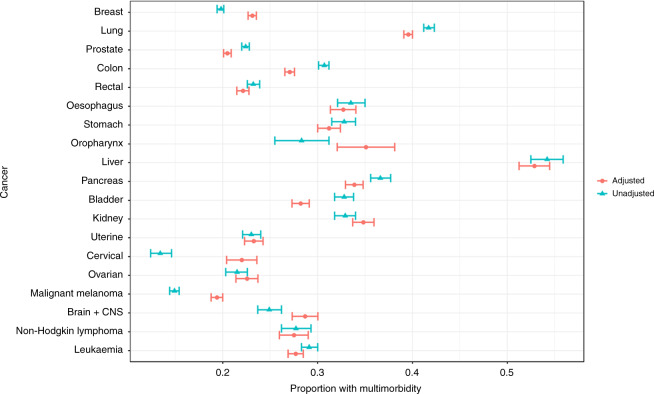
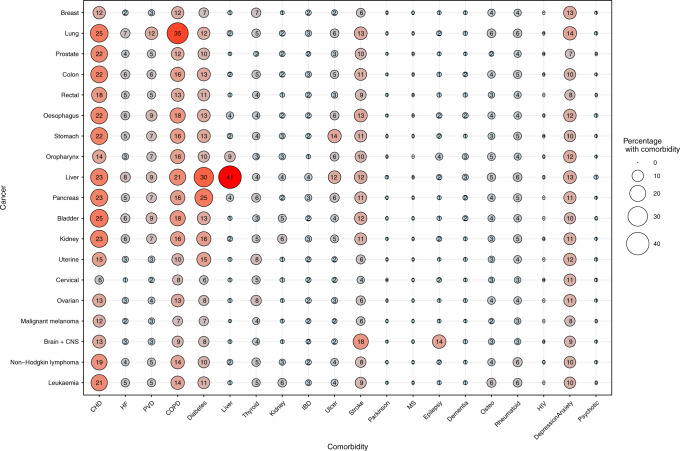
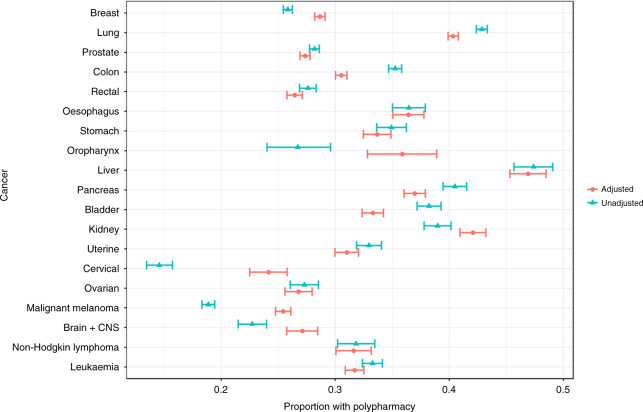
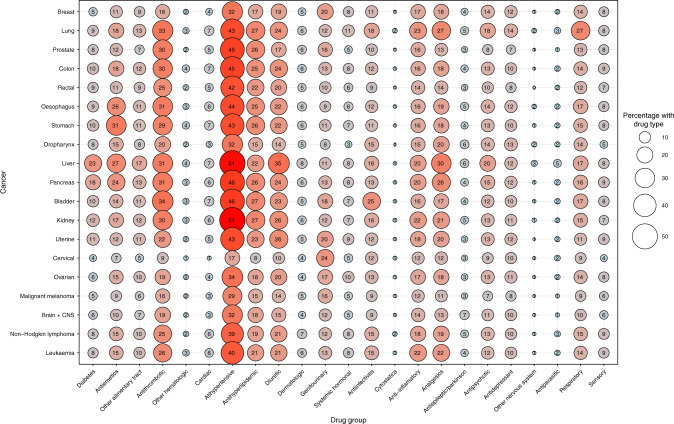
Results: We included 261,745 patients with a first primary cancer, of whom 55% had at least one comorbid condition at diagnosis and 27% had two or more. The most prevalent conditions at the time of cancer diagnosis were cardiovascular disease, chronic obstructive pulmonary disease, diabetes, stroke and depression/anxiety disorder. Polypharmacy was present in one-third of the cancer patients with antihypertensives, anti-thrombotic agents, anti-hyperlipidaemic agents, analgesics and diuretics as the most prevalent redeemed medications.
Conclusion: Among patients with a newly established cancer diagnosis, 55% had at least one comorbid condition and 32% were exposed to polypharmacy.
Conflict of interest statement
The authors declare no competing interests.
Figures
References
-
- Mohamed MR, Ramsdale E, Loh KP, Arastu A, Xu H, Obrecht S, et al. Associations of polypharmacy and inappropriate medications with adverse outcomes in older adults with cancer: a systematic review and meta-analysis. Oncologist. 2020;25:e94–e108. doi: 10.1634/theoncologist.2019-0406. - DOI - PMC - PubMed
Publication types
MeSH terms
LinkOut - more resources
Full Text Sources
Medical
