


Perioperative and oncological outcomes following minimally invasive versus open pancreaticoduodenectomy for pancreatic duct adenocarcinoma
- PMID: 32632485
- PMCID: PMC8057975
- DOI: 10.1007/s00464-020-07641-1
Perioperative and oncological outcomes following minimally invasive versus open pancreaticoduodenectomy for pancreatic duct adenocarcinoma
Abstract
Background: The outcomes of minimally invasive pancreaticoduodenectomy have not been adequately compared with those of open pancreaticoduodenectomy in patients with pancreatic ductal adenocarcinoma. We performed a meta-analysis to compare the perioperative and oncological outcomes of these two pancreaticoduodenectomy procedures specifically in patients with pancreatic ductal adenocarcinoma.
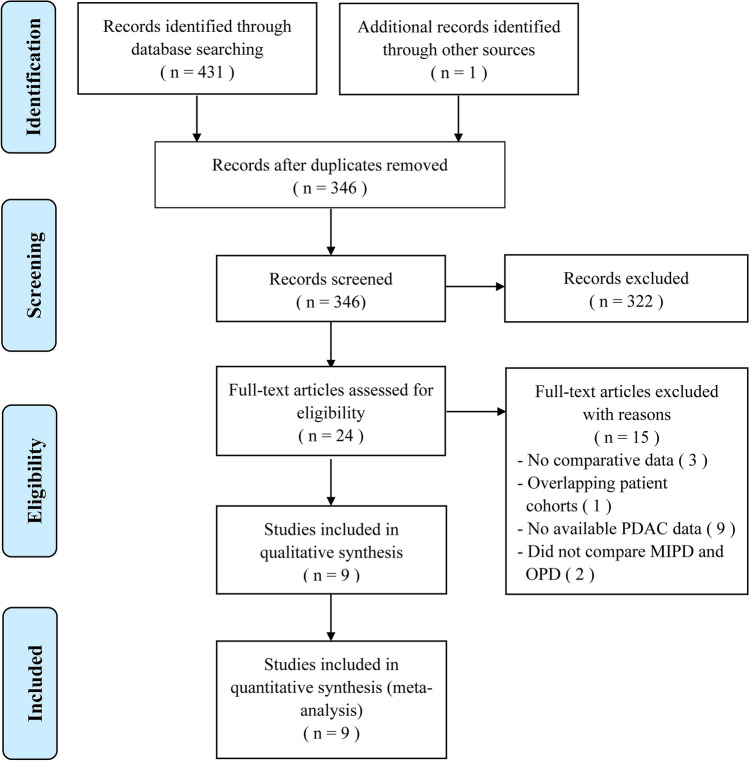
Methods: Before this study was initiated, a specific protocol was designed and has been registered in PROSEPRO (ID: CRD42020149438). Using the Preferred Reporting Items for Systematic Reviews and Meta-analyses (PRISMA) guidelines, PubMed, EMBASE, Web of Science, Cochrane Central Register, and ClinicalTrials.gov databases were systematically searched for studies published between January 1994 and October 2019. Overall survival, disease-free survival, and time to commencing adjuvant chemotherapy were the primary endpoint measurements, whereas perioperative and short-term outcomes were the secondary endpoints.
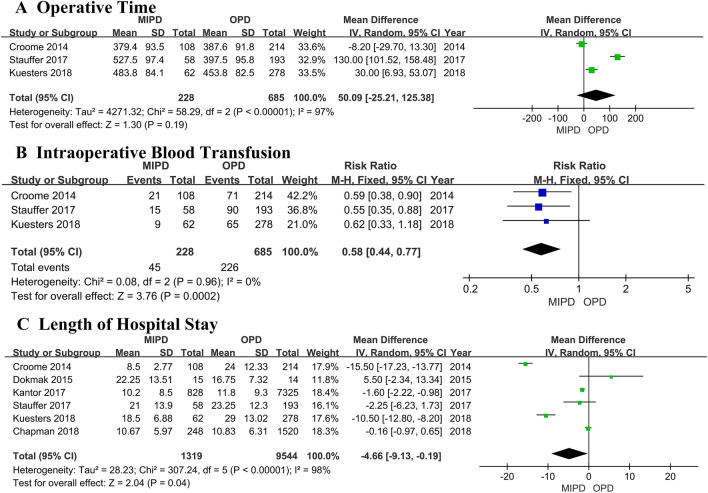
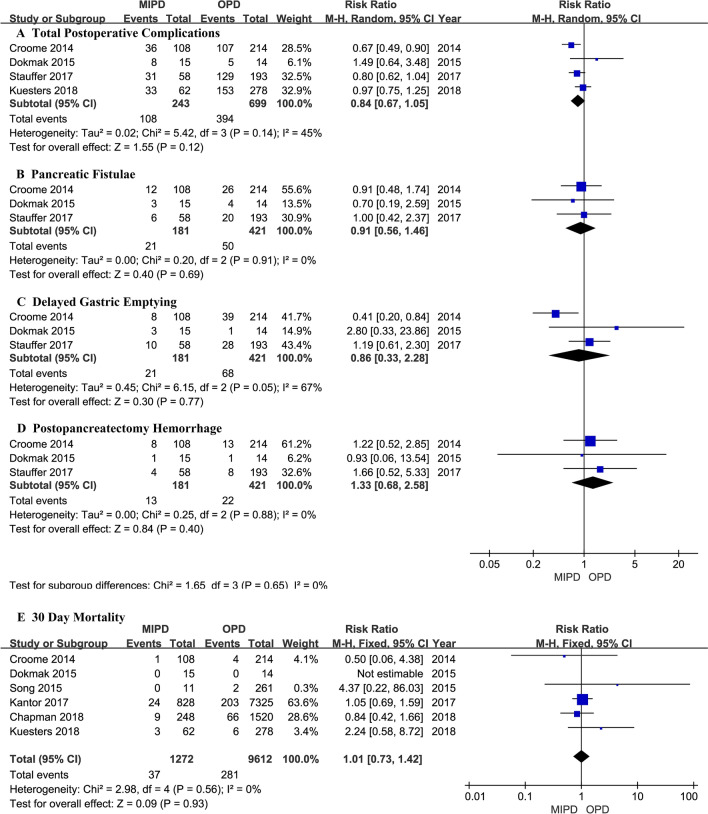
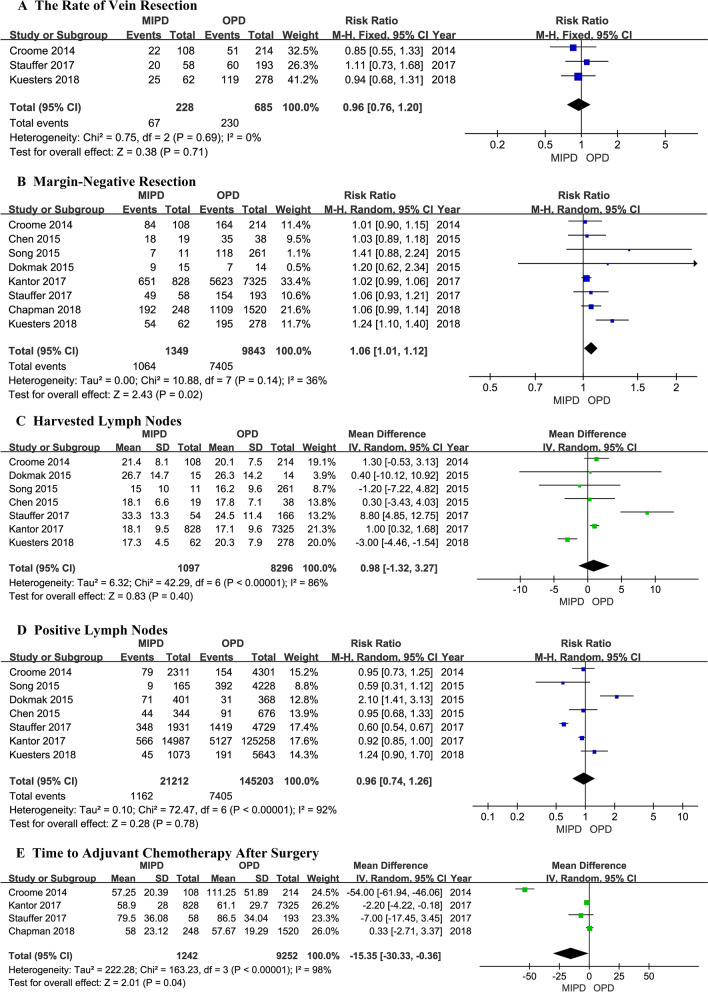
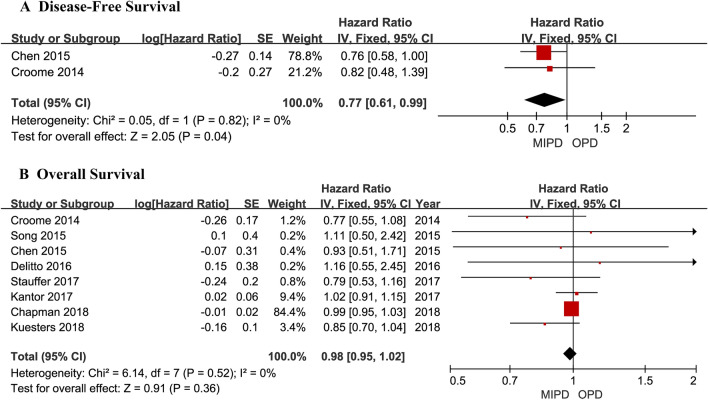
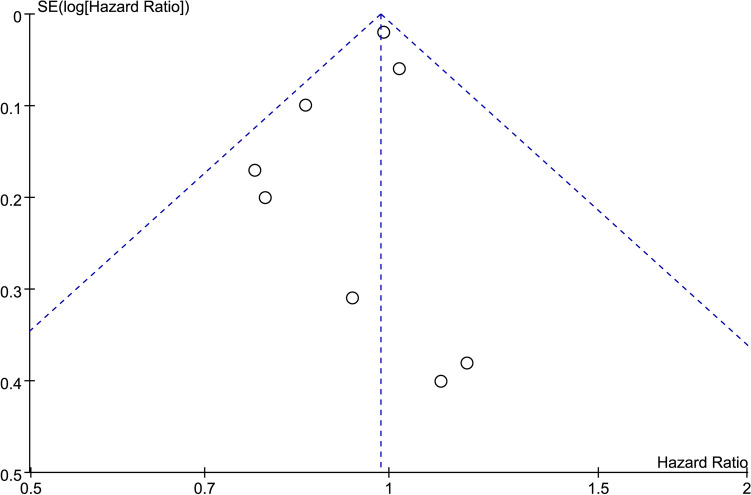
Results: The final analysis included 9 retrospective cohorts comprising 11,242 patients (1377 who underwent minimally invasive pancreaticoduodenectomy and 9865 who underwent open pancreaticoduodenectomy). There were no significant differences in the patients' overall survival, operative time, postoperative complications, 30-day mortality, rate of vein resection, number of harvested lymph nodes, or rate of positive lymph nodes between the two approaches. However, disease-free survival, time to starting adjuvant chemotherapy, length of hospital stay, and rate of negative margins in patients who underwent minimally invasive pancreaticoduodenectomy showed improvements relative to those in patients who underwent open surgery.
Conclusions: Minimally invasive pancreaticoduodenectomy provides similar or even improved perioperative, short-term, and long-term oncological outcomes when compared with open pancreaticoduodenectomy for patients with pancreatic ductal adenocarcinoma.
Keywords: Laparoscopic surgery; Meta-analysis; Minimally invasive surgery; Pancreatic ductal carcinoma; Pancreaticoduodenectomy; Robotic surgical procedures.
Conflict of interest statement
Xianlin Han, Rui Sun, Jiawen Yu, Yifan Zhang, and Zhikai Liang have no conflicts of interest or financial ties to disclose.
Figures
References
Publication types
MeSH terms
LinkOut - more resources
Full Text Sources
Medical
