


Current State of Transgender Medical Education in the United States and Canada: Update to a Scoping Review
- PMID: 32637641
- PMCID: PMC7315660
- DOI: 10.1177/2382120520934813
Current State of Transgender Medical Education in the United States and Canada: Update to a Scoping Review
Abstract
Background: The published literature on education about transgender health within health professions curricula was previously found to be sporadic and fragmented. Recently, more inclusive and holistic approaches have been adopted. We summarize advances in transgender health education.
Methods: A 5-stage scoping review framework was followed, including a literature search for articles relevant to transgender health care interventions in 5 databases (Education Source, LGBT Source, MedEd Portal, PsycInfo, PubMed) from January 2017 to September 2019. Search results were screened to include original articles reporting outcomes of educational interventions with a transgender health component that included MD/DO students in the United States and Canada. A gray literature search identified continuing medical education (CME) courses from 12 health professional associations with significant transgender-related content.
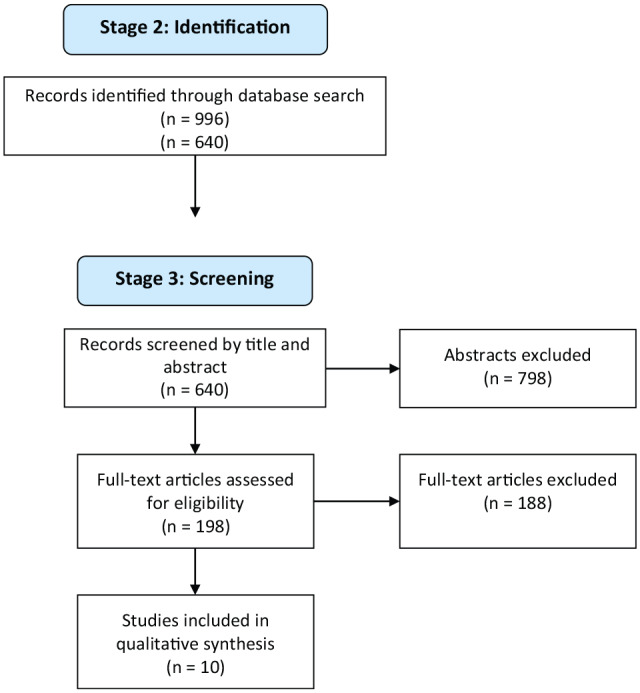
Results: Our literature search identified 966 unique publications published in the 2 years since our prior review, of which 10 met inclusion criteria. Novel educational formats included interdisciplinary interventions, post-residency training including CME courses, and online web modules, all of which were effective in improving competencies related to transgender health care. Gray literature search resulted 15 CME courses with learning objectives appropriate to the 7 professional organizations who published them.
Conclusions: Current transgender health curricula include an expanding variety of educational intervention formats driven by their respective educational context, learning objectives, and placement in the health professional curriculum. Notable limitations include paucity of objective educational intervention outcomes measurements, absence of long-term follow-up data, and varied nature of intervention types. A clear best practice for transgender curricular development has not yet been identified in the literature.
Keywords: Medical education; gender affirmation; transgender.
© The Author(s) 2020.
Conflict of interest statement
Declaration of Conflicting Interests:The author(s) declared no potential conflicts of interest with respect to the research, authorship, and/or publication of this article.
Figures
References
-
- James SE, Herman JL, Rankin S, Keisling M, Mottet L, Anafi M. The Report of the 2015 U.S. Transgender Survey. Washington, DC: National Center for Transgender Equality; 2016.
-
- Poteat T, German D, Kerrigan D. Managing uncertainty: a grounded theory of stigma in transgender health care encounters. Soc Sci Med. 2013;84:22-29. - PubMed
-
- Sawning S, Steinbock S, Croley R, Combs R, Shaw A, Ganzel T. A first step in addressing medical education curriculum gaps in lesbian-, gay-, bisexual-, and transgender-related content: the University of Louisville Lesbian, Gay, Bisexual, and Transgender Health Certificate Program. Educ Health (Abingdon). 2017;30:108-114. - PubMed
Publication types
LinkOut - more resources
Full Text Sources
Miscellaneous
