Review
. 2020 Jun 24;5(3):155-172.
doi: 10.1016/j.synbio.2020.06.002. eCollection 2020 Sep.

Challenges and advances in genome mining of ribosomally synthesized and post-translationally modified peptides (RiPPs)

Affiliations
Review

Challenges and advances in genome mining of ribosomally synthesized and post-translationally modified peptides (RiPPs)

Zheng Zhong et al. Synth Syst Biotechnol. .

Erratum in

  • Erratum regarding previously published articles.
    [No authors listed] [No authors listed] Synth Syst Biotechnol. 2020 Oct 14;5(4):330-331. doi: 10.1016/j.synbio.2020.10.001. eCollection 2020 Dec. Synth Syst Biotechnol. 2020. PMID: 33102827 Free PMC article.

Abstract

Ribosomally synthesized and post-translationally modified peptides (RiPPs) are a class of cyclic or linear peptidic natural products with remarkable structural and functional diversity. Recent advances in genomics and synthetic biology, are facilitating us to discover a large number of new ribosomal natural products, including lanthipeptides, lasso peptides, sactipeptides, thiopeptides, microviridins, cyanobactins, linear thiazole/oxazole-containing peptides and so on. In this review, we summarize bioinformatic strategies that have been developed to identify and prioritize biosynthetic gene clusters (BGCs) encoding RiPPs, and the genome mining-guided discovery of novel RiPPs. We also prospectively provide a vision of what genomics-guided discovery of RiPPs may look like in the future, especially the discovery of RiPPs from dominant but uncultivated microbes, which will be promoted by the combinational use of synthetic biology and metagenome mining strategies.

Keywords: Metagenome mining; Natural products; RiPPs, Genome mining; Ribosomally synthesized and post-translationally modified peptides; Synthetic biology.


Figures

Fig. 1
Fig. 1
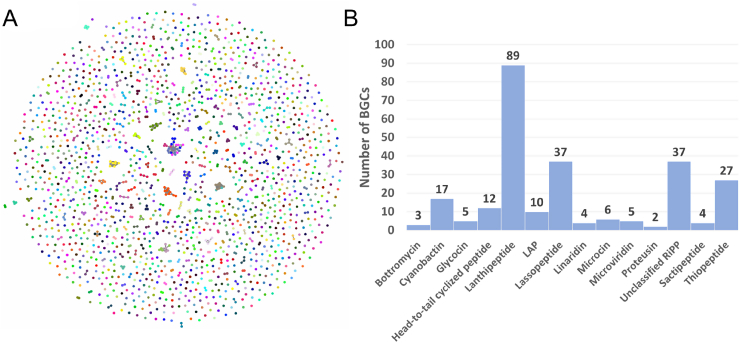
Diversity of known RiPP BGCs. A) The network of known RiPPs BGCs from MIBiG, visualizing their diversity. The network is constructive by BiG-SCAPE with default parameters, each node corresponds to one RiPP BGC, similar BGCs are clustered together. B) The numbers of known RiPPs at the family level from MIBiG.
Fig. 2
Fig. 2
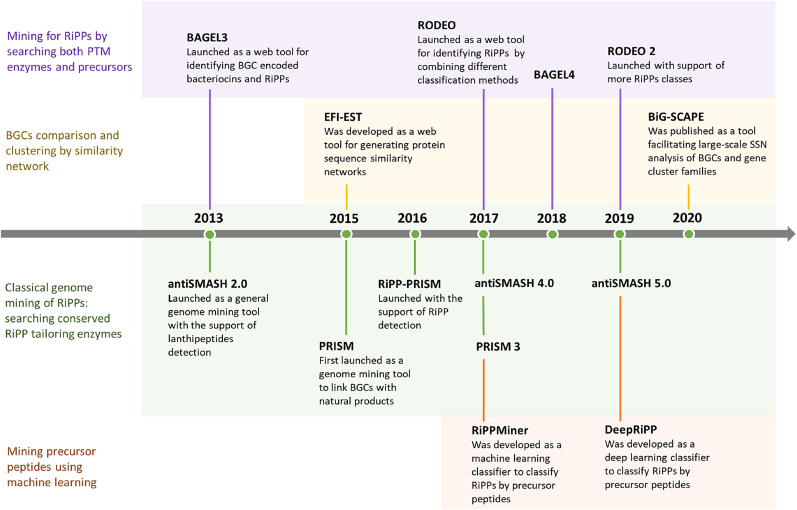
The timeline of RiPPs genome mining.
Fig. 3
Fig. 3
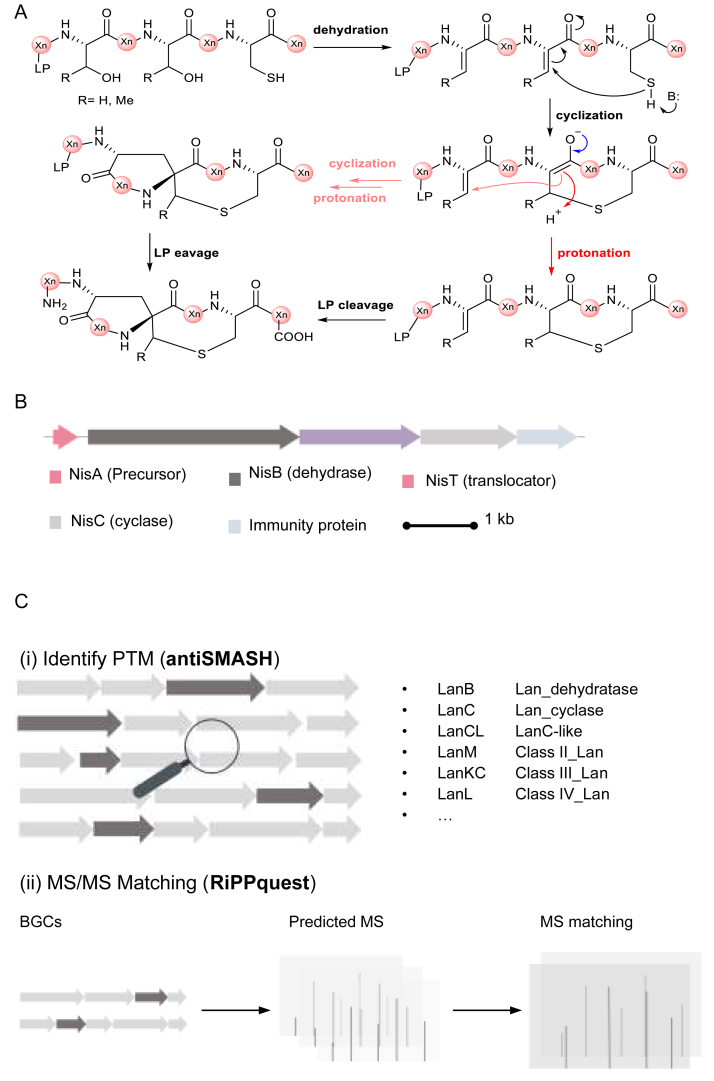
Lanthipeptide biosynthetic logic and mining strategy. A) Exemplified enzymatic mechanism of lanthipeptide biosynthesis. LP, leader peptide. Xn, peptide with n residues. B) Nisin biosynthetic gene cluster from Lactococcus lactis. C) Lanthipeptide mining strategy. (i) Tailoring enzyme-based mining mainly focuses on identifying the hallmark of lanthipeptide biosynthesis, such as dehydratase and cyclase. (ii) MS/MS matching connects genotypes and chemotypes. The MS data of predicated mature peptides was aligned with the experimentally obtained MS data to guide target isolation.
Fig. 4
Fig. 4
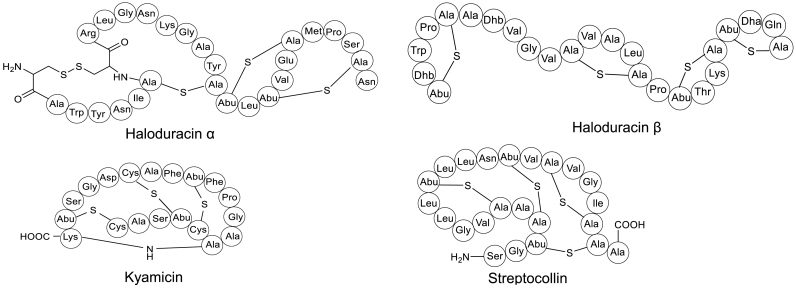
Examples of lanthipeptides discovered by genome mining. Haloduracin α and β were isolated from Bacillus halodurans C-125. Kyamicin and streptocollin were discovered from Saccharopolyspora species and Streptomyces collinus Tu 365, respectively. Abu, d-α-aminobutyric acid. Dha, 2,3-didehydroalanine. Dhb, 2,3-didehydrobutyrine.
Fig. 5
Fig. 5
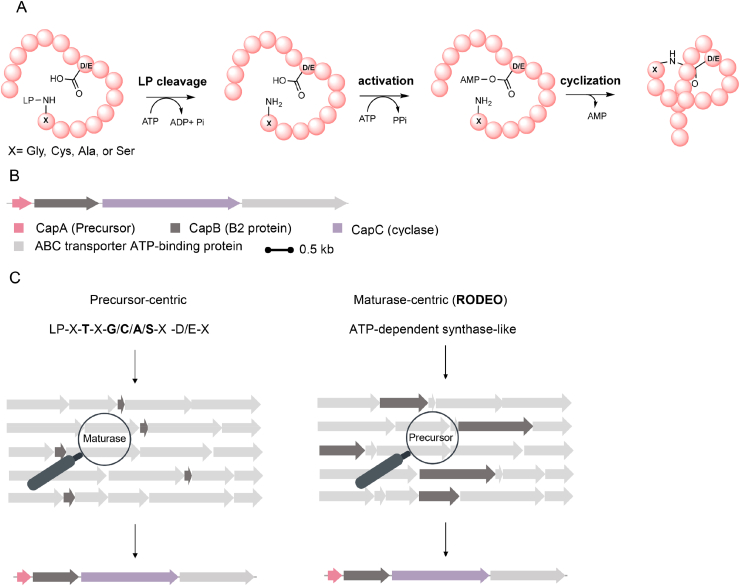
Lasso peptide biosynthetic logic and mining strategy. A) Enzymatic mechanism of lasso peptide biosynthesis. LP, leader peptide. X indicates Gly, Cys, Ala, or Ser residue. B) Capistruin biosynthetic gene cluster from Burkholderia thailandensis E264. C) Representative strategies of lasso peptide mining. The precursor-centric approach is to search putative lasso peptide precursors based on the conserved patterns of known lasso peptides. BGC candidates were identified by searching adjacent tailoring enzymes and ranking the conservativeness based on then conserved motifs, such as Cys-His-Asp catalytic triad for proteases (B protein) and Asp-rich motif for asparagine synthetases (C protein). In contrast, the maturase-centric strategy starts by retrieving tailoring enzymes-containing BGCs followed by searching possible adjacent short peptides, which could be the precursors.
Fig. 6
Fig. 6
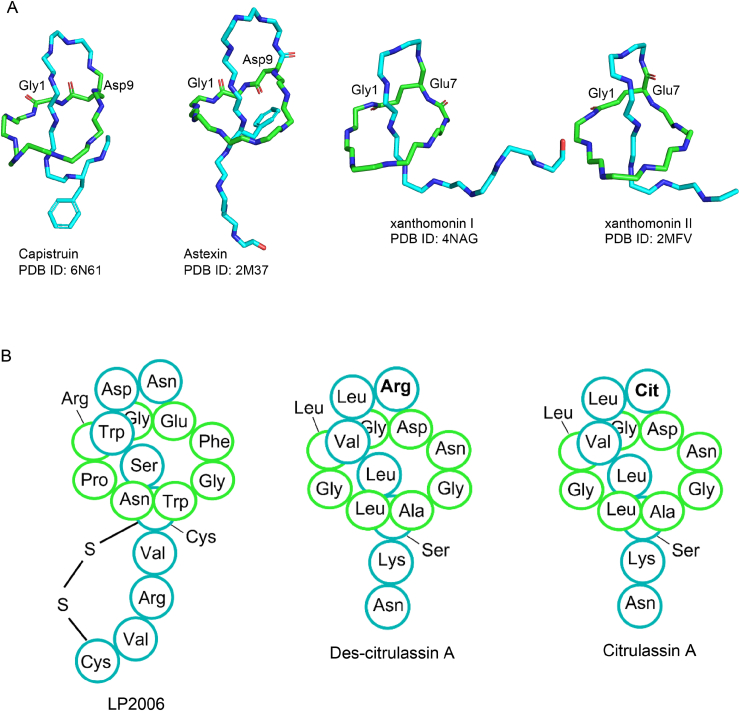
Representative lasso peptides discovered by genome mining. A) Lasso peptides mined by a precursor-centric approach. Astexin (PDB ID 2M37) was isolated from freshwater bacterium Asticcacaulis excentricus. Xanthomonin I and II (PDB ID 4NAG, 2MFV) were derived from Xanthomonas gardneri. The 3D structures of xanthomonin I and II showed here are truncated by four and six residues, respectively. B) LP2006, Des-citrulassin A and Citrulassin A were derived from Nocardiopsis alba NRRL B-24146 and Streptomyces albulus NRRL B-3066, respectively. Arg9 in Des-citrulassin A was modified to citrulline in Citrulassin.
Fig. 7
Fig. 7
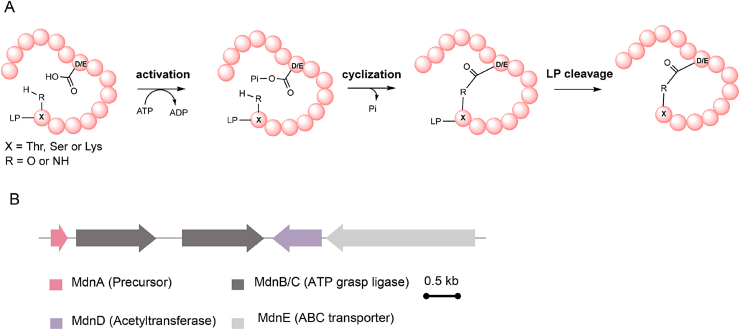
OEPs biosynthetic logic. A) Mechanism of ATP-grasp enzyme-catalyzed ω-ester amide bond formation. X indicates Thr, Ser, or Lys residue. B) Microviridin biosynthetic gene cluster from Microcystis aeruginosa NIES-298.
Fig. 8
Fig. 8
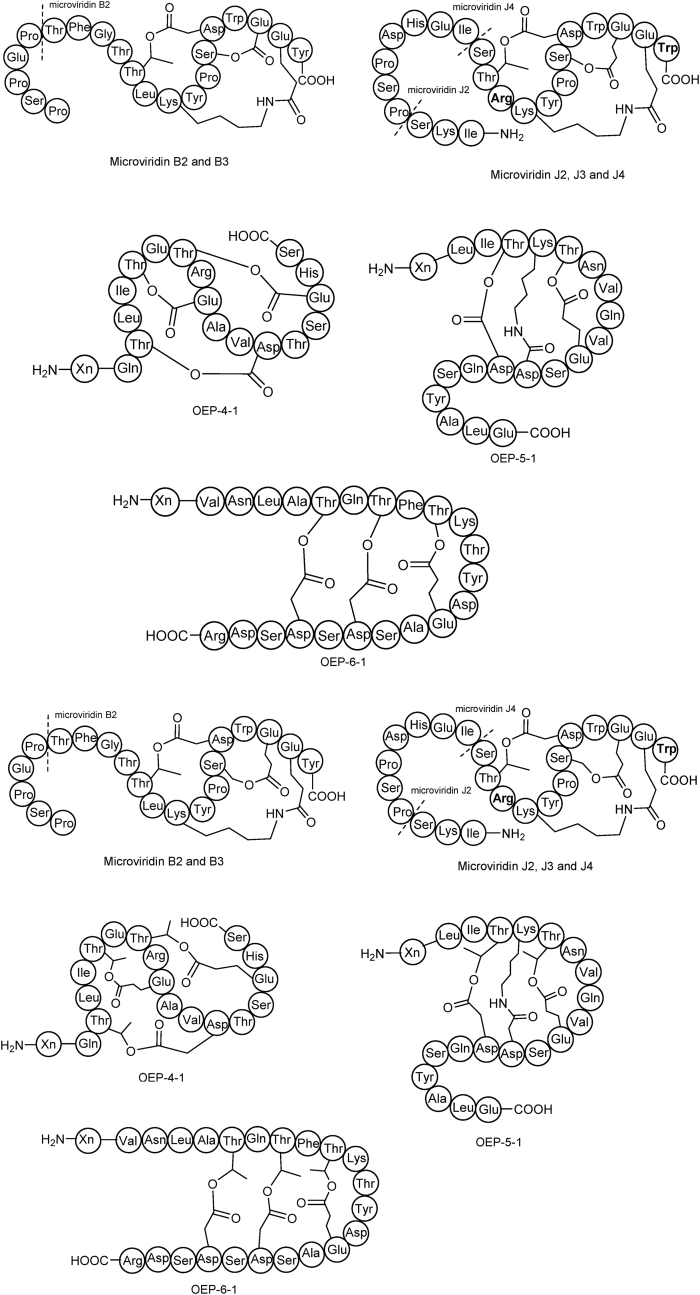
Microviridins and other OEPs discovered by genome mining. Microviridins were isolated via heterologous expression of mdnABCDE gene cluster in E. coli. Arg in C-terminal Trp was highlighted in bold, indicating the differences between microviridin B and microviridin J in their cyclic region. OEP-4-1, OEP-5-1 and OEP-6-1 BGCs were derived from Sphingobacteriales bacterium 44–61, Vibrio sp. JCM 18905 and Chryseobacterium greenlandense UMB34, respectively. The mature peptides were obtained via heterologous expression of the corresponding gene clusters in E. coli.
Fig. 9
Fig. 9
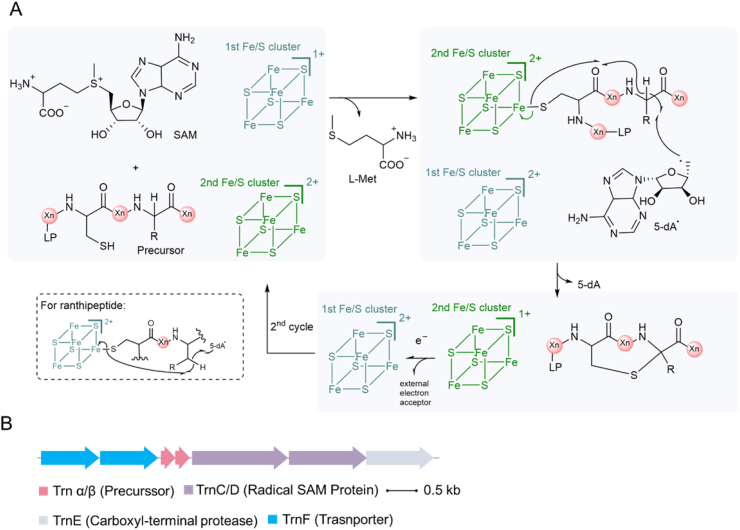
Proposed radical-based mechanism of carbon-sulfur bond formation in the biosynthesis of sactipeptides and ranthipeptides. A. In the initial step, 5′-deoxyadenosyl (5-dA) radical is generated through the reductive cleavage of SAM by the first [4Fe-4S] cluster, highlighted as dark cyan. Then, a hydrogen atom was abstracted by 5-dA radical from the precursor peptide, which was coordinated by the second [4Fe-4S] cluster, as highlighted by dark green. Meanwhile, one electron was transferred onto the second cluster via intramolecular attack, leading to the C-S bond formation. The second [4Fe-4S] cluster then transfers one electron to the first [4Fe-4S] cluster to regenerate. For ranthipeptides, side chain hydrogen atom is abstracted, as showed in the dashed box. Two [4Fe-4S] clusters are involved in the overall transformation. Xn, peptide with n residues. LP, leader peptide. B. Thurincin CD biosynthetic gene cluster from Bacillus thuringiensis strain DPC6431.
Fig. 10
Fig. 10
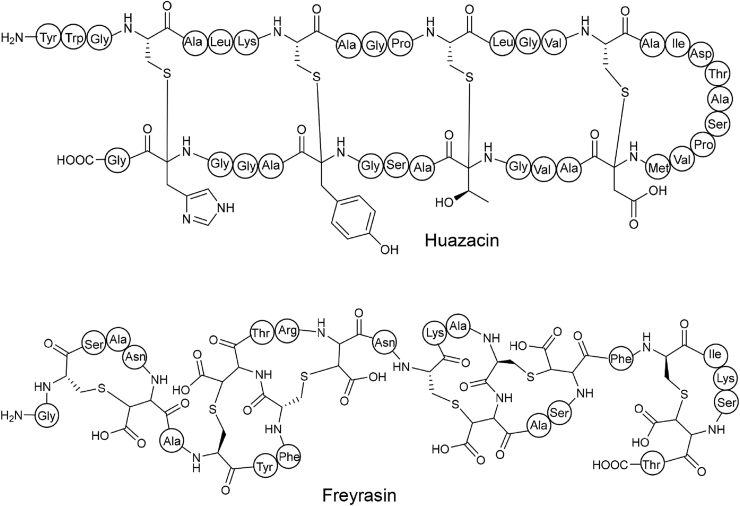
Representative sacti- and ranthipeptides discovered by genome mining. Huazacin was isolated from Bacillus thuringiensis serovar huazhongensis. Freyrasin belongs to ranthipeptide which contains six Cβ-S bonds formed between Cys and Asp residues.
Fig. 11
Fig. 11
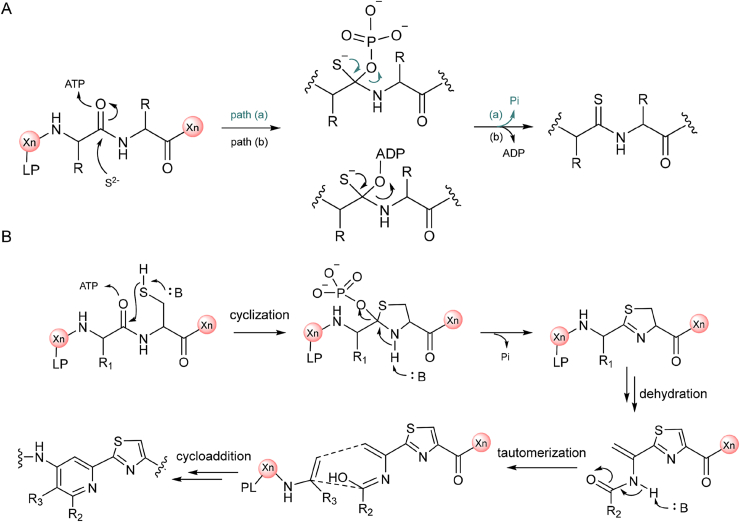
Proposed enzymatic mechanisms of YcaO-catalyzed thioamide bond and thiazole ring formation in the post modification of RiPPs. A) ATP-dependent YcaO-catalyzed thioamidated RiPPs biosynthesis. B) Mechanisms of thiazole ring and pyridine formation. In the cyclization step, Cys residue can be replaced by Ser or Thr to give other azoline motifs.
Fig. 12
Fig. 12
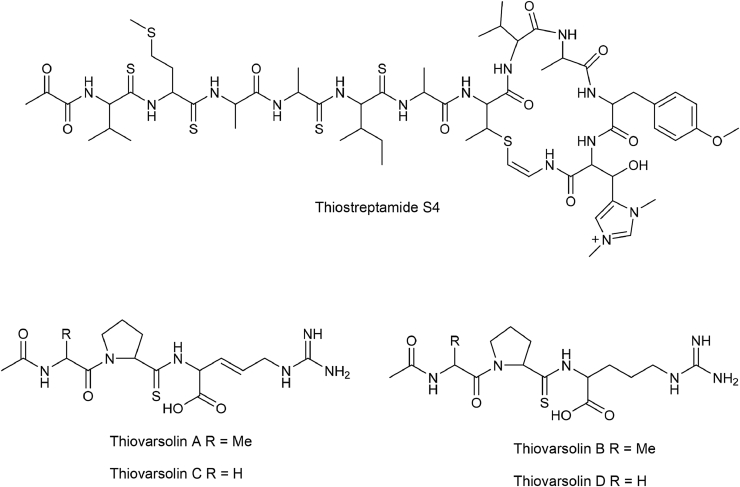
Representative thioamidated RiPPs discovered by genome mining. Thiostreptamide S4 was isolated from Streptomyces olivoviridis NA005001. Thiovarsolin was identified by heterologous expression of Thiovarsolin BGC derived from Streptomyces varsoviensis.
Fig. 13
Fig. 13
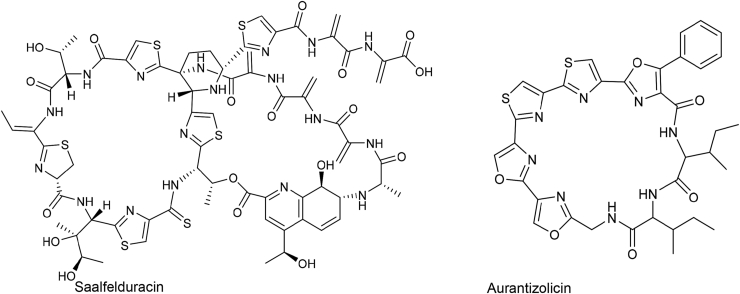
Representative thiopeptides discovered by genome mining. Saalfelduracin was produced by strain Amycolatopsis saalfeldensis NRRL B-24474. Aurantizolicin was isolated from the fermentation broth of Streptomyces aurantiacus JA 4570.
Fig. 14
Fig. 14
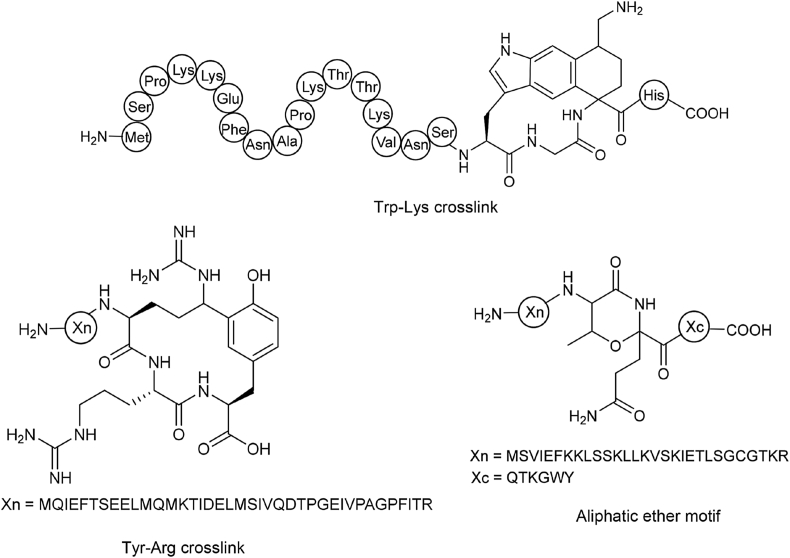
Other Radical SAM enzyme-catalyzed RiPPs identified by a quorum sensing-based approach. Streptide-like Trp-Lys and Tyr-Arg crosslink containing RiPPs were respectively found in Streptococcus ferus DSM 20646 and Streptococcus. suis LSS38. The aliphatic ether motif-containing RiPP was identified from Streptococcus suis.
Fig. 15
Fig. 15
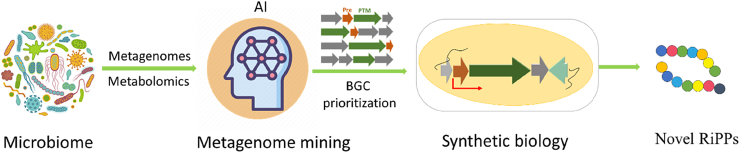
The flowchart of future RiPPs (meta)genome mining approach.

References

    1. Imai Y., Meyer K.J., Iinishi A., Favre-Godal Q., Green R. A new antibiotic selectively kills Gram-negative pathogens. Nature. 2019;576:459–464. doi: 10.1038/s41586-019-1791-1. - DOI - PMC - PubMed
    1. Yang X., Lennard K.R., He C., Walker M.C., Ball A.T. A lanthipeptide library used to identify a protein-protein interaction inhibitor. Nat Chem Biol. 2018;14:375–380. doi: 10.1038/s41589-018-0008-5. - DOI - PMC - PubMed
    1. Delivoria D.C., Chia S., Habchi J., Perni M., Matis I. Bacterial production and direct functional screening of expanded molecular libraries for discovering inhibitors of protein aggregation. Sci Adv. 2019;5 doi: 10.1126/sciadv.aax5108. - DOI - PMC - PubMed
    1. Mahanta N., Hudson G.A., Mitchell D.A. Radical S-adenosylmethionine enzymes involved in RiPP biosynthesis. Biochemistry. 2017;vol. 56:5229–5244. doi: 10.1021/acs.biochem.7b00771. - DOI - PMC - PubMed
    1. Reisberg S.H., Gao Y., Walker A.S., Helfrich E.J.N., Clardy J. Total synthesis reveals atypical atropisomerism in a small-molecule natural product. tryptorubin A Science. 2020;367:458–463. doi: 10.1126/science.aay9981. - DOI - PMC - PubMed

LinkOut - more resources