


Rationale, design and study protocol of the 'Strong Families Start at Home' feasibility trial to improve the diet quality of low-income, ethnically diverse children by helping parents improve their feeding and food preparation practices
- PMID: 32637721
- PMCID: PMC7327278
- DOI: 10.1016/j.conctc.2020.100583
Rationale, design and study protocol of the 'Strong Families Start at Home' feasibility trial to improve the diet quality of low-income, ethnically diverse children by helping parents improve their feeding and food preparation practices
Abstract
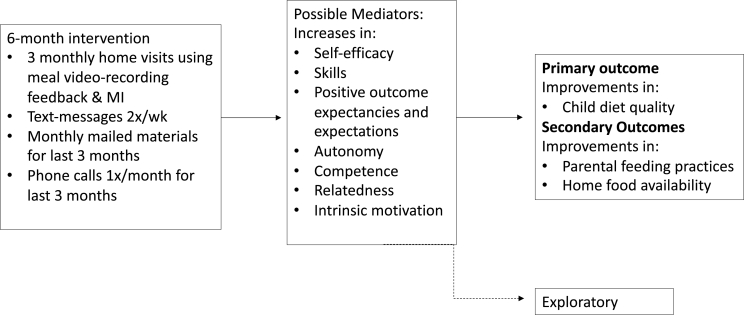
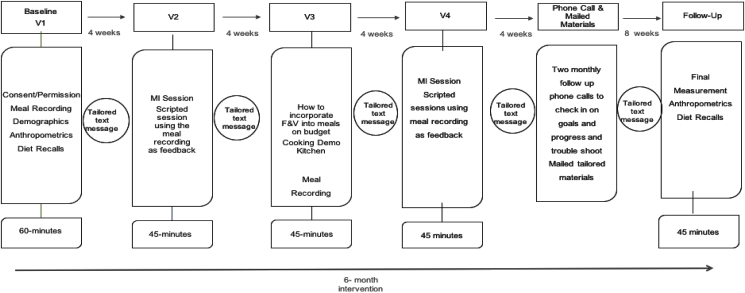
There is an urgent need to create effective interventions that help parents establish a healthy diet among their children early in life, especially among low-income and ethnically and racially diverse families. U.S. children eat too few fruits, vegetables and whole grains, and too many energy dense foods, dietary behaviors associated with increased morbidity from chronic diseases. Parents play a key role in shaping children's diets. Best practices suggest that parents should involve children in food preparation, and offer, encourage and model eating a variety of healthy foods. In addition, while parents help to shape food preferences, not all children respond in the same way. Certain child appetitive traits, such as satiety responsiveness (sensitivity to internal satiety signals), food responsiveness (sensitivity to external food cues), and food fussiness may help explain some of these differences. Prior interventions to improve the diet of preschool children have not used a holistic approach that targets the home food environment, by focusing on food quality, food preparation, and positive feeding practices while also acknowledging a child's appetitive traits. This manuscript describes the rationale and design for a 6-month pilot randomized controlled trial, Strong Families Start at Home, that randomizes parents and their 2-to 5-year old children to either a home-based environmental dietary intervention or an attention-control group. The primary aim of the study is to explore the feasibility and acceptability of the intervention and evaluation and to determine the intervention's preliminary efficacy on child diet quality, feeding practices, and availability of healthy foods in the home.
Keywords: Eating behavior; Feeding practices; Nutrition; Preschool-aged.
© 2020 The Authors.
Figures
References
-
- Hinkley T., Salmon J., Okely A.D., Crawford D., Hesketh K. Preschoolers' physical activity, screen time, and compliance with recommendations. Med. Sci. Sports Exerc. 2012;44(3):458–465. - PubMed
-
- Kranz S., Hartman T., Siega-Riz A.M., Herring A.H. A diet quality index for American preschoolers based on current dietary intake recommendations and an indicator of energy balance. J. Am. Diet Assoc. 2006;106(10):1594–1604. - PubMed
-
- Cortes D.E., Millan-Ferro A., Schneider K., Vega R.R., Caballero A.E. Food purchasing selection among low-income, Spanish-speaking Latinos. Am. J. Prev. Med. 2013;44(3 Suppl 3):S267–S273. - PubMed
Grants and funding
LinkOut - more resources
Full Text Sources
Medical
