


The Impact of Plant-Based Dietary Patterns on Cancer-Related Outcomes: A Rapid Review and Meta-Analysis
- PMID: 32640737
- PMCID: PMC7400843
- DOI: 10.3390/nu12072010
The Impact of Plant-Based Dietary Patterns on Cancer-Related Outcomes: A Rapid Review and Meta-Analysis
Abstract
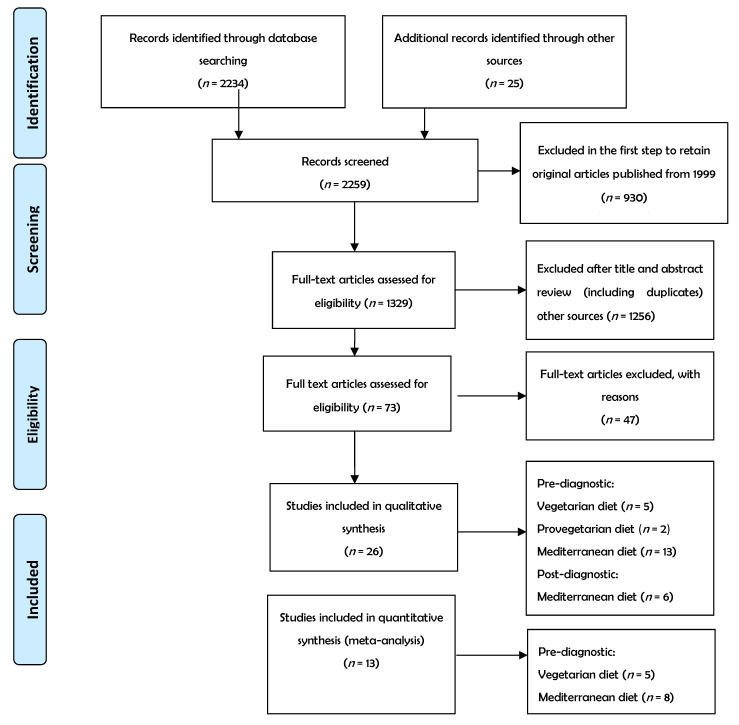
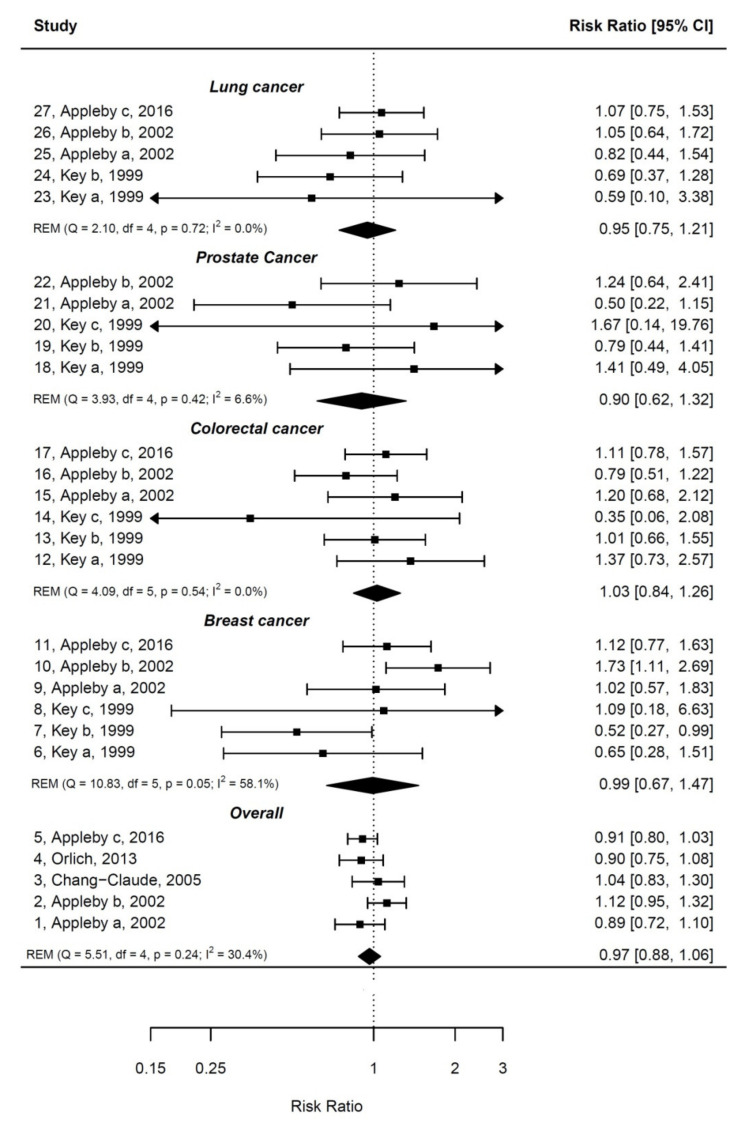
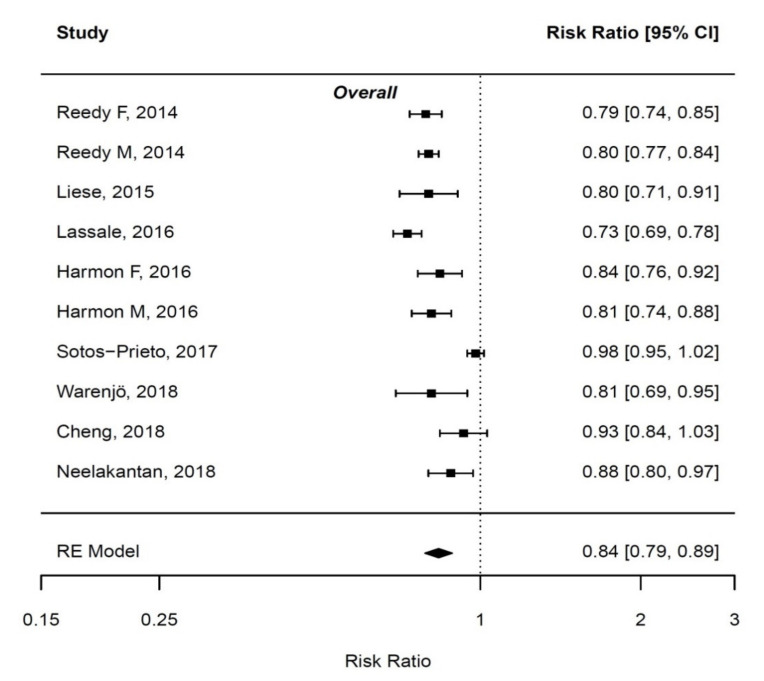
Long-term cancer survivors represent a sizeable portion of the population. Plant-based foods may enhance the prevention of cancer-related outcomes in these patients. We aimed to synthesize the current evidence regarding the impact of plant-based dietary patterns (PBDPs) on cancer-related outcomes in the general population and in cancer survivors. Considered outcomes included overall cancer mortality, cancer-specific mortality, and cancer recurrence. A rapid review was conducted, whereby 2234 original articles related to the topic were identified via Pubmed/Medline. We selected 26 articles, which were classified into studies on PBDPs and cancer outcomes at pre-diagnosis: vegan/vegetarian diet (N = 5), provegetarian diet (N = 2), Mediterranean diet (N = 13), and studies considering the same at post-diagnosis (N = 6). Pooled estimates of the associations between the aforementioned PBDPs and the different cancer outcomes were obtained by applying random effects meta-analysis. The few studies available on the vegetarian diet failed to support its prevention potential against overall cancer mortality when compared with a non-vegetarian diet (e.g., pooled hazard ratio (HR) = 0.97; 95% confidence interval (CI): 0.88-1.06). The insufficient number of studies evaluating provegetarian index scores in relation to cancer mortality did not permit a comprehensive assessment of this association. The association between adherence to the Mediterranean diet and cancer mortality reached statistical significance (e.g., pooled HR = 0.84; 95% CI: 0.79-0.89). However, no study considered the influence of prognostic factors on the associations. In contrast, post-diagnostic studies accounted for prognostic factors when assessing the chemoprevention potential of PBDPs, but also were inconclusive due to the limited number of studies on well-defined plant-based diets. Thus, whether plant-based diets before or after a cancer diagnosis prevent negative cancer-related outcomes needs to be researched further, in order to define dietary guidelines for cancer survivors.
Keywords: Mediterranean diet; cancer; diet quality; mortality; plant-based food; survival; vegan; vegetarian.
Conflict of interest statement
The authors declare no conflict of interest. The funders had no role in the design of the study; in the collection, analyses, or interpretation of data; in the writing of the manuscript, or in the decision to publish the results.
Figures
References
-
- Ferlay J., Ervik M., Lam F. Global Cancer Observatory: Cancer Today. International Agency for Research on Cancer; Lyon, France: 2018.
-
- De Angelis R., Sant M., Coleman M.P., Francisci S., Baili P., Pierannunzio D., Trama A., Visser O., Brenner H., Ardanaz E., et al. Cancer survival in Europe 1999–2007 by country and age: Results of EUROCARE-5—A population-based study. Lancet Oncol. 2014;15:23–34. doi: 10.1016/S1470-2045(13)70546-1. - DOI - PubMed
