Impact of concurrent genomic alterations in epidermal growth factor receptor (EGFR)-mutated lung cancer
- PMID: 32642201
- PMCID: PMC7330397
- DOI: 10.21037/jtd.2020.03.78
Impact of concurrent genomic alterations in epidermal growth factor receptor (EGFR)-mutated lung cancer
Abstract
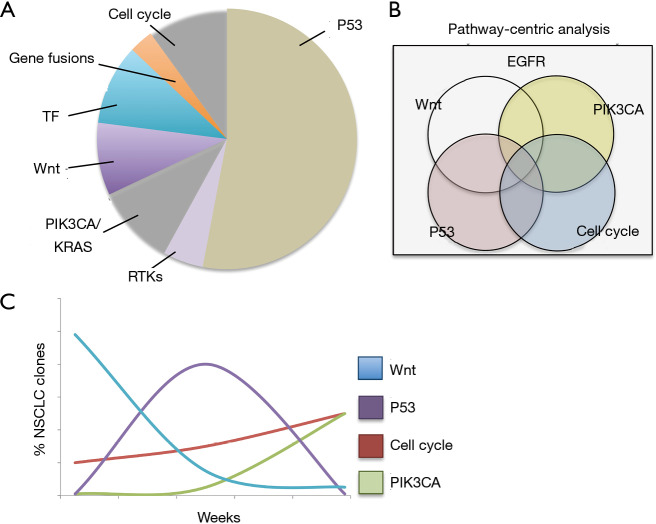
Comprehensive characterization of the genomic landscape of epidermal growth factor receptor (EGFR)-mutated lung cancers have identified patterns of secondary mutations beyond the primary oncogenic EGFR mutation. These include concurrent pathogenic alterations affecting p53 (60-65%), RTKs (5-10%), PIK3CA/KRAS (3-23%), Wnt (5-10%), and cell cycle (7-25%) pathways as well as transcription factors such as MYC and NKX2-1 (10-15%). The majority of these co-occurring alterations were detected or enriched in samples collected from patients at resistance to tyrosine kinase inhibitor (TKI) treatment, indicating a potential functional role in driving resistance to therapy. Of note, these co-occurring tumor genomic alterations are not necessarily mutually exclusive, and evidence suggests that multiple clonal and sub-clonal cancer cell populations can co-exist and contribute to EGFR TKI resistance. Computational tools aimed to classify, track and predict the evolution of cancer clonal populations during therapy are being investigated in pre-clinical models to guide the selection of combination therapy switching strategies that may delay the development of treatment resistance. Here we review the most frequently identified tumor genomic alterations that co-occur with mutated EGFR and the evidence that these alterations effect responsiveness to EGFR TKI treatment.
Keywords: Lung cancer; mutations; oncogenes; therapy.
2020 Journal of Thoracic Disease. All rights reserved.
Conflict of interest statement
Conflicts of Interest: All authors have completed the ICMJE uniform disclosure form (available at http://dx.doi.org/10.21037/jtd.2020.03.78). The series “Mechanisms of Resistance to EGFR-targeted Therapy” was commissioned by the editorial office without any funding or sponsorship. Dr. Blakely reports grants from Astrazeneca, grants from Takeda, grants from Novartis, grants from Mirati, grants from Spectrum, grants from Roche, personal fees from Revolution Medicines, personal fees from Foundation Medicine, outside the submitted work. The other authors have no other conflicts of interest to declare.
Figures
References
-
- Cancer Genome Atlas Research Network . Comprehensive molecular profiling of lung adenocarcinoma. Nature 2014;511:543-50. Erratum in: Nature. 2014 Oct 9;514(7521):262. Rogers, K [corrected to Rodgers, K]. Author Correction: Comprehensive molecular profiling of lung adenocarcinoma. [Nature. 2018] 10.1038/nature13385 - DOI - PMC - PubMed
Publication types
LinkOut - more resources
Full Text Sources
Research Materials
Miscellaneous