


Radiation-induced brain injury: current concepts and therapeutic strategies targeting neuroinflammation
- PMID: 32642709
- PMCID: PMC7271559
- DOI: 10.1093/noajnl/vdaa057
Radiation-induced brain injury: current concepts and therapeutic strategies targeting neuroinflammation
Abstract
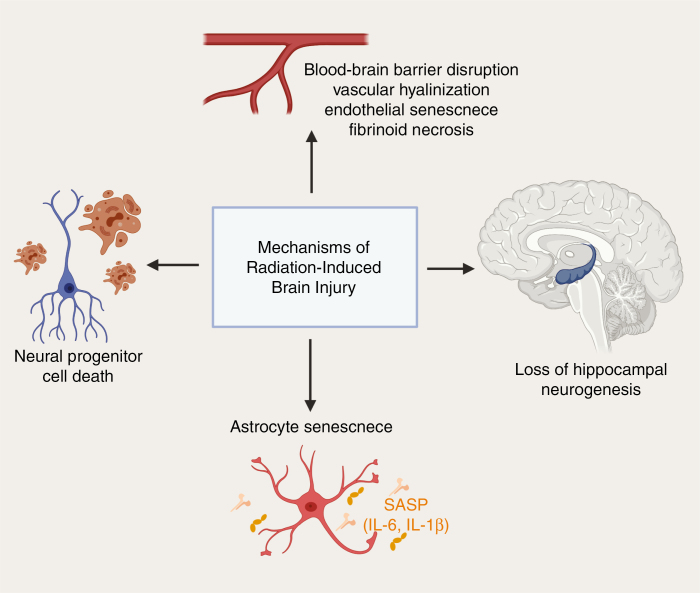
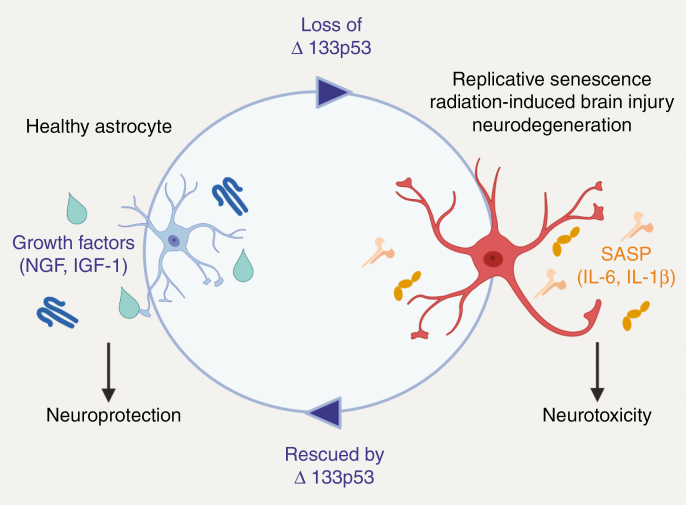
Continued improvements in cancer therapies have increased the number of long-term cancer survivors. Radiation therapy remains one of the primary treatment modalities with about 60% of newly diagnosed cancer patients receiving radiation during the course of their disease. While radiation therapy has dramatically improved patient survival in a number of cancer types, the late effects remain a significant factor affecting the quality of life particularly in pediatric patients. Radiation-induced brain injury can result in cognitive dysfunction, including hippocampal-related learning and memory dysfunction that can escalate to dementia. In this article, we review the current understanding of the mechanisms behind radiation-induced brain injury focusing on the role of neuroinflammation and reduced hippocampal neurogenesis. Approaches to prevent or ameliorate treatment-induced side effects are also discussed along with remaining challenges in the field.
Keywords: astrocytes; cognitive dysfunction; neurotoxicity; radiation-induced brain injury; senescence.
Published by Oxford University Press on behalf of the Society for Neuro-Oncology and the European Association of Neuro-Oncology 2020.
Figures
References
-
- Fisher BJ, Bauman GS, Leighton CE, Stitt L, Cairncross JG, Macdonald DR. Low-grade gliomas in children: tumor volume response to radiation. J Neurosurg. 1998;88(6):969–974. - PubMed
-
- Patchell RA, Tibbs PA, Regine WF, et al. . Postoperative radiotherapy in the treatment of single metastases to the brain: a randomized trial. JAMA. 1998;280(17):1485–1489. - PubMed
-
- Tang Y, Li Y, Luo D, Rong X, Ye J, Peng Y. Epilepsy related to radiotherapy in patients with nasopharyngeal carcinoma. Epilepsy Res. 2011;96(1–2):24–28. - PubMed
Publication types
LinkOut - more resources
Full Text Sources
Other Literature Sources